Guides · Sky tonight
When is the next solar eclipse? August 2, 2027 — the "eclipse of the century"
The next total solar eclipse is August 2, 2027 — with up to 6 min 22 sec of total darkness, the longest visible from land until the year 2114. Here's where it passes, the best places to watch, and how to see it safely.
📅When is the next total solar eclipse?
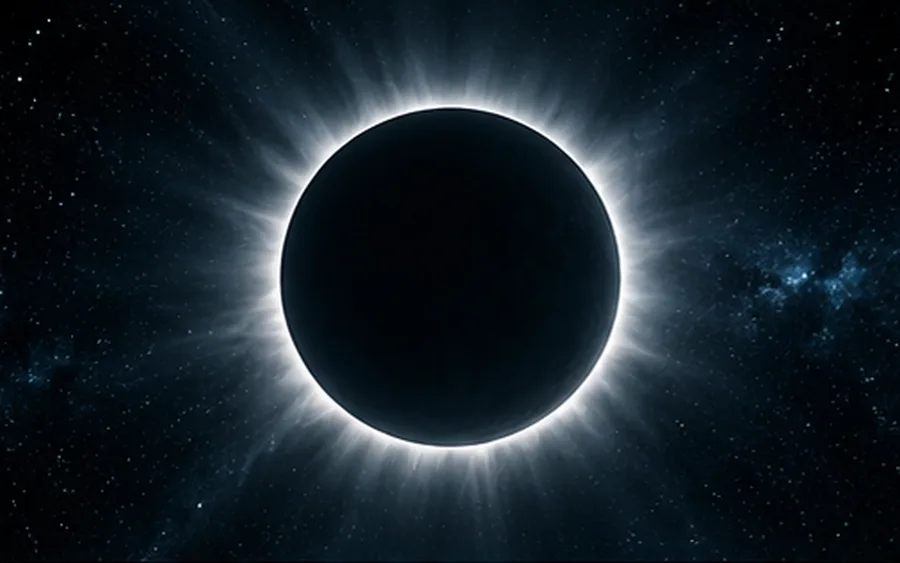
The next total solar eclipse falls on Sunday, August 2, 2027. Totality — the moment the Moon completely covers the Sun — reaches a maximum of about 6 minutes 22 seconds near Luxor, Egypt. For comparison, most total eclipses last only two to three minutes, which is why astronomers call this the "eclipse of the century." Nothing longer will be visible from land until 2114.
🗺️Where will the 2027 eclipse be visible?
The path of totality — the narrow band where the Sun is fully blocked — first touches land in southern Spain and northern Morocco, then sweeps east across North Africa and the Middle East:
- Spain — Cádiz, Málaga and Gibraltar (4–5 minutes of totality, within reach of Europe's transport network)
- Morocco — Tangier and the north
- Algeria, Tunisia, Libya — long desert stretches with the best weather odds
- Egypt — over Luxor's Valley of the Kings and the Great Pyramid of Giza (maximum 6m22s near Luxor)
- Saudi Arabia — including Jeddah and Mecca
- Somalia & Yemen — before the path leaves land
In total the path crosses roughly 89 million people across 10+ countries. A partial eclipse will be visible across a much wider area of Europe, Africa and the Middle East.
⭐Why the 2027 eclipse is so special
Two things make it extraordinary. First, the duration: 6+ minutes of totality is exceptional, because the eclipse happens when the Moon is near its closest point to Earth and the Sun is near its farthest. Second, the weather: the path runs through August desert skies, so the chance of a clear view is among the best ever for a major eclipse.
🕶️How to watch a solar eclipse safely
🛰️What else is happening in the sky
Eclipses are just one thing overhead. Right now you can track the ISS, Starlink and thousands of satellites live on the SkyLens tracker, or learn to spot them with our guides to seeing the ISS tonight and asteroids passing Earth.
❓Frequently asked questions
When is the next total solar eclipse?
August 2, 2027 — up to 6 min 22 sec of totality, the longest until 2114.
Where will it be visible?
Path of totality: southern Spain, Morocco, Algeria, Tunisia, Libya, Egypt (Luxor, Giza), Saudi Arabia (Mecca), Somalia, Yemen. Partial eclipse across much of Europe, Africa and the Middle East.
Why is it called the eclipse of the century?
At 6+ minutes it's the longest total solar eclipse over land until 2114, with unusually reliable clear-sky weather along its desert path.
How do I watch it safely?
Use certified ISO 12312-2 eclipse glasses or a solar filter. Only look with the naked eye during full totality — never during partial phases.