Guides · Orbits & hardware
Life in space: what living on the ISS is actually like
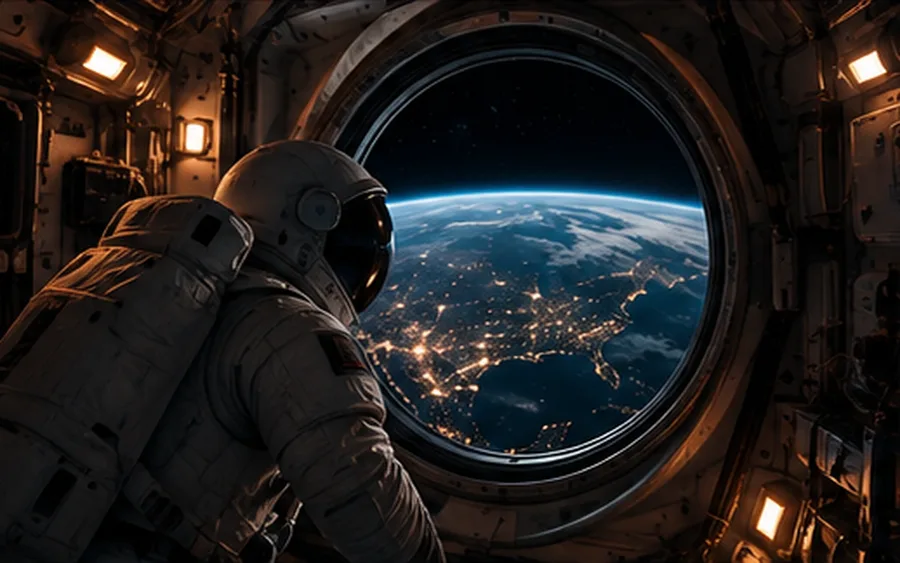
Right now, astronauts are living 400 km above your head on the International Space Station, orbiting Earth every 90 minutes at 28,000 km/h. No gravity, no fresh air but what they make, 16 sunrises a day. Here's what life in space is really like — how they sleep, eat, shower, and survive.
🛰️ See the ISS pass over you live →
🛰️How do astronauts sleep in space?
There's no "lying down" without gravity, so astronauts sleep in tiny personal cabins about the size of a phone booth, zipped into sleeping bags strapped to the wall so they don't drift into equipment. The strangest part: the ISS circles Earth every 90 minutes, meaning the crew sees 16 sunrises and 16 sunsets every day. To keep a normal rhythm, everyone follows one shared clock (UTC) and uses eye masks and earplugs. Many astronauts say they sleep better in space once they adjust — floating is surprisingly comfortable.
🛰️How do they eat and drink?
Most meals are dehydrated or heat-treated and rehydrated with hot water, then eaten straight from the pouch with a spoon — surface tension holds the food on. Salt and pepper only come as liquids, because loose grains would float away and end up in someone's eye or a control panel. Drinks are sipped through sealed straws. And yes — crews get occasional fresh fruit, tortillas (bread crumbs are a hazard), and even holiday treats when resupply ships arrive.
🛰️How do they shower and use the toilet?
There are no showers in space. Astronauts wash with rinseless soap, water pouches and wet wipes, and use a special no-rinse shampoo. The toilet is where physics gets clever: instead of gravity, it uses air suction — a fan pulls waste away. Even more remarkable, the station recycles water from urine, sweat and cabin humidity, filtering it back into clean drinking water. As astronauts joke: today's coffee is tomorrow's coffee.
🛰️What does zero gravity do to the human body?
Weightlessness sounds fun, but it's hard on the body. Without gravity to work against, muscles and bones weaken — so astronauts exercise about two hours a day on treadmills and resistance machines bolted to the station. Fluids shift toward the head, causing a puffy face and stuffy nose. Spines decompress, so astronauts temporarily grow up to a couple of centimeters taller. Most changes reverse back on Earth, though rebuilding bone density can take months — key research for future trips to the Moon and Mars.
🛰️See the space station for yourself
The best part: you can watch the very station these astronauts live on pass over your own house. It's the brightest human-made object in the night sky. Track it live on the SkyLens satellite tracker, or learn exactly when to look with our guide to seeing the ISS tonight.
❓Frequently asked questions
How do astronauts sleep in space?
In phone-booth-sized cabins, zipped into wall-strapped sleeping bags, on a UTC clock (they see 16 sunrises a day).
How do they eat and drink?
Rehydrated food from pouches, liquid salt and pepper, drinks through sealed straws.
How do they shower and use the toilet?
No showers — rinseless soap and wipes. The toilet uses air suction; water (even from urine) is recycled.
What does zero gravity do to the body?
Weakens muscles and bones (2 hrs of daily exercise), shifts fluids upward, and temporarily makes astronauts taller.