Space Discoveries · 2026-09-21
Lunar Reconnaissance Orbiter: Scientists Just Found the Largest New Crater on the Moon — and Its Heat Signal Has No Simple Answer
The Moon got hit. Hard.
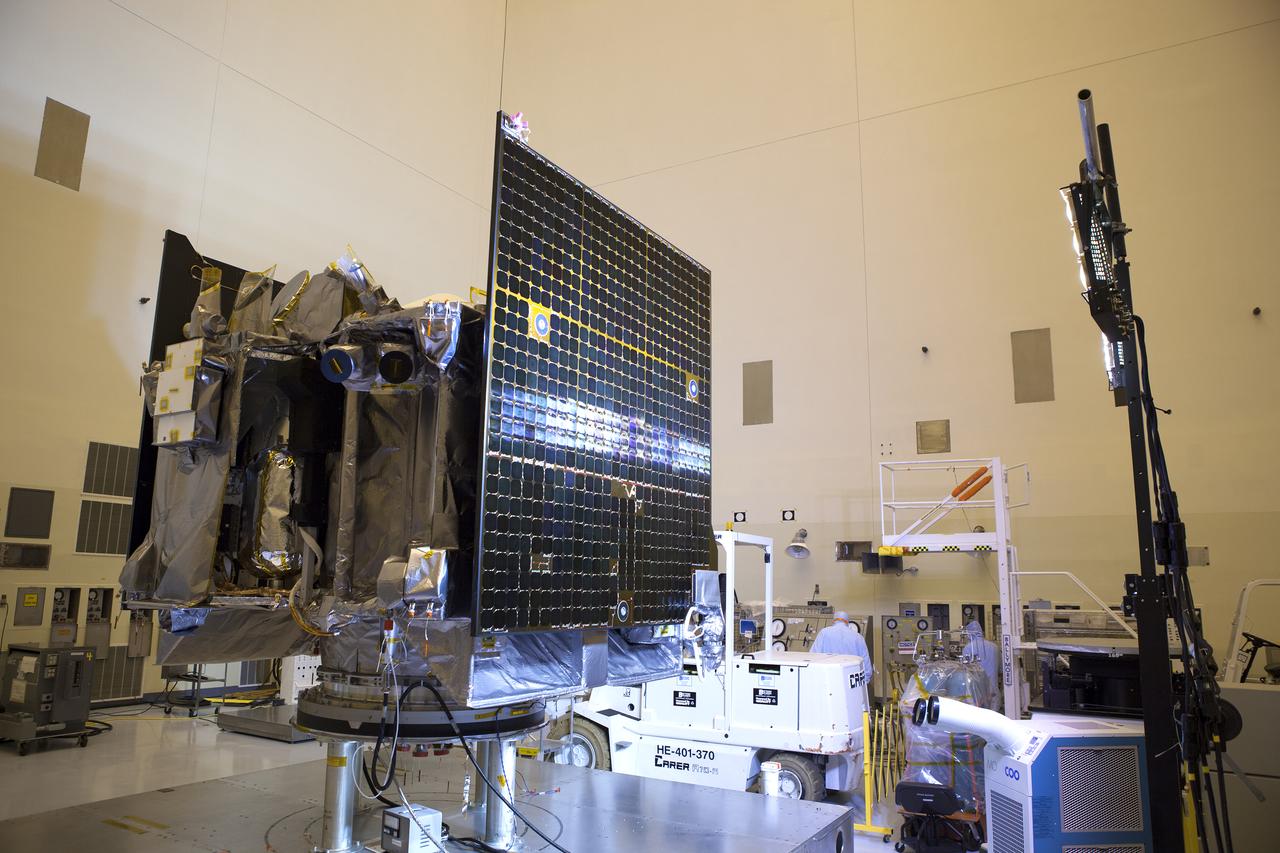
NASA's Lunar Reconnaissance Orbiter (LRO) — a spacecraft that has circled the Moon continuously since 2009, photographing every ridge, crater, and shadow in extraordinary detail — just announced the discovery of the largest freshly-formed impact crater found in 17 years of modern lunar mapping. Confirmed on September 20, 2026, the find isn't just about size. LRO's thermal cameras are detecting an emission from inside the crater that researchers specifically describe as "interesting" — and in scientific papers, that word is never casual.
"Interesting" means: the data doesn't fit the standard model yet, and we're not ready to say why.
What is the Lunar Reconnaissance Orbiter?
LRO is one of the most productive planetary science missions ever flown. Since launching in June 2009, it has built the most detailed map of any world beyond Earth — imaging the lunar surface in visible light, ultraviolet, and infrared at resolutions sharp enough to see individual boulders. Among its seven instruments is the Diviner Lunar Radiometer, a thermal camera that measures surface temperatures across the entire Moon through every phase of the lunar day and night cycle.
Diviner is how scientists find fresh craters that can't yet be confirmed in visible light. Freshly-exposed rock retains heat differently from ancient, billion-year-old lunar dust. When a new impact happens, the disturbed terrain glows thermally relative to its surroundings — a signal Diviner reads even from low lunar orbit.
How big is this newly-discovered Moon crater?
LRO has identified thousands of new craters over 17 years by comparing before-and-after images of the same terrain. Most are modest — a few metres across, punched by fist-sized rocks that hit a surface with absolutely no atmosphere to slow them down. Some are significant. A handful are remarkable.
This one is in its own category. The science team describes it as the largest newly-formed crater identified during the entire LRO mission era. That is a substantial statement from an instrument that has been watching the Moon without interruption for nearly two decades.
For context on what that means physically: there is no atmosphere on the Moon. Nothing slows incoming rocks down. Whatever made this crater arrived at somewhere between 12 and 20 kilometres per second — up to 70,000 km/h. That's faster than a bullet by a factor of fifty. At that speed, the kinetic energy converts explosively into heat and pressure on contact, vaporising rock and excavating a cavity that will outlast every human structure on Earth. This crater will still be clearly visible in 100 million years. The Moon is the solar system's perfect impact archive, and LRO keeps the ledger.
What is the unusual thermal emission inside the crater?
Here's where the story changes gear.
After a lunar impact, thermal cameras usually tell a familiar and predictable story. Freshly excavated rock conducts heat faster than ancient, powdery regolith. The new crater glows warm during the lunar night relative to its surroundings. Then, over millions of years, micrometeorite rain grinds that exposed rock back to fine dust, and the thermal signal fades toward background. Well-understood. Reproducible.
This crater isn't following that script exactly. Researchers specifically flagged an "interesting thermal emission phenomenon" as a distinct finding — separate from announcing the crater's record size. That kind of language in a scientific announcement means the anomaly is real enough to require its own explanation, and that explanation isn't yet in hand.
Several possibilities are being examined:
- Impact melt. Impacts this large briefly liquefy the target rock. Resolidified melt has unusual crystalline structure and thermal properties, and can produce patterns inconsistent with ordinary excavated rock even years after the strike.
- Unusual subsurface composition. Fresh craters excavate material from metres below the surface — material that hasn't seen sunlight in billions of years. If the buried layer contains dense basalt, metallic minerals, or ancient volcanic remnants, it could return a completely different thermal fingerprint than standard lunar soil.
- A Moon that isn't entirely geologically quiet. This is the speculative end of the spectrum — but it's grounded in actual science. Researchers have identified features called Irregular Mare Patches: small volcanic structures that appear to be only tens of millions of years old, not billions. The Moon may not be as inert as textbooks have long suggested. If this impact struck near one of those regions and disturbed thermally-distinct material, the readings could make sense — and open an entirely new set of questions about what the Moon's interior is still doing.
Diviner begins the first continuous thermal map of the entire Moon. Within months, fresh craters start appearing in comparison images.
Scientists identify geologically young volcanic features on the lunar surface — evidence the Moon may have been active more recently than believed.
LRO refocuses significant observation time on the lunar south pole, mapping water ice concentrations and potential landing zones for crewed missions.
LRO science team announces discovery alongside an unexplained thermal emission phenomenon. Investigation ongoing.
Why does this matter for astronauts going back to the Moon?
Human beings are returning. The Artemis program targets a crewed lunar landing in 2027 — the first human footsteps on the Moon since December 1972. China's Chang'e missions are methodically expanding their robotic presence near the south pole. Japan, India, the European Space Agency, and multiple commercial companies all have active surface operations planned within this decade.
For every one of those missions, a large fresh impact is operationally relevant data. The crater reshapes local topography. Ejecta has resurfaced surrounding terrain with pulverised rock. The thermal anomaly tells mission planners something concrete about what's underground in that region — and underground is where water ice is stored, where future habitats may be excavated, and where unexpected geology will surprise anyone who didn't know it was there.
The broader implication is about impact frequency: how often do strikes this significant actually happen in the modern era? Every large fresh crater is a live reading on that question — one with direct consequences for surface operations, habitat design, and the risk models behind every future Moon mission. The near-Earth objects that cross the Moon's path are tracked in real time on the SkyLens live tracker.
What happens next with this discovery?
LRO will keep watching. Diviner images the crater repeatedly across full lunar days and nights, tracking how the thermal anomaly evolves with changing solar illumination and temperature extremes that swing from −170°C to over 120°C. If the signal persists longer than impact melt would predict, or maps to a spatial pattern inconsistent with standard rock composition, that will narrow the hypothesis considerably.
Other instruments will likely be turned toward the site. LOLA — LRO's laser altimeter — can build a precise three-dimensional map of the crater's exact geometry. LEND, the neutron detector, can probe for hydrogen and water ice in the subsurface. If the site falls near a planned Artemis or Lunar Gateway landing zone, the data gathered now will directly inform decisions made by the people who are eventually going to walk there.
The Moon is 384,400 km away. It has been mapped, measured, and walked on. Humanity knows it better than almost any other world in the solar system — and it still leaves fresh questions embedded in fresh rock, still warm from the collision, still not fully explained.
How LRO identifies new lunar craters
For more on the science behind the Moon, near-Earth objects, and the missions heading into deep space, visit the SkyLens blog.
SkyLens editorial — live CelesTrak + NASA/JPL data (16022 objects)
Get the free Night Sky Field Guide
Spot the ISS, Starlink trains and more with the naked eye — plus occasional SkyLens updates.
🔒 No spam. Unsubscribe anytime.
Related stories