Space Exploration · 2026-08-30
Nancy Grace Roman Space Telescope: The Spy Satellite Mirror Now Hunting for a Second Earth
The mirror at the heart of this telescope was built to photograph missile silos. To track military convoys from orbit. To count tanks and map coastlines from 400 kilometres up — with enough resolution to read a number plate.
Then America's spy satellite agency decided it didn't need it anymore. So they gave it to astronomers. For free.
Yesterday, that mirror launched into deep space. This time, it's pointed at the stars.
What is the Nancy Grace Roman Space Telescope?
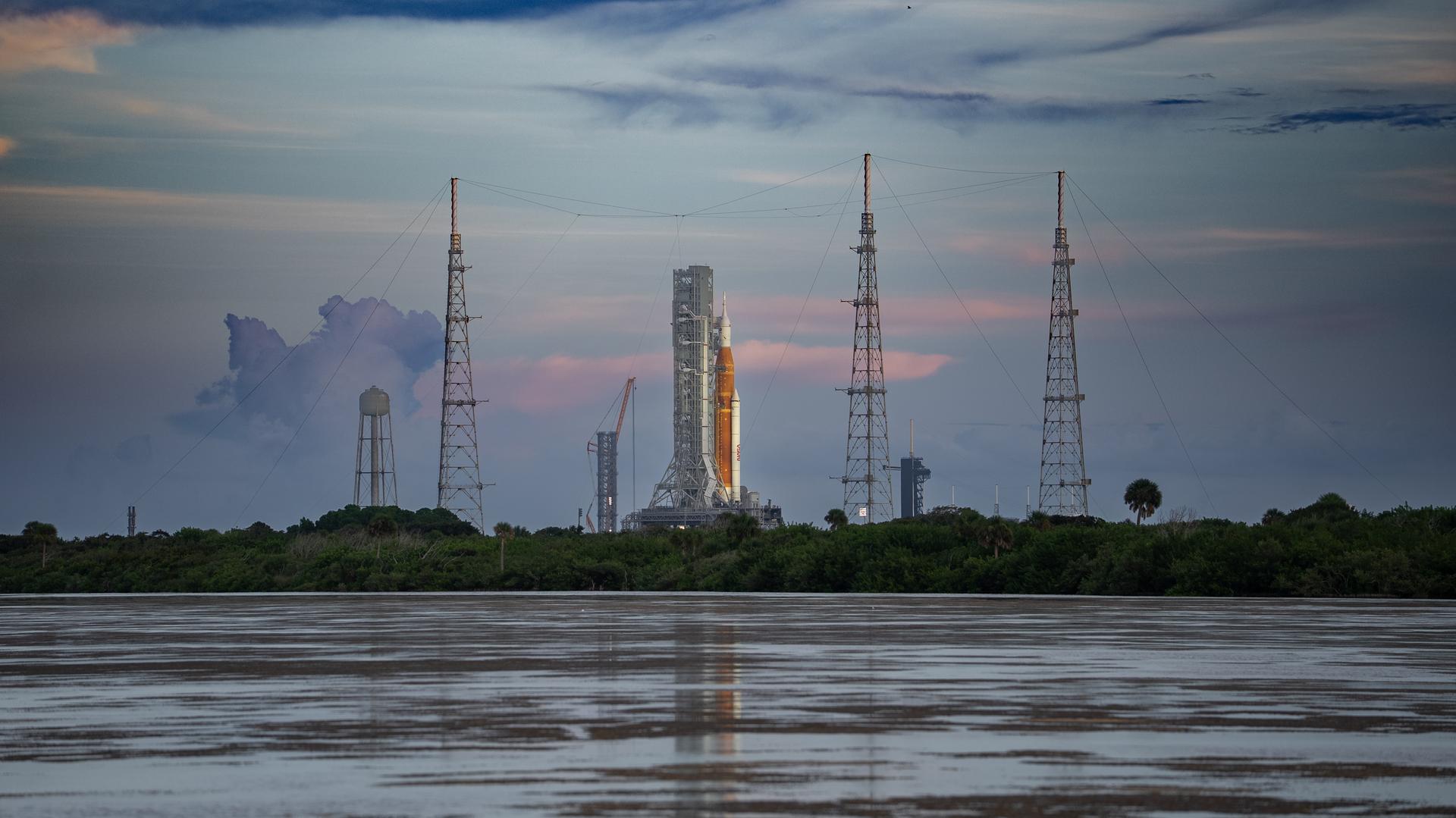
The Nancy Grace Roman Space Telescope is America's newest flagship space observatory — and the most powerful wide-field telescope ever built. It launched August 29, 2026 aboard a Falcon Heavy rocket from Kennedy Space Center in Florida, and it's now en route to the second Lagrange point (L2), the same cosmic parking spot as the James Webb Space Telescope, 1.5 million kilometres from Earth.
But unlike any telescope before it, the Roman telescope has a secret origin. Its 2.4-metre primary mirror — identical in size to Hubble's — wasn't built for science. It was built for surveillance.
Why does Roman have a spy satellite mirror?
In 2012, the National Reconnaissance Office — America's classified spy satellite agency — quietly told NASA it had two surplus space telescopes sitting in a warehouse. Both had 2.4-metre mirrors. Both had never been launched. Both were, by the NRO's own internal assessment, better than Hubble quality.
They were offering to give them away.
The NRO builds spy satellites to photograph Earth from orbit. The best ones use massive mirrors — the bigger the mirror, the sharper the image, the easier it is to distinguish a tank from a truck at 600 kilometres altitude. These mirrors were designed to look down. Roman will point one at the sky.
What will the Roman Space Telescope actually discover?
The mirror built to count enemy soldiers from orbit will now attempt to count planets around other stars. Roman is expected to discover roughly 100,000 new exoplanets — more than all previous missions combined — using gravitational microlensing, a technique that detects planets by the way they bend starlight.
For context: before 1995, humanity had confirmed zero exoplanets. Roman may find more in five years than we've confirmed across the last three decades of searching.
But exoplanets are only half the mission. Roman's other core objective is mapping dark energy — the mysterious force accelerating the expansion of the universe. Scientists currently have no idea what dark energy actually is. Roman will create the most detailed 3D map of large-scale cosmic structure ever made, surveying hundreds of millions of galaxies to understand why the universe is speeding up when physics says it should be slowing down.
Roman also carries something neither Hubble nor Webb has: a coronagraph — a device that blocks starlight to directly photograph the dim planets orbiting nearby stars. It's never been tested at this scale in space. If it works as designed, we'll see exoplanets the way we see Jupiter: as actual objects you can look at, not just statistical blips in a data set. Learn how telescopes work in the SkyLens explainer.
Who was Nancy Grace Roman?
Nancy Grace Roman (1925–2018) is the reason space telescopes exist at all. As NASA's first Chief of Astronomy in the 1960s, she championed the Hubble Space Telescope programme when almost no one in the agency believed it was worth funding. She built the scientific case, navigated the bureaucracy, and spent years arguing for a project most of her peers considered impossible.
She died in 2018, four years before James Webb launched. She never saw what she helped build from the beginning.
The telescope bearing her name was renamed after her by public vote in 2020. It launched yesterday.
How does Roman compare to Hubble and James Webb?
The Hubble Deep Field — the most famous image in astronomy — took 10 days of telescope time to capture a patch of sky smaller than a grain of sand held at arm's length. Roman can replicate the equivalent survey in about 60 days — of the entire sky.
Roman doesn't replace Hubble or Webb. It works alongside them. Webb stares deep at single targets in infrared. Hubble captures exquisite detail in visible light. Roman sweeps wide, cataloguing everything — the big picture no single telescope can see on its own.
Together, the three form something that didn't exist five years ago: a complete observational system. Point Webb at what Roman finds. Confirm with Hubble. Cross-reference with the 16,000+ satellites currently tracked live on SkyLens.
What happens next?
Roman will spend several months travelling to L2 and running instrument checks before capturing its first science images, expected sometime in 2027. Its five-year prime mission is designed to generate more astronomical data than all previous NASA missions combined.
The mirror built by a spy agency, pointed at the sky by scientists, named after a woman who refused to take no for an answer — it's now 1.5 million kilometres from Earth and accelerating.
It was built to watch us. Now it's watching for whatever is watching us back.
SkyLens editorial — live CelesTrak + NASA/JPL data (16106 objects)
Get the free Night Sky Field Guide
Spot the ISS, Starlink trains and more with the naked eye — plus occasional SkyLens updates.
🔒 No spam. Unsubscribe anytime.
Related stories