Space Exploration · 2026-08-15
The Last Human Left the Moon in 1972. NASA's New Boss Just Said He's 'Extremely Confident' the Next One Arrives in 2027.
The Initials Are Still There
Eugene Cernan knelt in the lunar dust on December 14, 1972. Before climbing into the lunar module for the last time, he scratched his daughter's initials into the surface — T-D-C. He told the world humans would be back within a decade.
He was wrong. For 55 years, those three letters have been sitting there, undisturbed. No wind. No rain. No footprints. Just silence, radiation, and the slow creep of cosmic rays erasing nothing at all.
That silence might finally end in 2027.
What NASA's Boss Actually Said
On August 14, 2026, NASA Administrator Jared Isaacman stood in front of cameras and declared he was "extremely confident" that Artemis III would launch next year. Not cautiously optimistic. Not guardedly hopeful. Extremely confident.
For context: NASA has been promising a return to the Moon for years. Timelines have slipped, stretched, and quietly shifted. So when the head of the agency drops those specific words — it's worth paying attention to what changed.
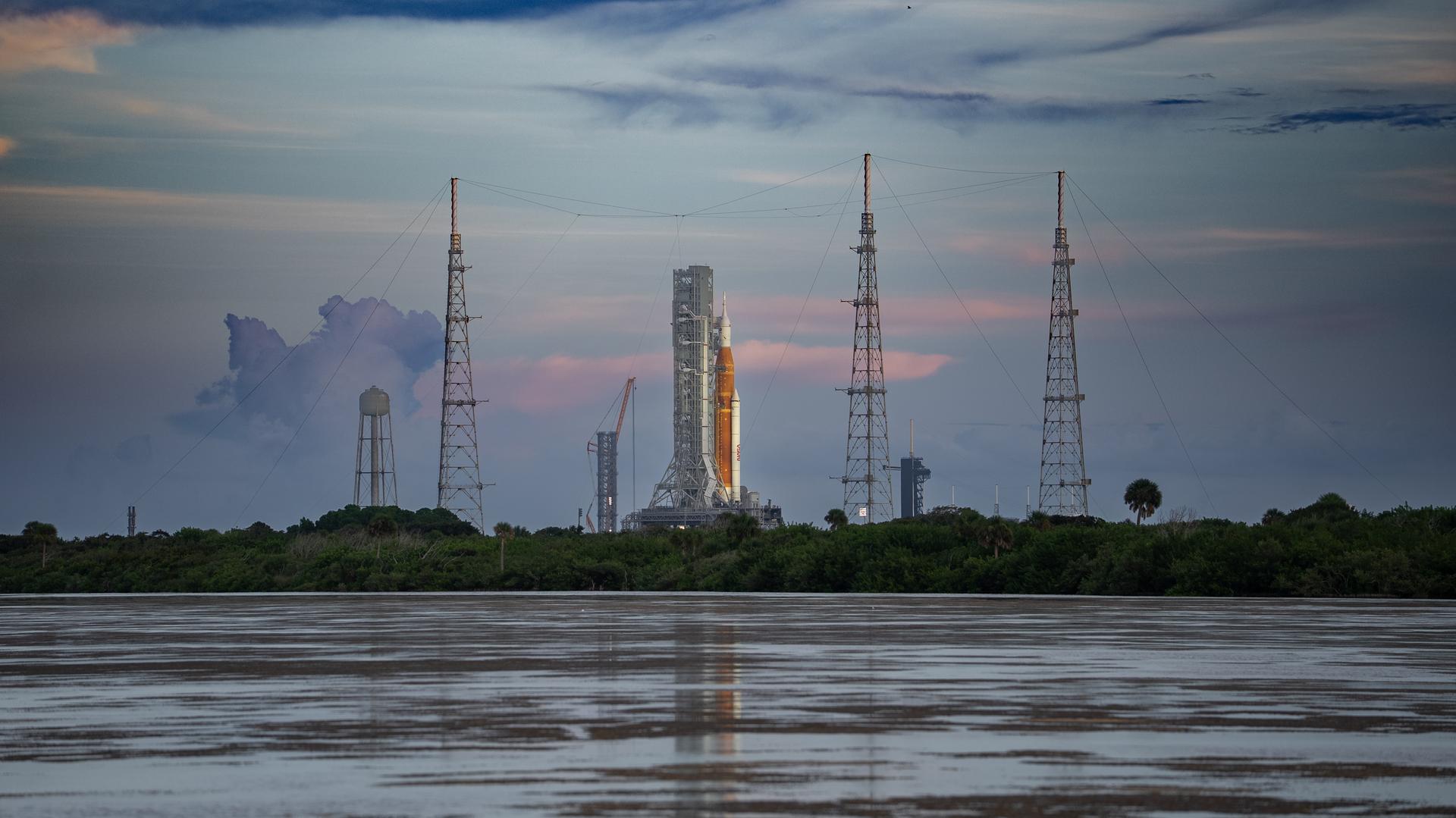
Here's what Artemis III actually involves: Orion, the deep-space capsule, launches on the massive SLS rocket and travels to lunar orbit. There, it attempts to rendezvous and dock with test versions of two competing human landing systems — one from SpaceX, one from Blue Origin. Before anyone descends to the surface, NASA needs to prove the whole stack can link up in the most hostile parking lot in the solar system.
Why the South Pole Changes Everything
Every Apollo mission landed near the equator. Flat ground. Known terrain. Manageable temperatures. The lunar south pole is different — and that's precisely the point.
The south pole sits in permanent shadow. Some craters there haven't seen a single photon of sunlight in 2 billion years. And in those frozen, lightless depths, scientists have confirmed what they long suspected: water ice.
Actual water. Just sitting there. Frozen into regolith that predates the dinosaurs.
That ice isn't just poetic. It's rocket fuel — literally. Split water into hydrogen and oxygen and you have propellant. Build a processing facility at the south pole and suddenly the Moon stops being just a destination. It becomes a refueling depot at the edge of everything we know. You stop hauling all your fuel from Earth's gravity well. You make it there — from a resource that's been waiting for two billion years.
China figured this out too. Their Chang'e program has been methodically mapping the south pole for years, and Chang'e 7 is already targeting that region. The race to claim that ice — and the strategic position it represents — is already underway. You can track China's growing satellite presence in real time on the SkyLens live tracker.
How cold is permanently shadowed crater floor at the lunar south pole?
Four Systems. One Moon. Zero Margin for Error.
Here's the part that doesn't get enough attention in the headline excitement.
For the first crewed lunar surface mission to work, you need the SLS rocket to perform flawlessly. Then Orion. Then SpaceX Starship — in a radically stripped-down configuration it has never flown before. Then Blue Origin's lander. And the entire stack has to successfully dock in lunar orbit, 384,000 kilometers from the nearest repair facility.
That's four complex vehicles, from three organizations, operating simultaneously in an environment where the communication lag alone runs over a second and evacuation isn't an option.
To be fair: NASA has done things that sounded impossible before. Apollo 11 landed two humans on the Moon with computers less powerful than the watch on your wrist. Engineers fixed the Apollo 13 carbon dioxide crisis using a sock, a binder cover, and duct tape. The agency's track record of threading needles in deep space is genuinely unmatched in human history.
But this time the stakes carry a geopolitical edge. If Artemis III slips again, it stops being a technical story and becomes a national credibility story, with China's timeline running parallel in the background.
The People Going — and Why History Will Remember This
When humans finally step onto the lunar south pole, they'll be entering terrain no member of our species has ever touched in all of recorded history.
Artemis is designed to land the first woman and the first person of color on the Moon. That's not a PR tagline — it's a documented, contractual mission parameter. The Artemis astronaut corps has been selected and named. These are real people who have spent years training for this specific environment, this specific mission profile, this specific destination.
The footprints they leave will sit at the edge of a crater that has been colder than the surface of Pluto since the Jurassic period. A place where Earth hangs in the black sky like a blue marble and the nearest human being is 384,000 kilometers away.
Should You Actually Believe the 2027 Date?
Honest answer: treat it as a serious target, not a guarantee.
Artemis I flew in November 2022 — uncrewed, successful, spectacular. Artemis II, the first crewed flyby around the Moon without landing, has been repeatedly rescheduled. Every delay compresses the chain downstream. Starship still needs to prove it can execute the specific lunar docking profile in this configuration. The 2027 date is ambitious by any reasonable engineering standard.
However — and this genuinely matters — Isaacman isn't a career bureaucrat managing optics. He's a private astronaut who completed a commercial spacewalk, stepped down from running a payment company to run NASA, and has been publicly vocal about moving faster than the agency historically has. "Extremely confident" from someone with that profile carries a different weight than the same phrase from someone hedging for job security.
The SpaceNews report also notes the statement came alongside an announcement about a NASA-supported private air and space show in November 2026 — suggesting the broader space program is in a momentum phase, not a defensive crouch. Read more about what's happening in the space industry on the SkyLens blog or check out our space explainers for the full Artemis context.
What Comes After the Docking Test
Assuming Artemis III succeeds in its docking mission, the architecture that follows is genuinely different from anything Apollo ever attempted. This isn't a flag-and-footprints program.
The plan calls for a Lunar Gateway — a small space station in lunar orbit — to serve as a permanent waypoint. Regular crew rotations. A surface base camp near the south pole. Eventually, the ice gets processed into propellant. Spacecraft that launched from Earth refuel at the Moon and push outward to Mars carrying a fraction of the propellant they'd otherwise need.
The Moon becomes the gas station at the edge of the solar system. Not a destination. A departure point.
All of that depends on whether a rocket can successfully dock with a lander in lunar orbit sometime next year.
Cernan's initials are still there. The surface of the Moon doesn't erase anything. Neither, it turns out, does 55 years of waiting.
SkyLens editorial — live CelesTrak + NASA/JPL data (16106 objects)
Get the free Night Sky Field Guide
Spot the ISS, Starlink trains and more with the naked eye — plus occasional SkyLens updates.
🔒 No spam. Unsubscribe anytime.
Related stories