Space Exploration · 2026-08-11
Jupiter's Moon Has an Ocean Bigger Than Every Sea on Earth. A Spacecraft Left to Find Out If It's Empty — and Arrives in 2030.
The ocean nobody was looking for
Under 30 kilometres of solid ice, on a moon orbiting Jupiter, there is an ocean. It contains twice as much liquid water as every sea, lake, and river on Earth combined. It has been liquid for over a billion years. And in 2030, a spacecraft will fly 25 kilometres above it — close enough to taste what's inside.
In 1995, NASA's Galileo spacecraft slipped into orbit around Jupiter. Scientists were there for the planet. What they found instead was one of its moons — a world barely the size of our Moon — hiding something nobody expected. A global ocean. Beneath a shell of ice. Warm enough to stay liquid. Chemically active. And possibly, just possibly, not empty.
That last number. Earth's deepest point — the Mariana Trench — is 11 kilometres. Europa's ocean may be nine times deeper. It is, by volume, the largest body of liquid water confirmed in the solar system. And it is not on Earth.
Why the ocean doesn't freeze
Jupiter is enormous. Four times the diameter of Earth. More than 300 times the mass. Its gravity is so powerful that it kneads Europa like dough — stretching and squeezing it as the moon orbits, generating heat through friction deep in the rock. That heat keeps the ocean liquid. It's called tidal heating. And it means Europa's interior is geologically active.
That matters because of what we found at the bottom of Earth's own oceans in 1977. Scientists sent a submersible to the Galapagos Rift, 2.5 kilometres below the Pacific surface where no sunlight has ever reached. They found ecosystems. Tube worms two metres tall. Crabs. Shrimp. Entire communities of life clustered around hydrothermal vents — fissures in the seafloor where superheated water pours out, loaded with chemical energy.
No photosynthesis. No sunlight. Just water, heat, and chemistry. Life found a way anyway.
Europa has tidal heating. Europa has a rocky seafloor beneath its ocean. Europa has liquid water for billions of years. It checks the same boxes that allowed life to appear at Earth's deep-sea vents. That is not proof of life. But it is why scientists are no longer dismissing the question.
The plumes that changed everything
Between 2012 and 2016, the Hubble Space Telescope spotted something that stopped researchers mid-sentence. Water vapour — erupting from Europa's south pole. Plumes, shooting 200 kilometres into space. Like geysers, but on a moon 628 million kilometres from Earth.
That's the ocean reaching out. Offering samples. Without anyone having to drill through 30 kilometres of ice to get them.
The spacecraft already on its way
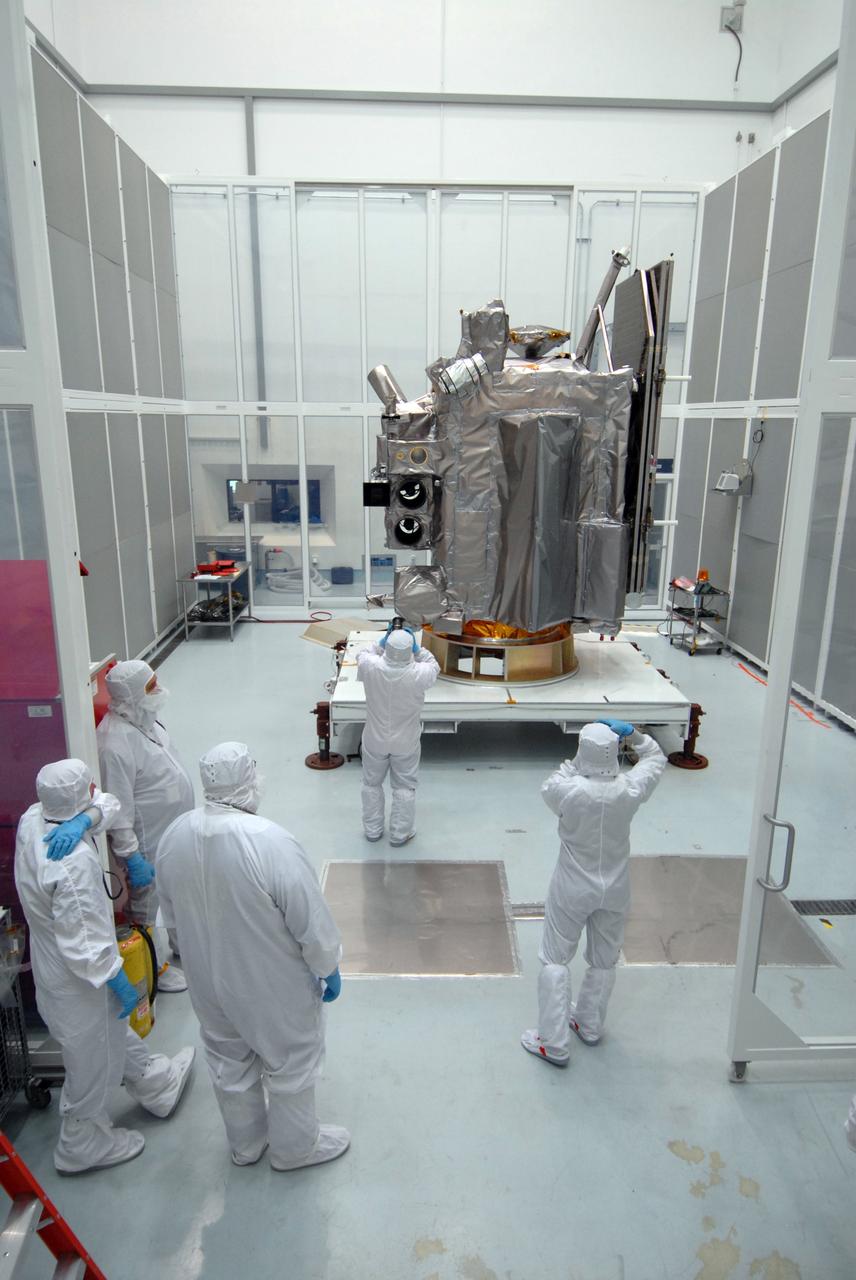
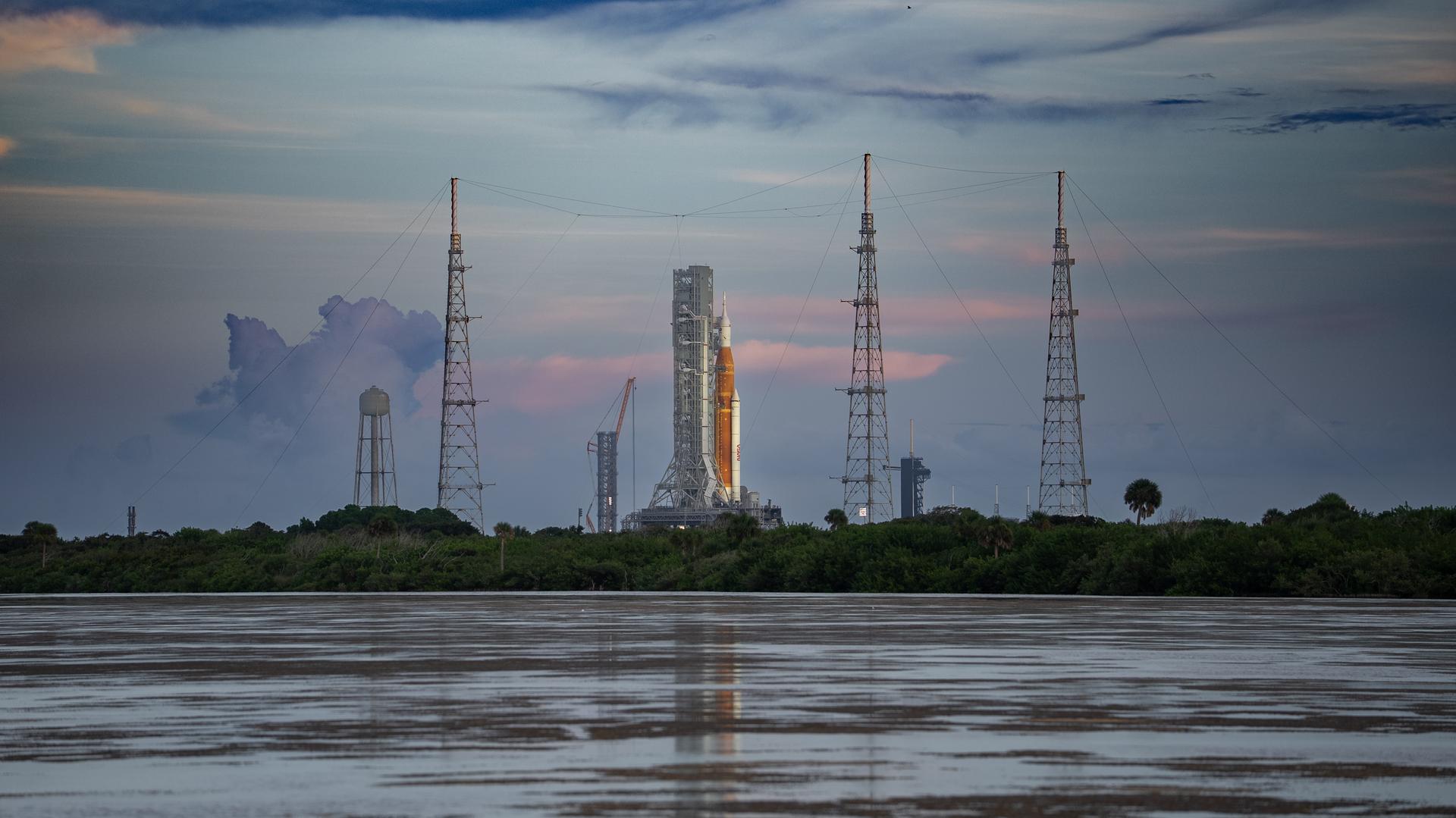
On October 14, 2024, a Falcon Heavy rocket lifted off from Kennedy Space Center. Onboard: NASA's Europa Clipper. The largest spacecraft NASA has ever built for a planetary science mission. Solar panels the size of a semi-truck. Nine science instruments capable of detecting organic molecules, measuring magnetic fields, mapping the ice shell thickness, and sniffing for water vapour.
It is in deep space right now, using gravity assists from Mars and Earth to build speed before heading into the outer solar system. You can follow it on the SkyLens live tracker alongside the 16,000 other objects currently in orbit around Earth.
Europa Clipper arrives at Jupiter in 2030. It will make 49 close flybys of Europa — some at just 25 kilometres above the surface. If there are active plumes, it will fly directly through them. It will measure what comes out.
Europa isn't the only one
While astronomers were watching Europa, NASA's Cassini spacecraft was doing something similar at Saturn — and in 2005, it found the same story on a different moon.
Enceladus. Barely 500 kilometres across. Brilliant white. Covered in fresh ice. Geysers erupting continuously from its south pole, feeding material directly into Saturn's rings. Cassini flew through those plumes seventeen times.
What it found has been called the most significant astrobiological result of the century:
- Water vapour — confirming a global liquid ocean beneath the ice
- Molecular hydrogen — indicating active hydrothermal reactions between hot water and rock at the seafloor
- Complex organic molecules — carbon-based compounds, the chemical building blocks biology requires
- Silica nanoparticles — formed only when water above 90°C reacts with rock under pressure
To be precise: none of this confirms life. Organic molecules form through non-biological processes. Hydrogen can be produced abiotically. Every scientist involved is careful to say this. But it means Enceladus has a warm, chemically rich ocean in contact with a rocky seafloor — the exact environment that hosted the appearance of life on Earth. That is worth investigating. That is why it is on the shortlist.
Galileo Galilei discovers Europa with a primitive telescope — a faint dot beside Jupiter
Scientists find entire ecosystems at Earth's hydrothermal vents — no sunlight needed
Galileo spacecraft confirms a subsurface ocean at Europa through magnetic and gravitational data
Cassini discovers active geysers at Enceladus — later confirmed to contain organics and hydrothermal signatures
Hubble detects water vapour plumes erupting 200 km above Europa's south pole
Europa Clipper launches — NASA's largest planetary science spacecraft, built for one question
Europa Clipper arrives at Jupiter. 49 flybys. Closest approach: 25 km. We find out what the ocean contains.
What changes if the answer is yes
This is the part that doesn't get discussed enough. If Europa Clipper detects signatures consistent with biology — specific amino acids, molecular ratios that don't occur without metabolism, something that was clearly made rather than formed — the scientific process that follows is long and demanding. A single result from a single instrument is not enough. Independent verification takes years. Possibly a decade or more.
But if it eventually holds: the implication is almost too large to process. Life arising independently, in the same solar system, in conditions radically different from our own — that would mean life is not a fluke. It would mean the universe is almost certainly full of it. It would rewrite every philosophical, scientific, and cultural framework humans have built around the question of what we are and whether we're alone.
That's a big sentence. It's also the honest one.
For context on what other unexplained phenomena scientists and governments are currently investigating, the PURSUE release files are worth your time. And for the full archive of space science stories we've covered, the SkyLens blog has everything in one place.
Four centuries to get here
Galileo Galilei looked through a glass tube in 1610 and spotted four small dots beside Jupiter. He had no idea one of them held an ocean. He was just looking at the sky because it was interesting.
Four hundred and sixteen years later, a spacecraft is in transit to that dot. Every instrument on board was chosen to answer one question. Every flyby trajectory was calculated for this. This is the most focused search for extraterrestrial life humanity has ever mounted — and it's already underway.
We find out in 2030. The spacecraft is moving. There is nothing to do now but pay attention.
SkyLens editorial — live CelesTrak + NASA/JPL data (16106 objects)
Get the free Night Sky Field Guide
Spot the ISS, Starlink trains and more with the naked eye — plus occasional SkyLens updates.
🔒 No spam. Unsubscribe anytime.
Related stories