Mars Exploration · 2026-10-05
Curiosity Rover: The Machine Designed for 2 Years on Mars — Still Making Discoveries 14 Years Later
A nuclear-powered robot has been driving alone across Mars since 2012. Completely alone. No crew. No maintenance bay. No one to call if a wheel breaks. Its mission was supposed to last two years.
We're in year fourteen. And last week, it arrived at a location scientists have been eyeing from orbit for over a decade.
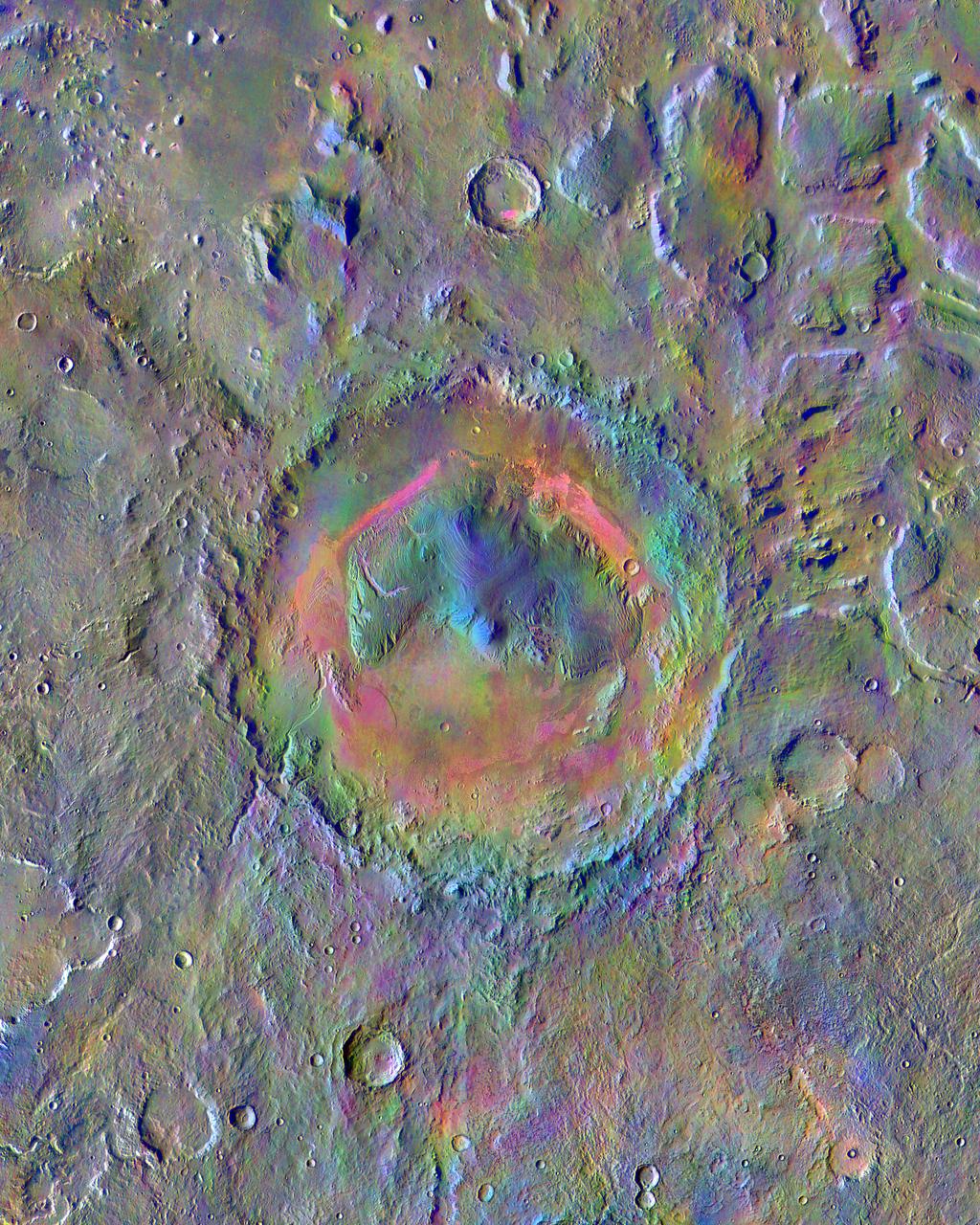
NASA's Curiosity rover is currently parked at a site called Cache Creek inside Gale Crater — an ancient lakebed that may have preserved chemical signatures of a habitable world, frozen in stone for three billion years. The science team calls this moment "cashing in." After years of driving across broken terrain, dodging sand dunes and mechanical failure, the rover has finally arrived at a place that might tell us something genuinely new about Mars.
What is the Curiosity rover doing on Mars right now?
Curiosity landed in Gale Crater on August 5, 2012, in a sequence so extreme that NASA's own engineers called it "seven minutes of terror." A capsule plummeted into the Martian atmosphere at 20,000 km/h. A parachute slowed it. Then a rocket-powered sky crane lowered the one-tonne rover on cables — hovering on jets above the surface — before flying away and crashing at a safe distance. Nobody knew if it would work until it did.
The mission goal was straightforward but profound: determine whether Mars was ever habitable. Not whether life existed — that's a harder question, requiring different tools. Just whether conditions suitable for life ever existed. Liquid water. Organic chemistry. Stable environments over long timescales.
Gale Crater is 154 km wide — roughly the distance from London to Oxford. Billions of years ago, it held a deep lake. In the centre of that ancient lake sits what's now called Mount Sharp, a layered mountain 5.5 km tall. Each layer is a chapter of Martian history, compressed into rock. Curiosity has been slowly climbing it ever since landing, reading those chapters one drill sample at a time.
What did Curiosity find at Cache Creek on Mars?
Cache Creek was circled on mission planners' maps before Curiosity even launched. Orbital data from the Mars Reconnaissance Orbiter showed unusual mineral signatures there — layered sedimentary rocks suggesting a pivotal period in Mars's wet history, when Gale Crater's ancient lake was slowly evaporating and leaving concentrated deposits behind.
Think about what happens when a lake dries up on Earth: everything dissolved in the water gets left behind. Salts, minerals, sometimes organic compounds. The rock record becomes a preserved snapshot of what the water once contained. At Cache Creek, scientists believe they're looking at exactly that — a three-billion-year-old chemical archive of an ancient Martian lake, frozen solid and waiting for a drill.
Science team member Lucy Thompson, Senior Research Scientist at the University of New Brunswick, described the site as matching what the team had predicted from orbit years before landing. The rover is now parked directly on target, drilling samples. Results are pending — but the setup is the best in the mission's history.
How long was Curiosity designed to last?
Two years. That was the original plan, baked into every engineering review and budget document. Two years of roving, drilling, analysing. Then whatever happened, happened.
NASA engineers always build margins — they have to, because sending a repair crew is not an option. But nobody was designing for a 14-year mission. The aluminium wheels developed holes and cracks years ago from sharp Martian rocks that weren't adequately modelled in pre-launch testing. Software patches were written to make the rover step more carefully, like a person nursing a sore foot. The drill mechanism failed, then was resurrected via a workaround that changed how it operates at a fundamental level. Three onboard computers have experienced glitches. And yet: every morning, the science team on Earth sends a new set of commands across 200 million kilometres of space — at the speed of light, taking up to 20 minutes one way — and the rover executes them.
The secret is nuclear power. Unlike the solar-powered Spirit and Opportunity rovers — Opportunity died in 2018 when a dust storm blackened its solar panels for weeks — Curiosity runs on a radioisotope thermoelectric generator (RTG). A chunk of plutonium-238, decaying slowly, generating heat, converted into electricity. Dust storms don't matter. Martian winter darkness doesn't matter. The RTG just keeps generating power, year after year, slowly fading but never switching off.
What has Curiosity discovered in 14 years on Mars?
The headline discoveries aren't sensational in a tabloid way. They're something rarer: actually important.
Ancient organic molecules. In 2018, Curiosity drilled into mudstone at the Murray Formation and extracted complex organic molecules — carbon-based chemistry associated with life as we know it. This does not prove life existed on Mars. Organic chemistry happens without biology all the time. But finding it in a three-billion-year-old rock from another planet, preserved against all odds, was a landmark result.
Methane pulses. Curiosity has repeatedly detected spikes of methane in the Martian atmosphere. On Earth, the vast majority of atmospheric methane is biological. On Mars, the source is completely unknown. The spikes appear to vary with the seasons, suggesting an active subsurface source of some kind. NASA's official position: the methane pulses are real, confirmed by multiple measurements. The cause is unknown. That's a careful, honest statement — and it should make you curious.
A confirmed habitable ancient environment. Every drill sample from the lake sediment layers confirms the same thing: Gale Crater's ancient lake had the right temperature, the right pH, and the right mineral chemistry to support microbial life. If you could go back three billion years and drop Earth bacteria into that lake, the science says they might have survived. That conclusion has held up across hundreds of samples.
Sky crane touchdown in Gale Crater. Seven minutes of terror. One perfect landing.
Drill samples from Yellowknife Bay confirm ancient lake conditions suitable for microbial life.
Complex carbon-based molecules found in 3-billion-year-old mudstone. Not proof of life — but the chemistry is there.
Seasonal methane spikes detected repeatedly. Source unidentified. Officially confirmed, officially unexplained.
Curiosity reaches the transition zone marking when Mars dried out. A record of planetary death, written in rock.
Rover arrives at pre-identified ancient lakebed sediment target. Drilling under way. Results pending.
Are there two active rovers on Mars at the same time?
Yes — and they're not even close to each other.
Curiosity is in Gale Crater, studying ancient habitability by reading the rock record of a dead lake. Perseverance is in Jezero Crater, 3,700 km away, doing something slightly different: actively searching for signs of past microbial biosignatures, and collecting sealed rock cores to be returned to Earth on a future mission. Perseverance also carried the Ingenuity helicopter, which became the first powered flight on another planet in April 2021 — a Wright Brothers moment on Mars.
Two robots. Two craters. Two complementary science programmes. Both currently active. Mars has never been this well-studied from the surface. You can follow both missions — and every other Earth-orbiting spacecraft — on the SkyLens live tracker.
Does this mean Mars had life?
This is the question everyone wants answered. The honest answer is: we don't know yet.
What we know for certain: ancient Mars had liquid water for hundreds of millions of years, organic chemistry, the right mineral environment, and energy sources that life on Earth actually uses. The conditions for life were present. Whether life actually arose from those conditions is a separate question entirely — and one that can't be answered by geological chemistry alone, no matter how good the rover.
To answer it definitively, you'd need one of three things: a fossil in a Mars rock, detectable biological molecules in the Martian subsurface, or returned samples analysed in Earth laboratories with instruments far more sensitive than anything Curiosity can carry. Mars Sample Return — currently the most ambitious item on NASA's long-range mission list — aims to do exactly that. Perseverance is already sealing rock cores into titanium tubes and leaving them on the surface for a future retrieval mission.
If Cache Creek delivers the right kind of chemistry to Curiosity's drill, those rocks might become priority targets for any future sample return effort. That's not guaranteed. But it's why the science team waited years to get there.
Meanwhile, a nuclear-powered machine the size of an SUV continues driving slowly across a rust-red desert, 200 million kilometres from the nearest human, sending back data that no one alive in 2012 was certain it would ever collect. It reached Cache Creek last week. It found what scientists predicted. Now it drills.
More deep-dives on space science and exploration every day on the SkyLens blog.
SkyLens editorial — live CelesTrak + NASA/JPL data (15968 objects)
Related stories