Science · 2026-08-31
Life in Space: What Six Months on the ISS Actually Does to a Human Body
Life in space is nothing like the movies. Right now, seven humans are hurtling through the void at 28,000 kilometres per hour inside a pressurised aluminium tube the size of a six-bedroom house. They see the sun rise 16 times a day. Their faces look subtly wrong — puffier than their ID photos, slightly glazed. Their spines are quietly stretching. And their muscles, deprived of gravity's constant resistance, are beginning to eat themselves.
After six months aboard the International Space Station, an astronaut's body is measurably, demonstrably different. Some of the changes reverse. Some take years to undo. And one of them — affecting vision — shocked researchers enough to reshape how space medicine thinks about getting humans to Mars.
What actually happens to the human body in space?
Within the first 48 hours of arriving in microgravity, two things happen at once. First: the muscles start wasting. Without gravity constantly pulling against every movement, muscle fibres that spent decades fighting to keep you upright simply stop. The body reads no mechanical load. It begins breaking down tissue it no longer thinks it needs. Not slowly. Fast — within two days, the process has already begun in the legs, back, and core.
Second: about 2 litres of fluid shift upward through the body. On Earth, gravity drags blood and lymph fluid toward the feet. In orbit, there is no down. All that fluid redistributes toward the torso and head. Astronauts look puffy around the face within hours of launch — their sinuses become permanently congested, like a mild head cold that never clears. Food tastes blander up there than it did on Earth. That's not the freeze-dried packaging. It's the fluid muffling their taste receptors.
How much bone do astronauts lose in space?
Bone loss in space runs at roughly 1–2% per month in the load-bearing skeleton — hips, spine, femurs. For comparison: the most aggressive osteoporosis in elderly patients on Earth progresses at roughly 1–2% per year. Astronauts experience the rough equivalent of a decade of skeletal ageing in a single six-month mission.
Exercise slows it but cannot stop it. NASA mandates at least two hours of physical activity every single day — resistance machines with bungee cords that mimic the feel of lifting weight, treadmills with harnesses that push the astronaut's feet against the belt. Miss a session, and the compounding cost gets steeper. The workout isn't optional. It's maintenance just to arrive home capable of standing upright.
Why do astronauts' eyes change in space?
This one genuinely blindsided the research community. It has a name — VIIP, Visual Impairment and Intracranial Pressure syndrome — and more than half of astronauts who've completed long-duration missions aboard the ISS return with measurable changes to their vision. Some need reading glasses for the first time in their lives. Some have subtle flattening at the back of the eyeball. A handful have optic nerve swelling that persists for months after landing.
The culprit is the same fluid shift that makes their faces puffy. With excess fluid pressing against the skull, intracranial pressure rises — and the optic nerve, which runs directly into the brain, takes the load. Scientists are actively testing countermeasures: negative-pressure suits that draw fluid back toward the legs, altered sleeping positions, modified exercise protocols. There is no definitive fix yet. This is still an open medical problem, and it's one of the reasons scientists studying deep-space missions are genuinely worried about a Mars crew's vision state on arrival.
How do astronauts sleep on the ISS?
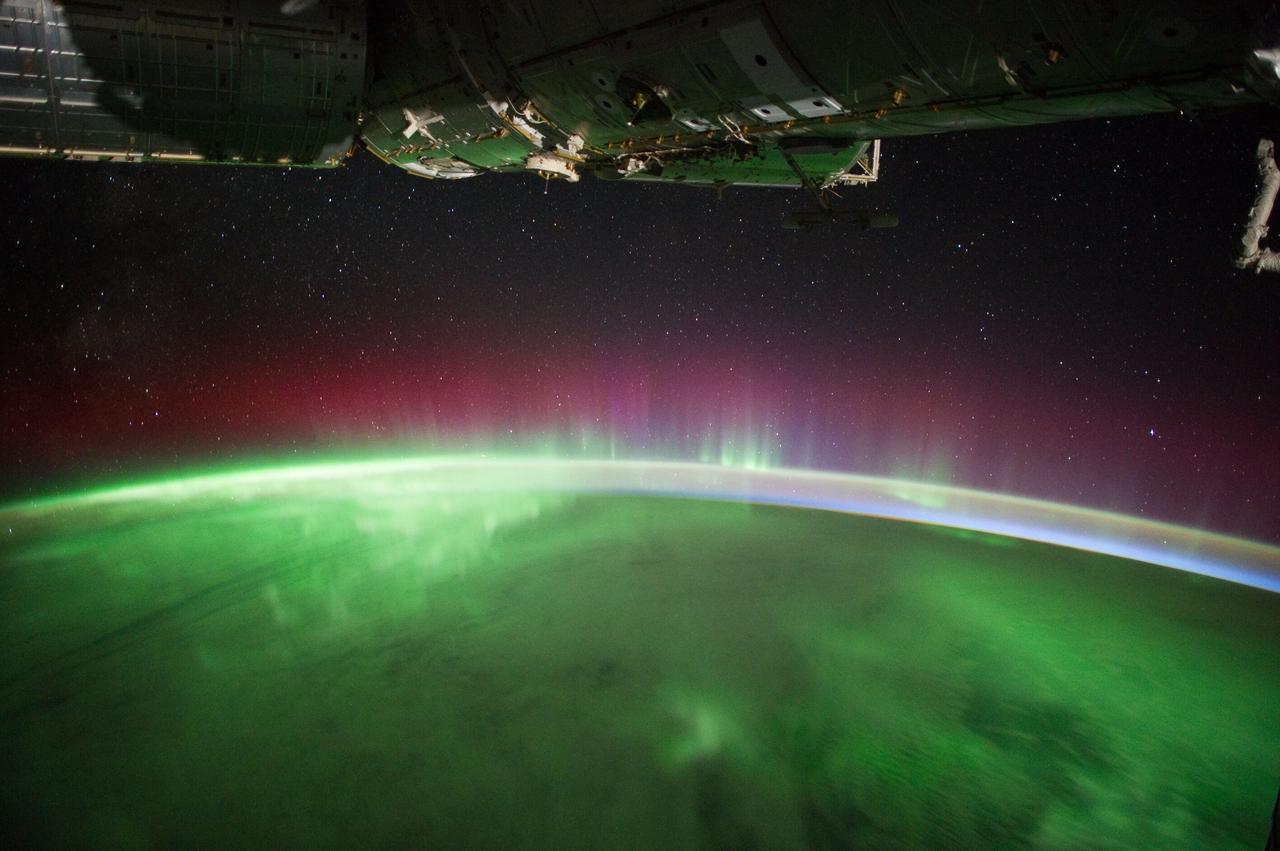
The station circles Earth every 92 minutes. That means 16 full sunrise-sunset cycles in every 24-hour day. The human body runs on light cues — circadian rhythms calibrated across millions of years to exactly one sunrise and one sunset. Expose it to 16 cycles a day and the system starts to glitch.
Astronauts sleep in individual pods roughly the size of a phone booth, zipped into sleeping bags anchored to the wall to stop them floating into equipment. The station runs on UTC, and artificial lighting is programmed to follow a shifted day-night schedule. It helps. But sleep disruption has been a documented, persistent problem since the first long-duration ISS crew arrived in 2000 — sleep aids appear in crew medication logs with uncomfortable regularity.
What did the NASA twin study reveal about life in space?
In 2015, astronaut Scott Kelly spent 340 consecutive days aboard the ISS while his identical twin brother Mark — also a former astronaut — stayed on Earth as a living genetic control. When Scott returned, scientists compared the brothers at the molecular level. The results ran for years.
Scott's telomeres — the protective caps on chromosomes that shorten as we age — had temporarily lengthened in space. Researchers think elevated cellular stress triggers a protective response. More unexpectedly, around 7% of Scott's genes showed expression changes that hadn't fully reverted to baseline two years after landing. His gut microbiome had shifted. Subtle cognitive test score declines showed up. His carotid artery walls had thickened.
Scott Kelly didn't transform into a different person. But 340 days in orbit had altered his biology at a level that will take researchers years — possibly decades — to fully map. Read more stories about what spaceflight is teaching scientists about human biology.
What happens when astronauts come back to Earth?
After six months in orbit, returning crew members are lifted out of their Soyuz capsule. They cannot stand. Their vestibular system — the inner-ear balance mechanism — has spent six months recalibrating for a world without gravity, and now it has no idea what's happening. The planet feels violent. A 500 ml water bottle feels like it weighs two kilograms. Their legs, the muscles most devastated by disuse, shake under a load they spent their entire lives carrying without thought.
The recovery road is long. Bone density takes up to two years to restore in the worst-affected areas. Vision in VIIP cases can take months to stabilise and may not fully normalise. The cognitive dulling — the slight blunting of reaction time and processing speed that long-duration crews consistently report — fades over weeks of careful re-adaptation.
This is the part that worries planetary scientists most. A Mars mission takes 7–9 months each way. By the time a crew arrives at Mars, they'll be at their most physically degraded state of the journey — and then they'll need to do complex, physical surface science. On a planet with only 38% of Earth's gravity. With no emergency return option if something goes wrong.
The current ISS crew is up there right now — orbiting once every 92 minutes, doing something no human body was built to do, and doing it anyway. Watch them pass overhead on the SkyLens live tracker and think about what that dot in the sky is actually doing to the people inside it.
SkyLens editorial — live CelesTrak + NASA/JPL data (16106 objects)
Related stories