Mars · 2026-07-31
NASA's Rover Has Been Drilling Into 3-Billion-Year-Old Martian Lake Beds. The Chemistry It Found Could Change the Definition of Alone.
Three billion years ago, a lake sat inside a crater on Mars.
It had a river delta. It had shorelines. It had sediment layers that took millions of years to build up — the same kind of sediment layers on Earth that paleontologists tear apart looking for ancient life.
Then the water vanished. The atmosphere bled away. The planet went cold and dead.
Today, a nuclear-powered car-sized laboratory is drilling into the floor of that ancient lake, one centimeter at a time. What it's pulling out of the rock isn't just dust.
It's the chemical fingerprint of something that might once have been alive.
The Lake That Shouldn't Have Existed
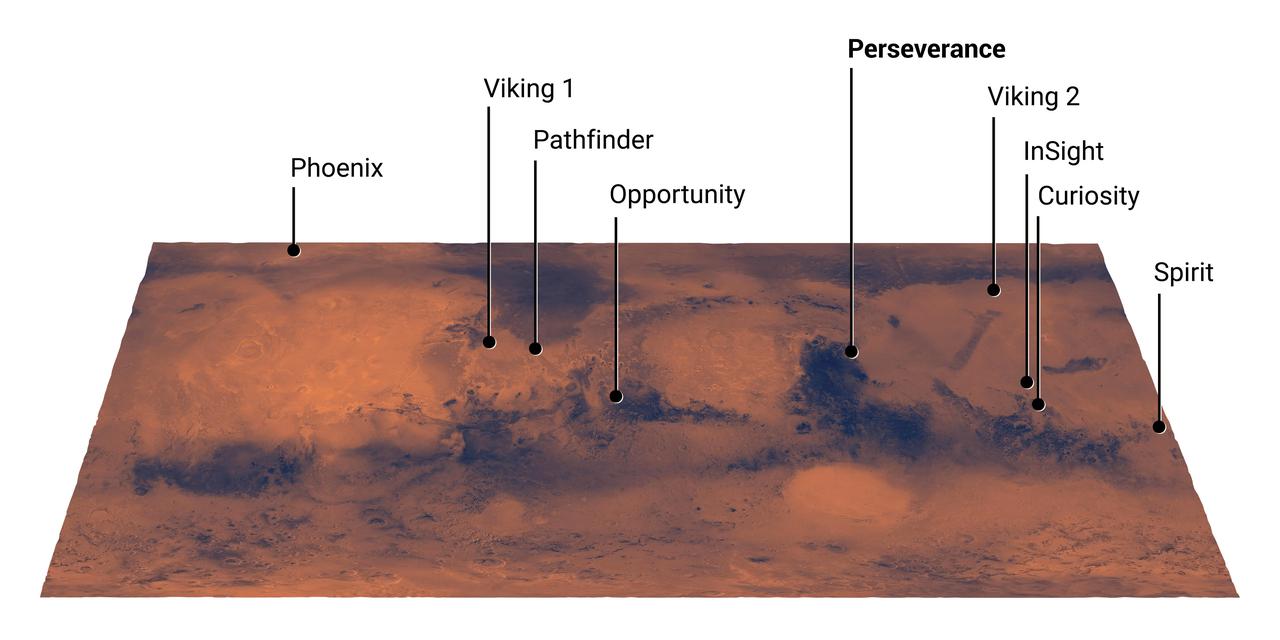
Jezero Crater is a 45-kilometer-wide scar on the Martian surface that scientists studied from orbit for decades. But when NASA's Perseverance rover touched down there on February 18, 2021, it confirmed something extraordinary: this wasn't just a crater. It was a real lake, fed by a real river, with a genuine delta fan still visible from space.
On Earth, river deltas are where paleontologists find ancient life. Sediment layers lock in whatever was dissolved in the water: minerals, chemicals — organisms. Jezero's delta formed under those exact same conditions.
This matters because life on Earth didn't emerge overnight. It needed time. Stability. Liquid water. Jezero had all three — for potentially millions of years.
What Came Out of the Rock
Perseverance carries a drill on the end of a robotic arm. Each time it finds an interesting target, it bores a core the width of a pencil — about 6 centimeters long — seals it in a titanium tube, and caches it on the surface for a future retrieval mission.
By now, the rover has cached over two dozen of these samples. Sealed. Pristine. Untouched. Waiting.
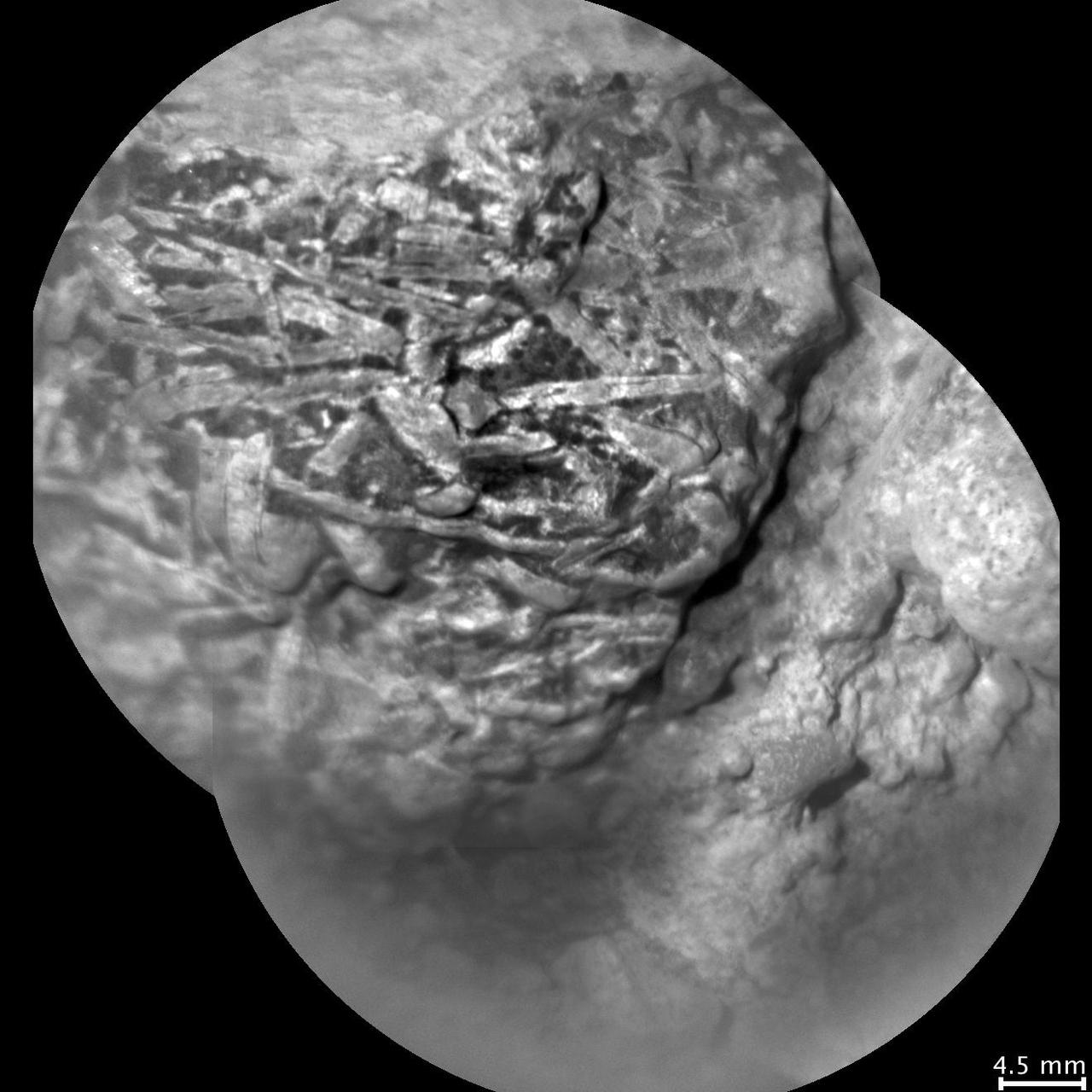
But before caching them, the rover analyzed what was inside — and in the sedimentary rocks near the ancient delta, instruments detected organic molecules.
Organic molecules are carbon-based compounds — the same category that includes DNA, proteins, and every biological structure inside every living thing. On Earth, when we find organics in ancient sedimentary rock, the first question is always: did something make this?
Here's where honesty matters: organics can form without life. Meteorites carry them. Volcanic chemistry can produce them. Finding organic molecules does not prove life existed in Jezero.
But it's exactly what you'd expect to find if life had been there. The chemistry is right. The environment was right. Whether something actually lived there — that answer is sealed in those titanium tubes.
The Helicopter That Was Never Supposed to Survive
Perseverance didn't arrive alone.
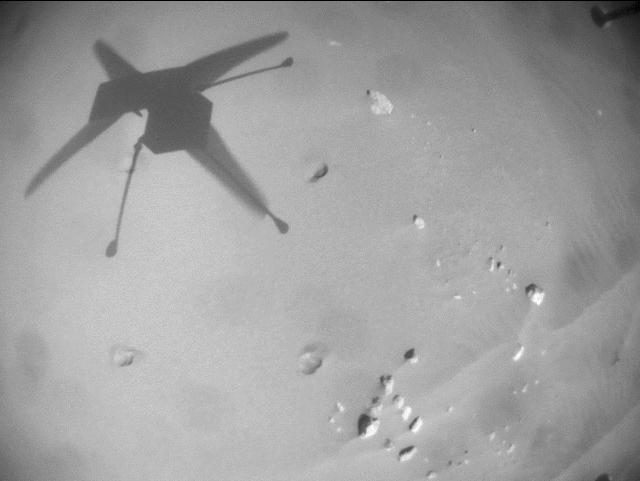
Tucked under its belly was a small helicopter — a technology experiment called Ingenuity. It was never supposed to be more than a 5-flight proof of concept. Mars's atmosphere is so thin (about 1% of Earth's density) that flying was considered almost impossible. The test window was 30 days.
Ingenuity flew 72 times.
It flew over terrain the rover couldn't cross. It scouted paths from above. It photographed rock formations from angles no wheeled vehicle could reach. It became the first powered, controlled aircraft to fly on another world.
In January 2024, it landed and broke a rotor blade. Contact was lost. It sits somewhere in Jezero right now, silent, exactly where it fell — a $85 million helicopter that outlived its own obituary by three years.
But it changed everything. Future Mars missions are already planning larger aerial vehicles. One small foam-and-wire experiment started the age of Martian aviation.
The Crisis Nobody's Talking About
Here's where the story turns uncomfortable.
Those 23+ rock samples sitting on Mars need a mission to come get them. That mission — Mars Sample Return — was supposed to launch a lander, collect the cached tubes, and rocket them back to Earth by the early 2030s. It was supposed to be the most scientifically important mission in the history of planetary science.
It's in serious trouble.
NASA's own independent review board found the original plan unworkable. Costs ballooned past $10 billion. The projected launch date slipped from 2028 toward 2040. Congress started asking hard questions about whether it would happen at all.
NASA is redesigning the mission — possibly with ESA partnership, possibly with commercial elements. Several private companies have proposed alternative retrieval architectures. Discussions are ongoing.
The samples are there. The answers may be inside them. The only problem is getting them home — and right now, there is no fully funded, approved, finalized plan to do it.
What Perseverance Proved We Didn't Know
Before this mission, scientists suspected Mars had water in its past — but "water" can mean many things. A flash flood. A shallow seasonal thaw. Something brief and hostile.
Jezero proved something different: this was a stable lake, fed by rivers, for potentially millions of years. Not a puddle. A proper ancient lake with the same sedimentary conditions that preserved early life on Earth.
Perseverance also quietly achieved something that matters enormously for future human exploration. An experiment called MOXIE spent two years making oxygen directly from Martian carbon dioxide. Not much — about 122 grams total. But enough to prove it works.
Future crewed missions to Mars won't need to haul breathing air all the way from Earth. They'll make it on the surface, from the Martian sky.
And there's one more thing. The ancient rocks of Jezero carry remnant magnetism — the fossil signature of Mars's long-dead magnetic field. Earth still has this field today. It deflects the solar wind and keeps our atmosphere in place.
Mars lost its magnetic field about 4 billion years ago. Its atmosphere stripped away. Its oceans dried. Whatever was there — if anything was there — either died or went underground.
Scientists haven't ruled out underground life. Not even close. You can read more about what drives the search at the SkyLens learning hub.
The Clock Is Ticking
Perseverance is still active. Still drilling. Still moving across Jezero, collecting samples, reading chemistry in rocks that haven't been touched in three billion years.
But it isn't invincible. Its drill. Its wheels. Its power systems. All of them will eventually fail. Every extra day Perseverance keeps operating is another day those sample tubes stay cached and waiting — and another day we still don't have a firm plan to retrieve them.
Somewhere in those titanium tubes is either the greatest scientific discovery in human history, or the confirmation that Mars was always empty. We won't know until we crack them open in a clean room on Earth.
The hard part was never the science. It was never the engineering. The hard part — the part that might actually delay the answer to humanity's oldest question — is the budget meeting.
For more stories about what we're finding across the solar system, explore the full SkyLens archive.
SkyLens editorial — live CelesTrak + NASA/JPL data (16114 objects)
Related stories