Defense & National Security · 2026-07-04
The Satellites Watching for Nuclear Missile Launches Are Behind Schedule and Over Budget. Now the Audit Is Public.
Right now, 36,000 kilometers above Earth, a constellation of satellites is staring down at every square kilometer of the planet — watching for the heat signature of a ballistic missile launch. They've been doing it for decades. And a federal watchdog just released a report saying the program replacing them is running over budget, behind schedule, and critically short on the engineers who know how to build them.
What These Satellites Actually Do
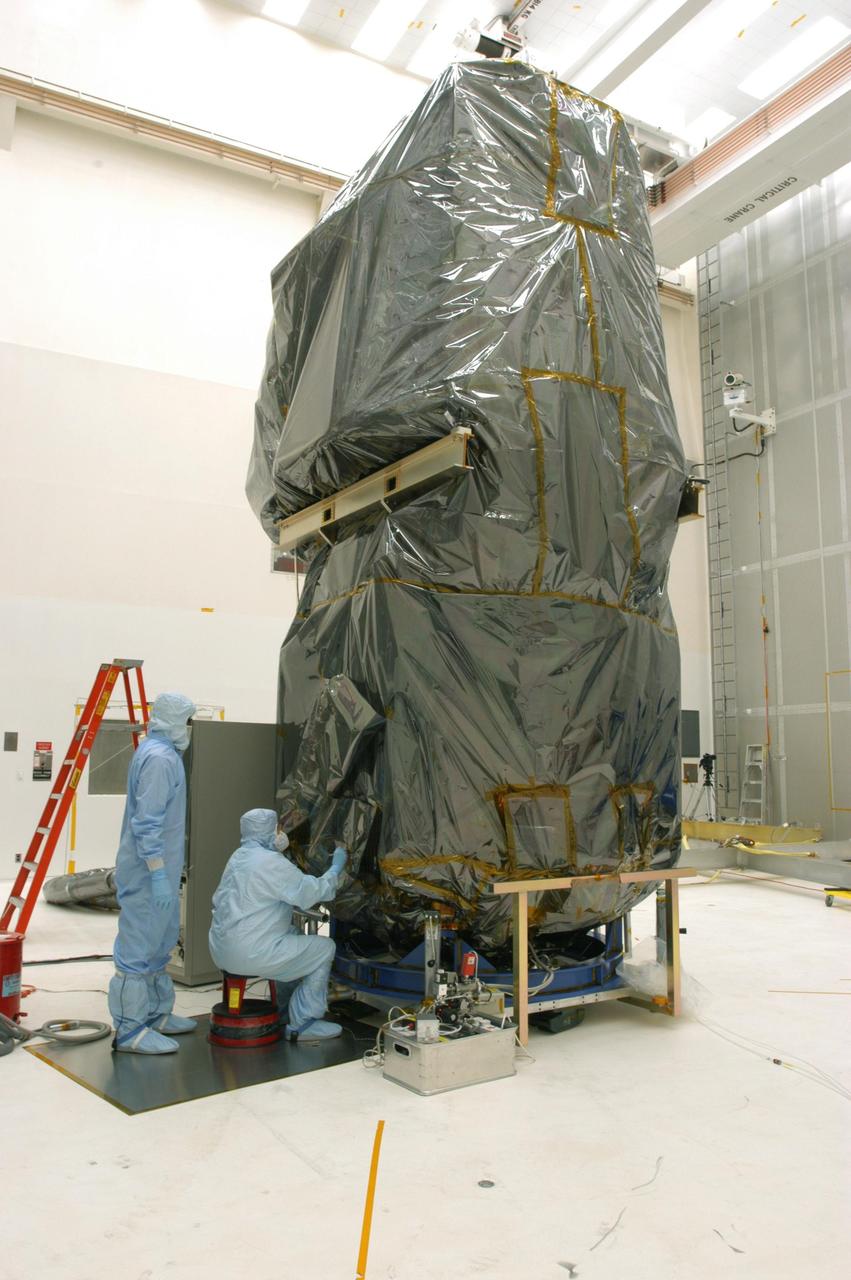
The Space-Based Infrared System — SBIRS — is America's missile early-warning network in geostationary orbit. Each satellite carries a wide-field infrared sensor sensitive enough to detect the heat plume of a solid-rocket booster within seconds of ignition, anywhere on the planet, in any weather, day or night. From 36,000 kilometers up, there is no cloud cover. There is no darkness. There is nowhere to hide a launch.
These satellites are the reason decision-makers have minutes, not seconds, to respond to a missile launch. The sensor sees the plume. The signal goes down. Decisions get made at the highest levels of government. Without this constellation, that warning window collapses entirely.
SBIRS is aging out. The Space Force has been developing its replacement: Next Generation Overhead Persistent Infrared, or NG-OPIR. Same mission. Newer technology. Designed to track advanced hypersonic threats that move differently than traditional ballistic missiles. You can learn how different orbital systems work and why geostationary orbit is the only altitude that gives you constant global coverage.
What the GAO Actually Found
The Government Accountability Office — the independent federal watchdog that answers to Congress, not the Pentagon — just published its assessment of Space Force satellite programs. The findings, released July 4, 2026, identified three specific problems:
- Growing costs for missile-warning satellite development
- Digital engineering gaps — the modern model-based design practices that NG-OPIR depends on aren't implemented consistently across the program
- Workforce reductions that could create bottlenecks when national security launches need to happen on schedule
This isn't the first time GAO has flagged cost and schedule issues in military space programs. It's practically a recurring event. But the timing of this one matters. China's military space program is expanding faster than analysts predicted. America's dependence on satellites for everything from communications to targeting to navigation is at an all-time high. And the program responsible for detecting a nuclear launch is behind where it's supposed to be. The full satellite picture — what's tracked publicly right now — is visible on the SkyLens live tracker.
What Is a "Digital Engineering Gap" — and Why Does It Matter?
This is the part that never makes the front page. It probably should.
Modern spacecraft are designed in software before a single physical component gets built. Engineers use interconnected digital models — of the satellite's structure, thermal behavior, power systems, orbital mechanics — to simulate and validate the design before committing to expensive hardware. The idea is that you find the errors in the model, not in the test facility, and definitely not after launch.
A "digital engineering gap" means those models aren't fully integrated, aren't consistently used, or aren't trusted across the teams that depend on them. Think of it as building a $2 billion structure from blueprints that different departments drew independently and never fully reconciled.
At these price points, a late-caught design error isn't an inconvenience. It's a program-level catastrophe that can delay a satellite by years. And in national security, a years-long gap in missile-warning coverage isn't a budget problem — it's a strategic vulnerability.
The Workforce Problem Nobody Talks About
Of the three issues GAO flagged, the workforce concern is the one the space industry quietly dreads most.
Satellite programs run for a decade or longer from contract to launch. The engineers who know why a specific design choice was made in year three, who remember the thermal issue that almost killed the program in year five, who understand the undocumented quirks in a particular infrared sensor — they are irreplaceable. When budget pressure forces workforce reductions mid-program, that institutional knowledge walks out the door and doesn't come back. You can hire new engineers. You cannot easily rebuild institutional memory.
To Be Fair: What Space Force Has Going For It
GAO reports can read like slow-motion disaster narratives. This one deserves context.
SBIRS — the current constellation — is operational. It has worked. NG-OPIR is an upgrade to a functioning system, not a replacement for something broken. The Space Force has redundancy in its early-warning architecture, contingency plans for gaps, and a track record of eventually delivering complex satellite programs, even when they run late and over budget. That record exists because programs like this get scrutinized publicly, which is exactly what's happening right now.
More importantly: the fact that this report is public is the system working as designed. GAO exists to surface these problems before they become irreversible. Congress can now demand answers. Program managers face public accountability. The pressure this creates is often what finally forces course corrections that internal reviews couldn't achieve.
The Uncomfortable Part: The Competition Isn't Waiting
What makes the timing of this audit genuinely uncomfortable is the environment it lands in.
China's military space program has grown faster than most public estimates projected five years ago. It now includes dedicated reconnaissance satellites, signals intelligence collection, demonstrated anti-satellite weapons, and — critically — its own infrared early-warning constellation in development. The gap between "our program is behind schedule" and "a peer competitor closes a capability gap" shrinks every year programs drift.
Those numbers are floors, not ceilings. The public TLE catalog deliberately omits or obscures the most sensitive military assets. What's visible on the SkyLens blog and tracker represents the open catalog — what's actually flying in classified programs on both sides is a separate, larger picture that no public database captures. The competition happening in the orbits that matter most is largely invisible from the ground.
The Bottom Line
Strip away the bureaucratic language from this report and here's what it actually says: the satellites America depends on to know within seconds if a nuclear missile has been launched are being replaced by a program that costs more than planned, is taking longer than planned, doesn't fully have the engineering practices it needs, and is losing workforce at a moment when it can least afford to.
That's not a crisis. Yet. It's a warning — which is why it was published. The question, as with every GAO report before it, is whether the people in a position to act on it do so before the warning becomes something worse.
SkyLens editorial — live CelesTrak + NASA/JPL data (15924 objects)
Related stories