Space Exploration · 2026-07-04
Apollo 11 Left From This Pad. The World's Biggest Rocket Is About to Follow.
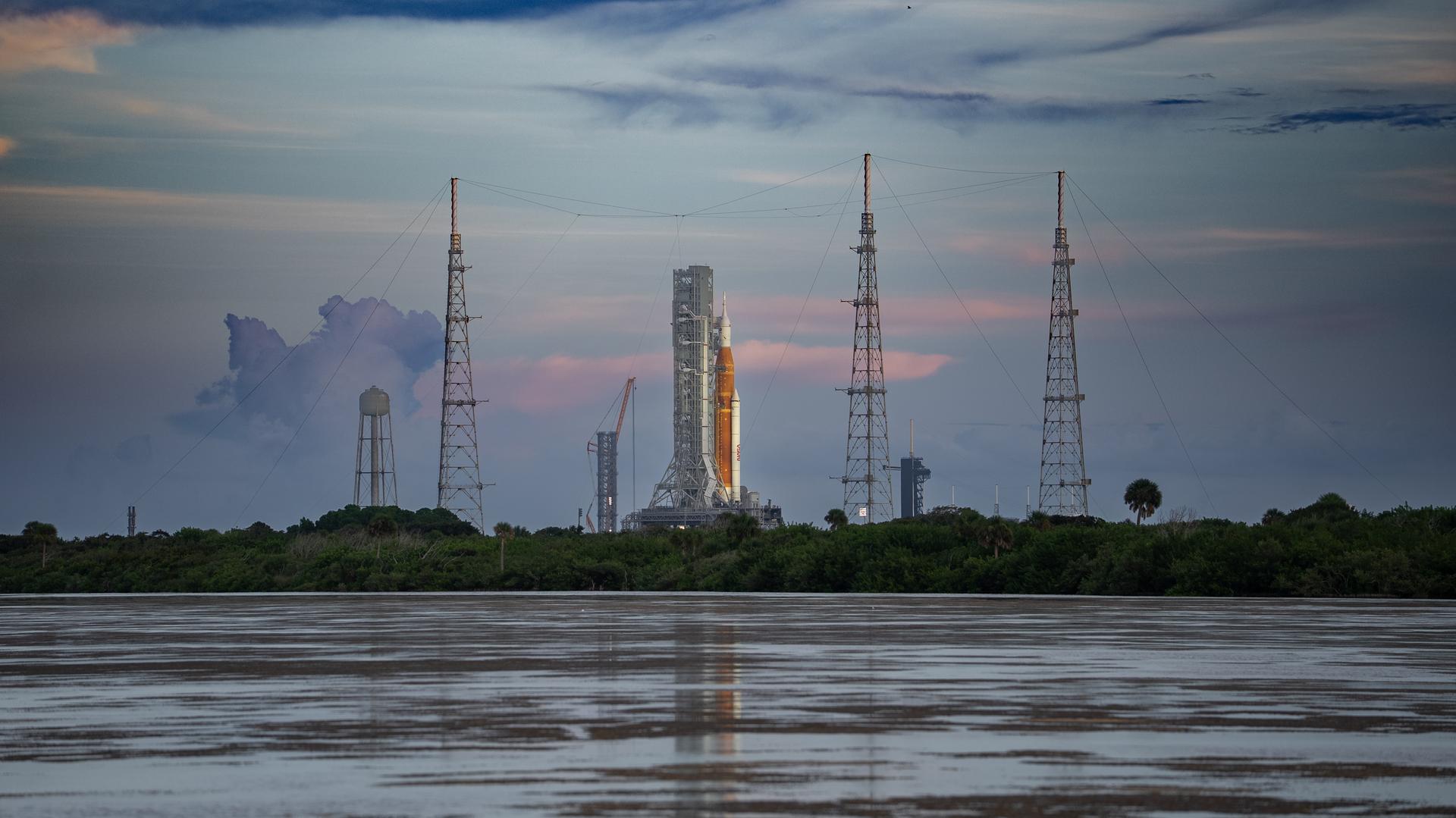
One of the most storied launchpads on Earth is getting a new rocket. The biggest one ever built.
Pad 39A at Kennedy Space Center in Florida is not just concrete and steel. It's where Apollo 11 left for the Moon on July 16, 1969. Where the Space Shuttle roared to orbit 82 times. Where the first Falcon Heavy shook the Florida coastline in 2018 and sent a red Tesla Roadster into solar orbit — where it's still drifting today.
Now SpaceX is preparing to launch Starship from there. And based on what contractors and engineers are doing at the Cape right now, it could happen before the end of 2026.
Why Florida Changes Everything
Every Starship that has ever flown left from Starbase in Boca Chica, Texas — a remote strip of Gulf Coast beach SpaceX essentially built from scratch. Texas made sense for early test flights. But Texas isn't where you go when you need to reach the Moon.
Orbital mechanics are unforgiving. Florida sits at 28.5 degrees north latitude — nearly three degrees closer to the equator than Boca Chica. That might sound minor. It isn't. It means less fuel fighting Earth's rotation. More payload capacity. Broader trajectory options. And critically: it's the trajectory NASA needs for the Artemis Moon missions that Starship is contracted to fly.
For comparison: the Saturn V — the rocket that put humans on the Moon — was 111 meters tall and the most powerful vehicle ever launched. Starship is taller. By ten meters. And it generates roughly twice the thrust.
The Pad That Has Seen Everything
LC-39A's résumé is unlike any structure in history. It launched Neil Armstrong and Buzz Aldrin toward the Moon. It saw the final Space Shuttle mission in 2011. It watched Falcon Heavy debut in 2018 with synchronized booster landings that made grown aerospace engineers cry on camera.
SpaceX leases the pad from NASA. It's already been reconfigured once — from Space Shuttle-era infrastructure to support Falcon 9 and Falcon Heavy. Now it's being reconfigured again, for something three times as tall as the Shuttle stack.
What "Pushing for Launch This Year" Actually Means
According to NASASpaceFlight, SpaceX and its contractors are actively working Pad 39A toward a first Starship launch target within 2026. That is not a confirmed date. That's a push — and in SpaceX terms, a push is a real signal.
Starbase in Texas went from empty beach to orbital launch complex in roughly four years. Florida already has infrastructure, workforce, and FAA familiarity. The question isn't whether Starship launches from the Cape. It's when.
NASA Is Watching This Very Closely
Starship isn't just SpaceX's moonshot. NASA selected it as the Human Landing System for the Artemis program — the missions sending Americans back to the Moon for the first time since 1972. Before any astronaut boots touch lunar soil again, Starship has to prove orbital refueling, full mission profiles, and precision lunar landings.
All of that depends on getting Starship operational from Florida. The Artemis timeline is not flexible. China is targeting a crewed Moon landing by 2030. The political window to beat them narrows every year.
Every month without a Florida Starship launch is a month NASA can't rehearse the Moon mission stack. The pressure on SpaceX — and on this pad — is enormous. You can explore how NASA's live assets are positioned right now using the SkyLens live tracker, which shows all 15,924 tracked objects in real time.
The Catching Problem
Here's the engineering challenge that doesn't get enough attention. At Boca Chica, SpaceX built mechanical arms — nicknamed Mechazilla — that catch the 70-meter Super Heavy booster as it falls back to the pad, still travelling hundreds of kilometers per hour. They pulled it off. Twice in a row. On live camera, in front of the world.
Florida needs its own catching infrastructure. Different geography, Atlantic ocean recovery instead of Gulf waters, different regulatory environment, different logistics. It's not a copy-paste of Boca Chica. It's a full replication of the most complex rocket ground system ever built — in a new location, with new constraints.
The Moment When History Doubles Back
When Starship eventually rises from Pad 39A — on that same iron frame that watched Apollo 11 disappear into a Florida sky 57 years ago — something strange will happen. The two most significant rocket programs in human history will share the same concrete, the same coastline, the same Atlantic horizon.
One launched humans to the Moon with 1960s computers and slide rules. The other is designed to make that trip routine — and then keep going, to Mars, with passengers, multiple times a year, with reusable hardware that costs less each time it flies.
The pad doesn't change. The ambition just keeps growing.
Want to understand how launch trajectories and orbital mechanics actually work — why latitude matters, what different orbits are used for, and what makes the Florida site strategically different from Texas? The SkyLens learn section breaks it down without the textbook.
SkyLens editorial — live CelesTrak + NASA/JPL data (15924 objects)
Related stories