Space Technology · 2026-07-03
The Breakthrough Solar Material That Keeps Dying in Rain Just Found Its Perfect Home — 400 Miles Above Earth's Atmosphere
The most efficient solar material ever discovered breaks down when it gets wet. A startup just moved their entire commercialization strategy to space — because up there, it hasn't rained in 4.6 billion years.
The material is called perovskite. Not a brand name. A crystal structure, first described in 1839, that researchers discovered in 2009 could harvest sunlight more efficiently than anything we'd built before. In a lab, perovskite solar cells hit 33.9% efficiency. Silicon — the material in every rooftop solar panel on Earth — tops out around 22% commercially.
Fifteen years later. Almost none of it has reached the market at scale.
The reason is rain.
The Enemy Is Everywhere
Perovskite solar cells are exquisitely sensitive to moisture and oxygen. When water molecules infiltrate the crystal lattice, efficiency collapses. Panels that perform brilliantly in a lab degrade within months in real-world conditions — humidity, seasons, weather. The Earth's atmosphere, which we depend on for air and life, is essentially slow-acting poison to this material.
Researchers have spent a decade trying to seal perovskite inside protective encapsulants. Progress has been real. But silicon panels last 25+ years with almost no attention. The investment case for perovskite on Earth has been brutal. Every year of encapsulation research is a year not spent building factories.
The Pivot Nobody Saw Coming
Verde Technologies just announced a decision that sounds absurd for about three seconds — then clicks completely.
Instead of continuing to fight moisture and oxygen on the ground, they're going somewhere those things don't exist. According to SpaceNews, the startup is pivoting its primary commercialization target to orbit — focusing on powering orbital data centers and satellites as its first customers.
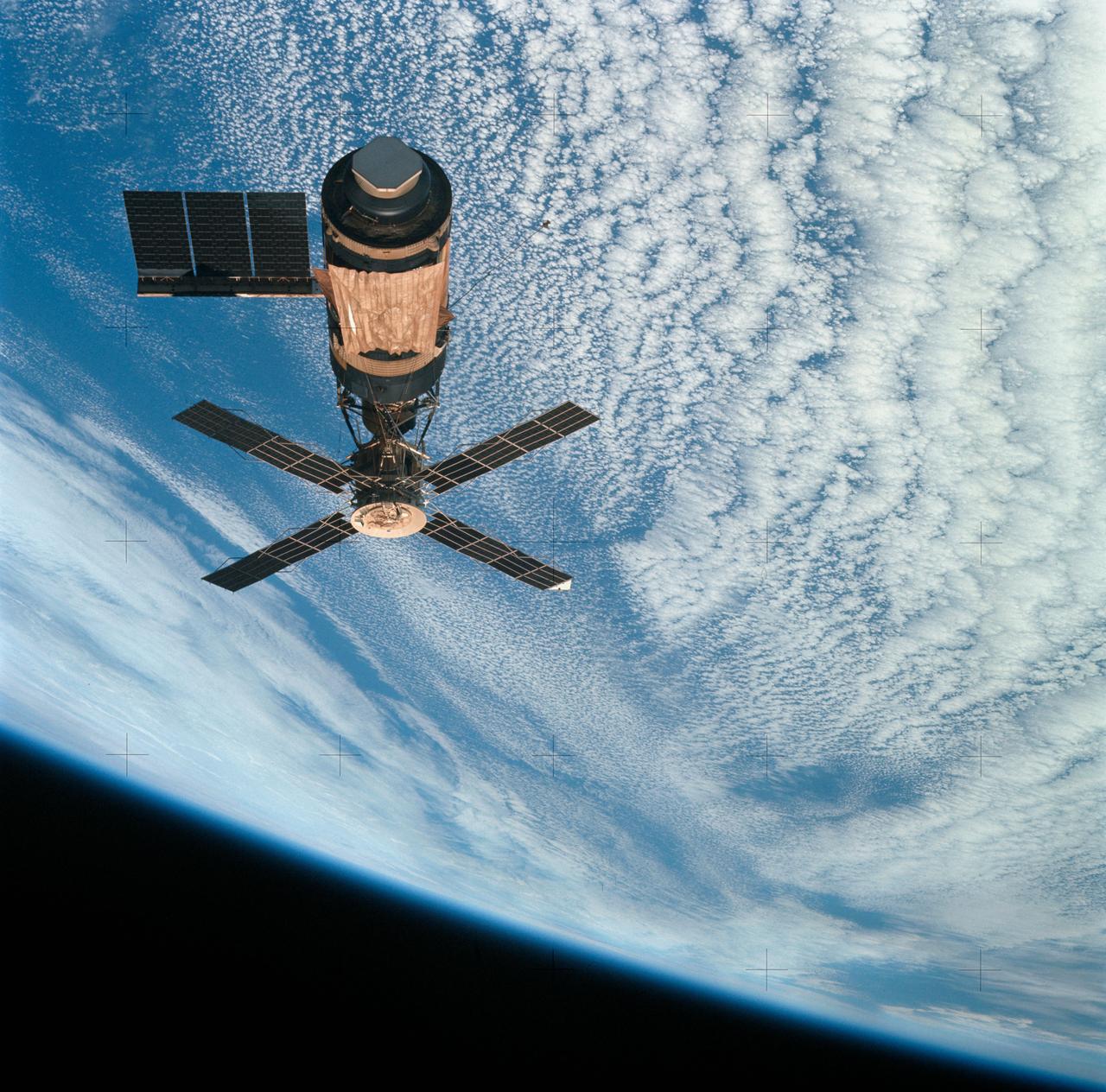
The logic is almost elegant. In low Earth orbit, there is no atmosphere. No rain. No humidity. No oxygen. The specific failure mode that has been destroying perovskite panels since 2009 simply does not exist 400 miles up.
Suddenly, the material's core advantage — raw efficiency — gets to compete without its biggest handicap.
And in space, efficiency isn't just nice to have. It's the entire product.
Why Satellites Are Starving for Better Solar
Every satellite in orbit is solar powered. The expensive ones — the kind used on the highest-performance missions — use triple-junction gallium arsenide cells. They hit around 30% efficiency. They also cost between $100 and $300 per watt to produce. For comparison, silicon solar on your roof costs less than $0.30 per watt.
Every kilogram of hardware launched to orbit costs roughly $2,000–5,000. Heavier panels mean higher launch bills. More efficient panels mean smaller arrays for the same power output, which means less mass, which means lower cost to orbit. Watts-per-kilogram is the metric satellite operators obsess over — and perovskite's thin-film format scores extremely well on it.
As the live tracker shows, there are over 15,000 tracked objects in orbit right now, with thousands more satellites expected to launch this decade. The appetite for cheaper, lighter, more capable power systems is enormous — and largely unmet by the existing supply chain.
But Space Has Its Own Ways of Killing Things
Here's what Verde's pitch doesn't open with: orbit is still hostile.
Moisture and oxygen are gone, yes. What replaces them is radiation. High-energy protons and electrons from the solar wind, cosmic rays, and the Van Allen belts bombard everything in orbit continuously. Silicon degrades under radiation too — which is why space-grade silicon is specifically engineered to be radiation-hard after decades of investment. Perovskite's radiation tolerance is still being characterized. Some research suggests certain formulations may self-heal after radiation damage due to the crystal structure's ionic mobility. That's genuinely interesting science. It is not yet years of flight-proven orbital data.
There's also thermal cycling. In low Earth orbit, a satellite swings from -150°C in shadow to +120°C in full sunlight — every 90 minutes. Every orbit. Sixteen times a day. The mechanical stress of that repeated thermal shock cracks conventional materials over time. How perovskite thin-film holds up through thousands of cycles in real orbital conditions is an open question.
The Bigger Picture: AI, Power, and the Race to Orbit
Verde isn't only selling to satellite manufacturers. The company sees orbital data centers as the long-term market — and that framing reveals something about where serious money thinks the next decade is heading.
The AI compute boom is driving electricity demand to levels the grid wasn't built for. Data centers already consume 1–2% of global electricity, and projections suggest AI infrastructure alone could double that by 2030. On the ground, that means building power plants, straining transmission lines, and competing for land and water for cooling.
In orbit, none of those constraints exist. And orbital solar has one enormous advantage over everything on Earth:
A solar array in geosynchronous orbit can collect energy around the clock, uninterrupted. Multiple space agencies — the UK Space Agency, ESA's SOLARIS program, Japan's JAXA — are actively researching how to beam that power back to Earth via microwave or laser. It's not science fiction. It's engineering with a funding line. Perovskite's lightweight, high-efficiency profile makes it a natural candidate for those arrays.
Verde's orbital data center angle suggests they may be positioning for something even simpler: don't beam the power back down. Use it in space, to run compute in space, where the power is free and continuous. Whether that becomes a viable business depends on the economics of orbital operations — but the directional bet isn't crazy.
What to Watch Next
Verde has not yet published radiation tolerance data from orbital conditions. The pivot to space is a strategic announcement, not a delivered product. The milestones that matter: a small satellite mission with real perovskite panels flying in LEO, published degradation curves from actual orbital exposure, and whether the efficiency numbers measured on the ground survive the radiation environment above the magnetosphere.
The semiconductor industry spent forty years making silicon work in space. Perovskite is asking to compress that timeline dramatically. The bet is that removing moisture — the material's oldest enemy — unlocks enough headroom to solve the remaining problems faster than anyone has before.
The material that couldn't survive a rainy afternoon in Portland might end up powering infrastructure that circles the Earth every 90 minutes.
Space has always been the hardest possible test for materials. For perovskite, it might turn out to be the only environment where it can finally win.
Want to understand how satellites are powered, built, and launched into the orbits you're watching? The SkyLens learn section breaks it down — or browse more stories from the team.
SkyLens editorial — live CelesTrak + NASA/JPL data (15928 objects)
Related stories