Launch · 2026-06-26
New Zealand Built the World's Only Battery-Powered Orbital Rocket. NASA Just Hired It Three Times.
A rocket smaller than a city bus just got assigned three NASA science missions. It launches from a sheep farm at the edge of the South Pacific. And its engines run on batteries.
This week, NASA selected Rocket Lab to fly a pair of science missions on three Electron rockets in 2027. The announcement was quiet — a paragraph in a trade publication. But what it represents is anything but small.
The Rocket Nobody Expected to Reach Orbit
In 2006, a New Zealander named Peter Beck was building rockets in a garage. Not model rockets. Real ones. He wanted to reach orbit.
Everyone said it was impossible. New Zealand had no rocket industry. No launch pads. No aerospace tradition. The country was better known for sheep, rugby, and Tolkien filming locations than for propulsion engineering.
Beck built it anyway.
Rocket Lab's Electron made its first orbital attempt in 2017. The second try, in January 2018, reached orbit. New Zealand became one of only four nations — alongside the US, Russia, and China — to develop and fly an orbital rocket on home soil.
Wait. Battery-Powered?
Here's the part that surprises engineers.
Every orbital rocket before Electron used gas generators or staged combustion to pump propellants into its engines. The physics are violent. Turbopumps spin at tens of thousands of RPM, driven by burning rocket fuel itself. It is loud, hot, and mechanically spectacular.
Beck's team did something different. The Rutherford engine — Electron's powerplant — uses electric motors to drive its pumps. Powered by lithium-polymer batteries. The same fundamental technology in your laptop, scaled up for one of the most extreme environments humans manufacture.
The aerospace establishment said it wouldn't work. The efficiency losses would kill performance. You'd drain the batteries before you drained the tanks.
Beck proved them wrong. The Rutherford engine became the world's first electric pump-fed engine to reach orbit. Every single component is 3D-printed. It is, by almost any measure, the most unconventional orbital engine flying today.
The Launch Site: A Sheep Farm at the Edge of the World
Rocket Lab's primary launch complex sits on the Māhia Peninsula in Hawke's Bay, New Zealand. The nearest town has a population of roughly 4,000 people. The access road crosses working farmland. Sheep graze within sight of the pad.
The location was chosen deliberately. Mahia is remote enough that launches require no complex airspace negotiations over cities. The Pacific stretches east for thousands of kilometers — a natural safety corridor. And New Zealand's latitude gives clean access to sun-synchronous orbits, the sweet spot for Earth observation satellites.
A second site — Launch Complex 2 at Wallops Island, Virginia — opened in 2023, giving Rocket Lab access to different orbital inclinations and making it easier to serve US government customers directly. The NASA science missions are expected to fly from there.
Why NASA Needed a Smaller Rocket
For decades, small science teams wanting to launch a satellite faced two options: wait years for a rideshare slot on a large rocket, or pay hundreds of millions for a dedicated launch. Small experiments got delayed. Timelines ballooned. A decade of scientific momentum could stall because someone else's payload wasn't ready.
Electron changes the math. At roughly $7–8 million per launch, it isn't cheap in absolute terms — but it buys something rideshare on a larger rocket can't: schedule control. Your satellite launches when your mission is ready, to the exact orbit you need, without waiting for another customer's timeline to align with yours.
The Hat Moment
There is a reason Peter Beck has a cult following in the space community.
For years, he argued publicly that small reusable rockets were economically pointless. The math didn't close. Catching and refurbishing a first stage cost more than manufacturing a new one at Electron's scale. He was vocal about it. He staked his credibility on it.
Then, in 2020, Rocket Lab announced Neutron — a medium-lift reusable rocket designed to compete with SpaceX's Falcon 9.
Beck ate his hat. On camera. With a knife and fork and what appeared to be hot sauce.
It wasn't a stunt. It was a founder publicly acknowledging he'd been wrong — and that the engineering path he'd dismissed had become the one his company needed. It is the kind of moment that makes people follow a company for years.
What Three NASA Missions Actually Means
NASA selecting Rocket Lab for three Electron launches in 2027 isn't just a contract. It's a signal.
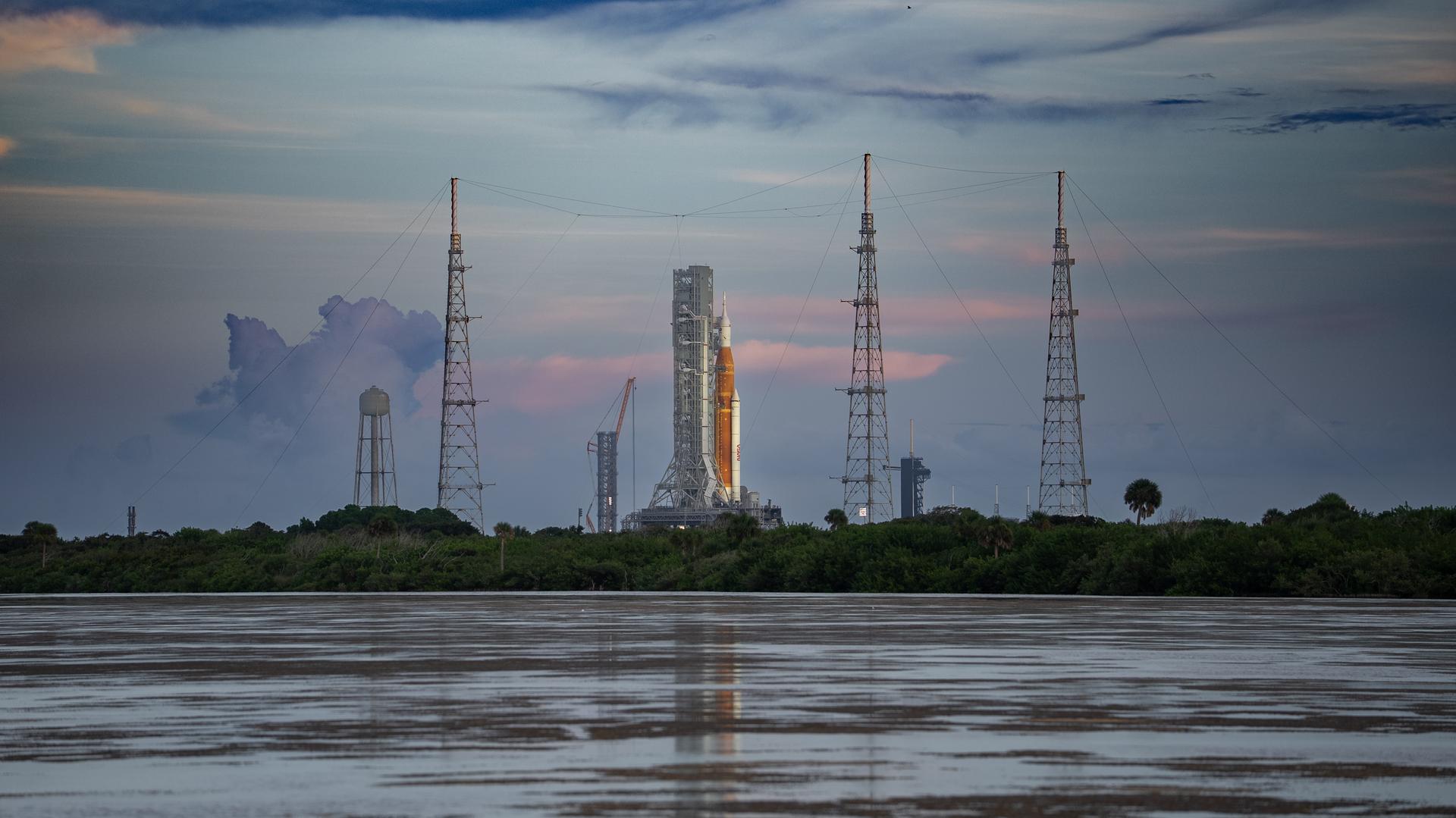
NASA has its own enormous rocket in the Space Launch System. It has access to SpaceX for its biggest payloads. The fact that it is deliberately routing specific science missions to the smallest dedicated orbital rocket in its fleet says something about how mission architecture is changing.
To be fair: Electron isn't competing with SLS or Falcon Heavy. Rocket Lab has been clear that Electron and its forthcoming Neutron rocket serve entirely different market segments. This isn't a David-vs-Goliath story in the traditional sense — it's a story about niches maturing into genuine strategy.
The Bigger Picture
In 2026, there are more orbital launch providers than at any point in human history. Rocket Lab sits at the top of the small-launch segment — but it isn't alone. Isar Aerospace, RocketFactory Augsburg, ABL Space, and a dozen other companies are racing to serve the same market.
What NASA's contract confirms is that space agencies are deliberately diversifying away from dependence on a single launch provider. Science missions that once required a decade of patience to queue up could now launch in months. That changes what questions we can ask about the universe — and how quickly we can ask them.
Next time you read about a small satellite measuring ocean temperatures, tracking wildfire smoke, or monitoring polar ice — there is a growing chance it rode to orbit on a battery-powered rocket, built in New Zealand, launched from a sheep farm on a peninsula most people can't find on a map.
That's worth paying attention to. Learn how satellites reach orbit, or read more stories like this one.
SkyLens editorial — live CelesTrak + NASA/JPL data (15879 objects)
Related stories