Space Politics · 2026-06-25
68 Nations Just Signed the Same Document About the Moon. Russia and China Signed a Different One.
There are 195 countries on Earth. 68 of them just agreed on the same rules for space. Russia and China are not among them.
Today, Botswana became the 68th country — and the sixth African nation — to sign the Artemis Accords. A handshake at NASA headquarters in Washington. Flags in a photo. A ceremony that lasted less than an hour.
But here's what that ceremony actually means: the world just got a little more divided over who gets to write the rules for the Moon.
What the Artemis Accords Actually Are
Most people have never heard of them. The Artemis Accords are a set of principles — not a binding treaty — that countries agree to follow when exploring space. Launched by the United States in 2020, they cover peaceful exploration, data sharing, preserving historic sites, and — this is the part that gets complicated — extracting resources from other worlds.
That last one is the reason Russia and China didn't sign.
Under the 1967 Outer Space Treaty, no country can own the Moon. But the Artemis Accords argue that you can own what you extract from it — the ice you mine, the regolith you process. This is the legal gray zone the US is trying to define. Russia calls it an attempt to privatize the Moon and bypass international law. The US calls it clarification. Both sides have a point.
Why Botswana Matters
It's easy to dismiss a landlocked African country signing a space document as symbolic. But read the room: nations that sign the Accords become preferred partners for mission data, commercial access, and eventually the infrastructure of the next 50 years of space exploration. Botswana has a functioning democracy, a government actively investing in STEM, and a long-term bet on being inside the room when decisions get made.
The six African signatories — now including Rwanda, Nigeria, and Botswana — are building satellite programs, mapping their own territory from orbit, and training aerospace engineers. The continent that was historically cut out of the space race is choosing a lane.
The Other Side of the Room
China and Russia aren't just absent from the Artemis Accords — they've built their own competing framework: the International Lunar Research Station (ILRS). It has its own principles, its own partners, its own vision. Nations including Pakistan, Venezuela, South Africa, and Belarus have signed the ILRS instead.
The US and China are running competing diplomatic campaigns — each racing to bring more countries into their framework before anyone actually lands and starts extracting anything. Think of it as the geopolitical bloc dynamic, but for the lunar surface.
What the Race Is Actually About
It's not flags. The Moon's south pole contains permanently shadowed craters holding billions of tons of water ice. Water in space can be split into hydrogen and oxygen — rocket fuel. Whoever builds the first permanent extraction operation at the lunar south pole doesn't just win a science prize. They potentially control the refueling depot for every deep-space mission in the 21st century.
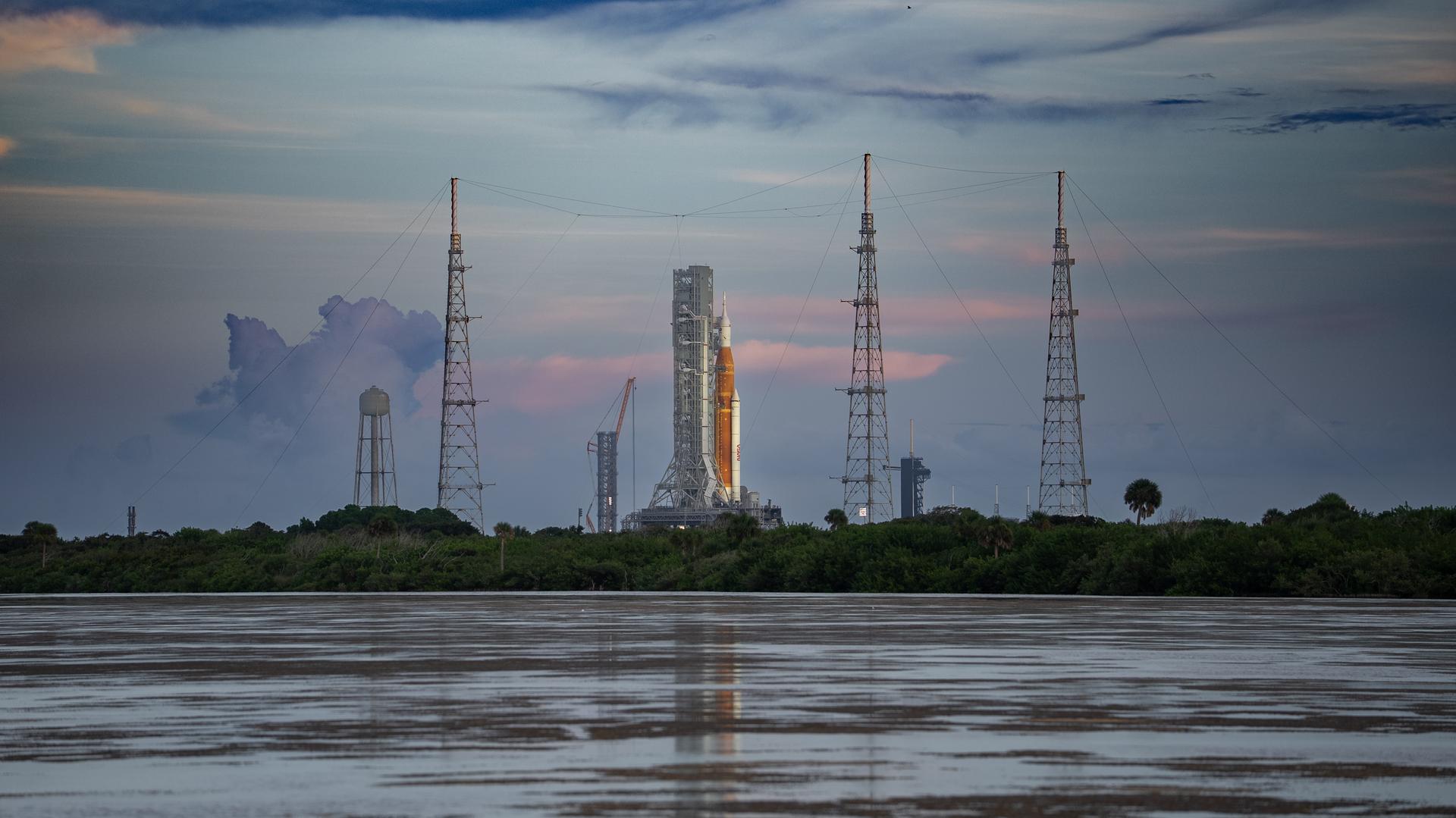
The US Artemis program is targeting the south pole. China's Chang'e missions are targeting the south pole. It is not a coincidence. They are racing to the same gas station.
You can watch everything in Earth orbit right now — including the satellites both sides are using to prepare for what comes next — on the SkyLens live tracker.
The Enforcement Problem Nobody Is Talking About
Here's the uncomfortable truth buried in all the ceremony: neither framework has an enforcement mechanism. There is no space court. No space police. If a country mines the lunar south pole and ignores every agreed norm, the consequence is... diplomatic displeasure.
To be fair, this is equally true of the ILRS framework. Both systems are built on trust, political pressure, and the assumption that everyone will behave once serious money is on the table. The US argues that getting 68 countries to agree on norms is the essential first step. Russia and China argue the process was never genuinely multilateral to begin with.
Both points are valid. That's what makes this genuinely unresolved — and genuinely important.
Africa's Long Game
Zoom out. The real story isn't Washington vs. Beijing. It's the 127 countries that haven't formally picked a side yet — and what they decide in the next decade will shape who actually governs the Moon when humans are living there.
Africa, with the world's youngest population and fastest-growing satellite industry, is being courted by both sides. Nigeria signed the Artemis Accords. South Africa signed the ILRS. The continent is not a monolith — and that's exactly the point. Every signature is a diplomatic win in a slow-motion race most people aren't watching.
Botswana's ceremony today is a small thing and a large thing simultaneously. A small room. A large bet. On a future where the rules of space were written in Washington in 2020 — and 68 nations decided that was the right foundation.
Want to understand what's orbiting overhead right now — and which countries those satellites belong to? The live tracker breaks it down in real time. For deeper context on how orbital law and satellite diplomacy intersect, our explainers are a good place to start.
SkyLens editorial — live CelesTrak + NASA/JPL data (15879 objects)
Related stories