Mars Exploration · 2026-06-24
A Robot Just Ran a Marathon on Mars. It Took Five Years. Another Spacecraft Caught It on Camera From 300 Kilometers Up.
On June 13, 2026, a camera orbiting Mars pointed its lens at the rust-colored surface below and photographed a small green speck.
That speck is roughly the size of a coffee table. It has six aluminum wheels. It weighs about a metric ton. And the day after this photo was taken, it crossed a threshold that no machine had ever reached on another planet.
The Perseverance rover just completed a marathon.
The Photo That Should Stop You Cold
The photograph wasn't taken from the ground. It was taken from space.
NASA's HiRISE camera — mounted on the Mars Reconnaissance Orbiter, circling 300 kilometers above the planet — spotted Perseverance on June 13, 2026, exactly one day before the rover crossed the marathon mark. The image was released publicly this week. In it, the rover appears as a single green pixel against the ancient crater floor.
Think about what that means. One spacecraft photographed another spacecraft, on another planet, from orbit. Two machines — one crawling across a dead lake bed, one watching silently from the sky — working in concert across 225 million kilometers of empty space.
Five Years. One Wheel-Turn at a Time.
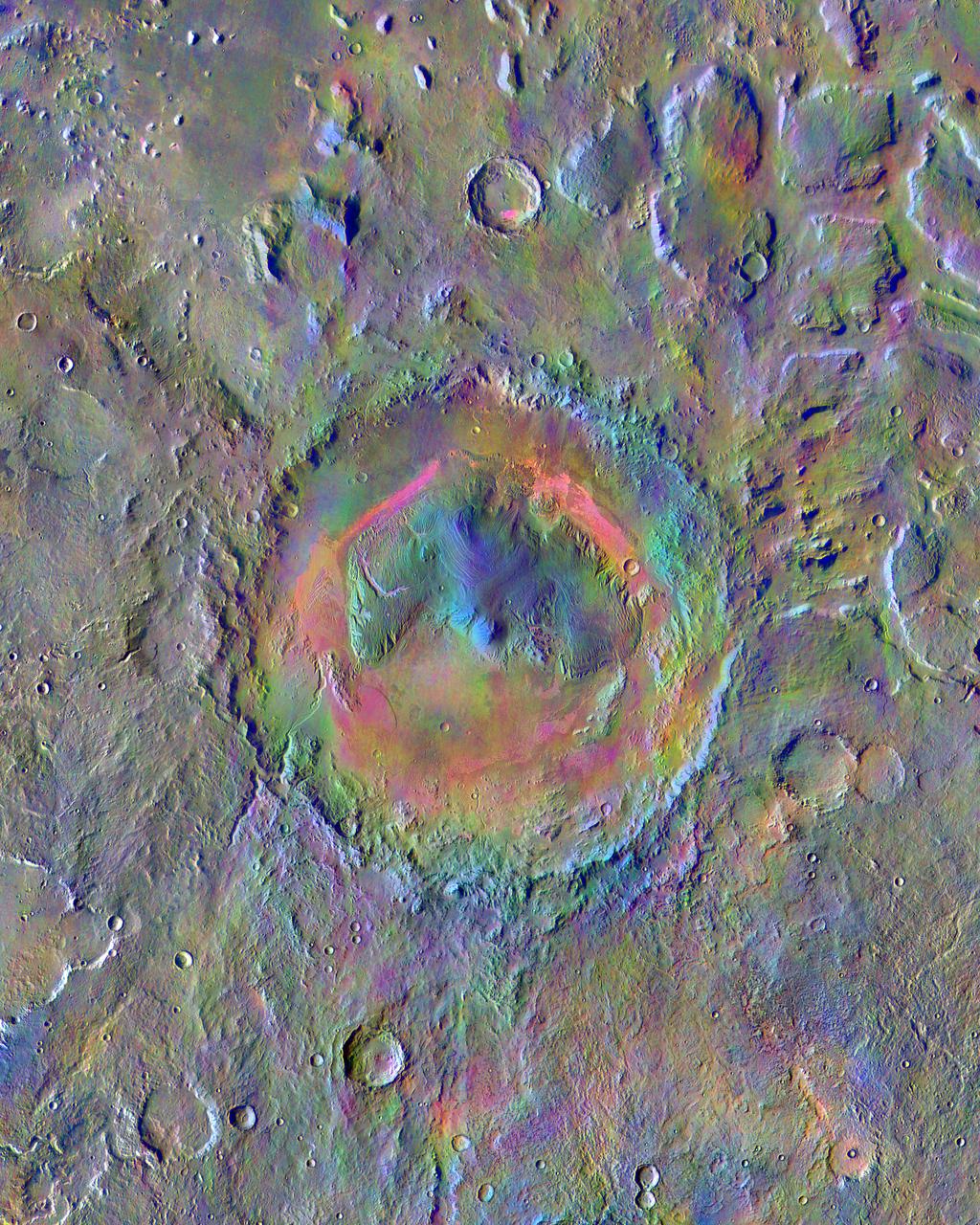
Perseverance landed on February 18, 2021, in Jezero Crater — a 49-kilometer-wide bowl of rock that, roughly 3.5 billion years ago, held a lake.
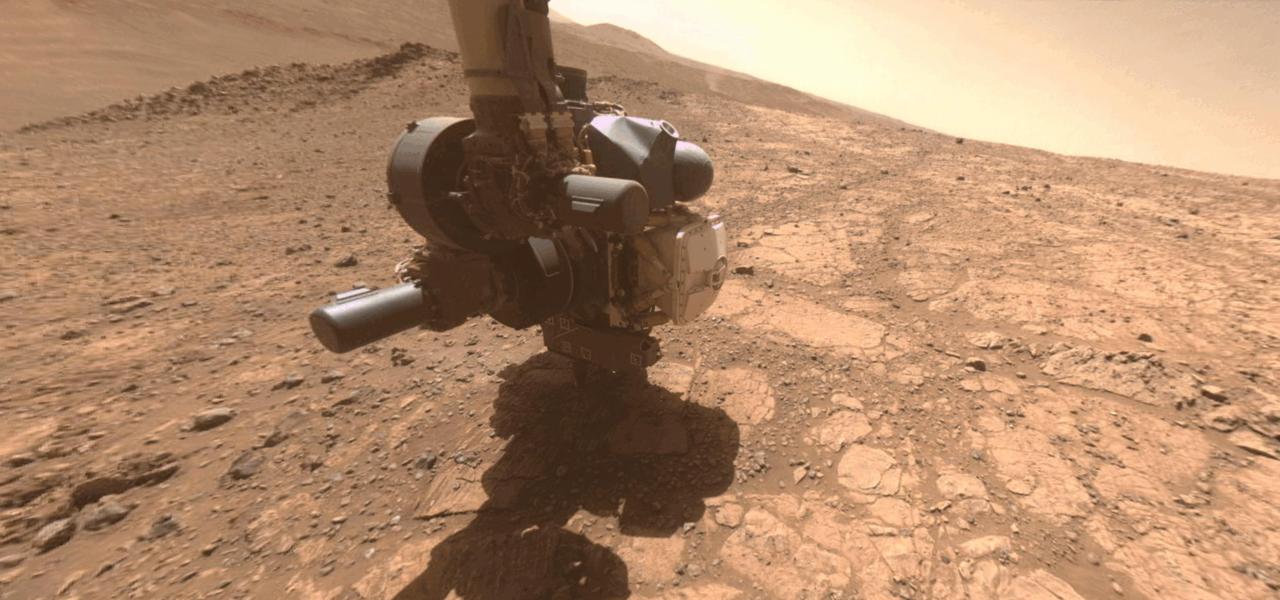
It did not sprint. It could not. On a productive Martian day, the rover covers about 240 meters. It stops constantly — drilling core samples, photographing rock layers, testing instruments, and waiting for commands from Earth, where every radio signal takes between 3 and 22 minutes to arrive depending on where the two planets sit in their orbits.
And yet. One crawl at a time, it kept going. For more than five years.
For context: the Opportunity rover — the previous champion of Mars driving — covered 45.16 kilometers over 15 years before going silent in a global dust storm in 2018. Perseverance has nearly matched that total in roughly a third of the time. It is the fastest, most capable, most scientifically productive rover ever sent to another world.
What It Found Along the Way
The marathon was not a commute. Every meter covered was science.
Inside Jezero's ancient river delta — where sediment from a long-dead Martian river once accumulated at the edge of the lake — Perseverance found something that made scientists reach very carefully for their words.
Organic molecules. The chemical building blocks that, on Earth, are associated with life.
Not life. Not proof of life. But the precursor chemistry, preserved inside rock that formed at the bottom of a lake when Mars was warm and wet and theoretically habitable. The distinction matters — and scientists have been clear about it. However, the find was significant enough that it changed the scientific consensus about what future Mars missions should prioritize.
- Organic molecules in delta sediments: Found in rock cores drilled from the ancient river delta — the most compelling chemical evidence yet that ancient Mars had the conditions for microbial life
- MOXIE experiment: Successfully produced breathable oxygen from the Martian CO₂ atmosphere — a proof-of-concept for future crewed missions living off local resources
- Ingenuity helicopter: Deployed in April 2021, it was designed for five flights. It flew 72 times over nearly three years before going silent — becoming the first powered aircraft to fly on any planet other than Earth
- 23 sealed rock samples: Drilled, sealed, and cached at a depot on the surface — waiting for a future mission to retrieve them and bring them back to Earth
The Conditions It Has Survived
None of this was guaranteed to work.
Mars is not a friendly place to send machinery. Temperatures swing roughly 100°C between Martian day and night — from a daytime high around 20°C in summer to a nighttime low of -100°C. The atmosphere is 1% as thick as Earth's, which means dust storms that last for months and radiation that strips unprotected surfaces over years. The same thin atmosphere that makes life impossible also means wheels must be extraordinarily light, which means they are also somewhat fragile — Perseverance has developed small holes in its aluminum wheels from rock impacts, a known issue the team monitors carefully.
Every system on Perseverance was designed to handle this. Five years in, most of them still are. The live tracker on SkyLens shows Earth's orbiting satellites in real time — the infrastructure that makes missions like this possible, relaying commands and data between continents and across the solar system.
The Only Thing Left to Do
The marathon milestone is remarkable. But it is not the destination.
Those 23 sample tubes cached on the surface are the entire point of sending Perseverance to Mars in the first place. They contain pieces of the planet's ancient past — rock from the bottom of a 3.5-billion-year-old lake, drilled out, sealed, and waiting. Getting them back to Earth is the most complex interplanetary operation ever attempted. The Mars Sample Return mission — a joint effort between NASA and ESA — would require landing a retrieval craft, launching the samples into Mars orbit aboard a small rocket, rendezvous with a waiting Earth-return vehicle, and a multi-year journey home.
It is behind schedule and over budget. The scientific and engineering communities are debating the path forward. The samples are still there, in their sealed tubes, on the Martian surface.
Perseverance will keep driving while they figure it out.
One day, a person will stand in Jezero Crater and walk the path this rover drove. They'll see the drill holes in the rock, the wheel tracks pressed into the regolith, the sample depot waiting exactly where it was left. They'll know: a machine got here first. And it ran a marathon to do it.
For more stories from the frontier of space exploration, read the SkyLens blog.
SkyLens editorial — live CelesTrak + NASA/JPL data (15822 objects)
Related stories