Launch · 2026-06-23
SpaceX Already Has Dragon. It Built Another Reentry Capsule Anyway — and 'Starfall' Launches This Morning.
There's a new capsule on the pad. And nobody's quite explained why it needs to exist.
SpaceX already has Dragon. Dragon is excellent. It has returned cargo from the International Space Station dozens of times. It brought American astronauts home after a decade of hitching rides on Russian rockets. Dragon works.
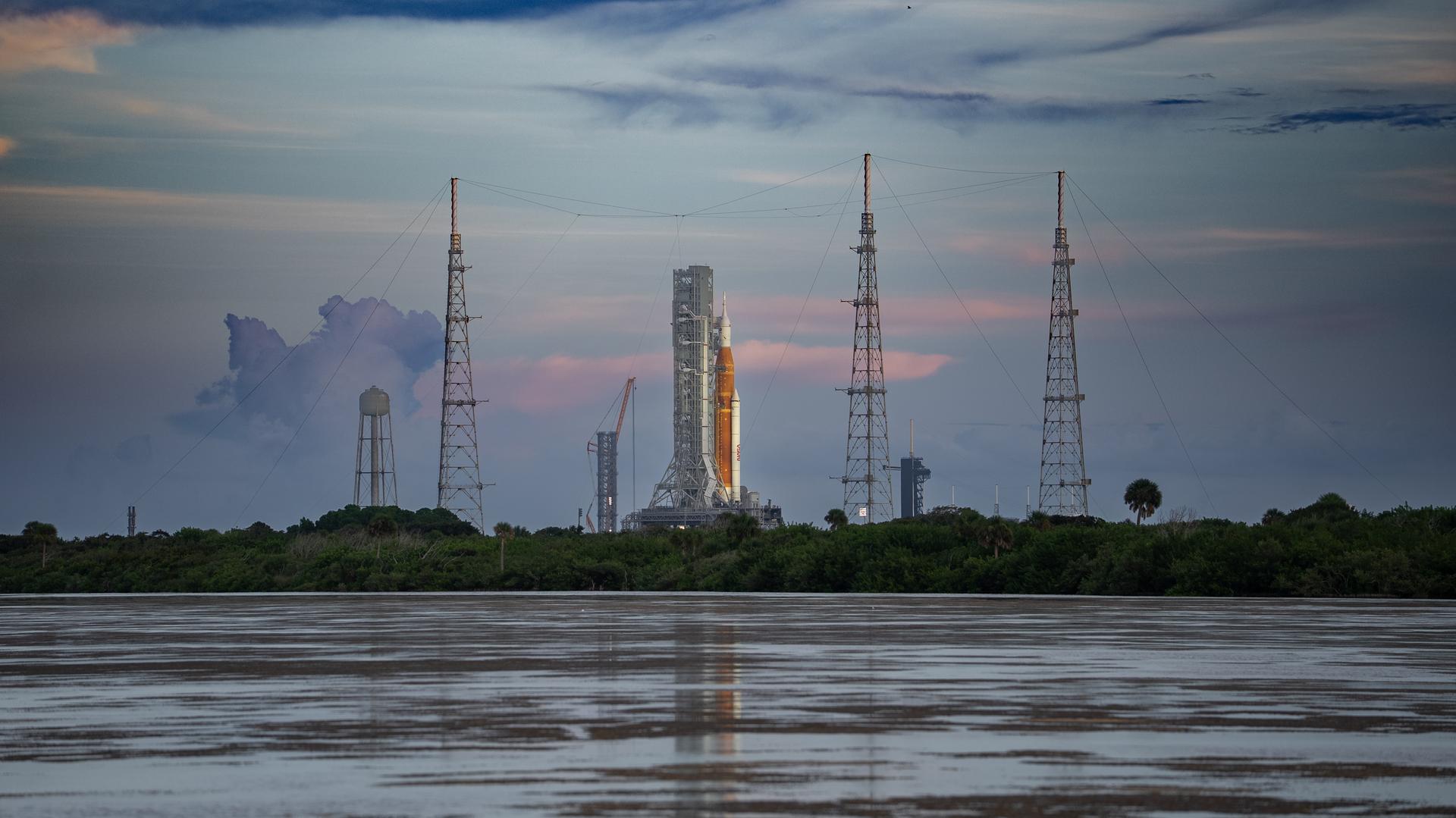
So why — on the morning of June 23rd, 2026 — is a brand-new reentry capsule called Starfall sitting on Pad 40 at Cape Canaveral, waiting to launch?
That question doesn't have a complete answer yet. But the capsule is real. It weighs 2,100 kilograms. It's about to fly. And what SpaceX does next with it could quietly reshape the economics of coming back from space.
What Starfall Actually Is
The official description is short: a reentry capsule demo mission. SpaceX has not published a detailed manifest of what's aboard, or given a full briefing on what Starfall is ultimately designed to do commercially. What we know is that it's launching on a Falcon 9 from Pad 40 — the same pad that has sent hundreds of Starlink batches and dozens of cargo flights into orbit.
At 2,100 kilograms, Starfall is roughly half the mass of a Dragon capsule. That's not a small detail. Dragon is optimized for crew safety, long docked missions, and maximum cargo volume. A smaller, lighter dedicated return vehicle means faster turnarounds, potentially lower cost per kilogram recovered — and a vehicle that could launch far more frequently than Dragon ever does.
The Reentry Bottleneck Nobody Talks About
Here's a thing most people don't realize about the space economy: getting cargo back to Earth is the bottleneck.
Getting things up to orbit is the part SpaceX has essentially solved. A Falcon 9 can deliver payload to low-Earth orbit for a few thousand dollars per kilogram. Cheap enough that companies are genuinely starting to run factories up there. But bringing finished product back? That's expensive, rare, and slow. Dragon is the primary Western vehicle for returning cargo from the ISS. It makes a handful of trips per year. For the coming wave of orbital manufacturing — pharmaceuticals, fiber optics, semiconductor crystals — that's not nearly enough throughput.
Space-grown protein crystals with near-perfect geometry. Fiber optic preforms that can only be drawn cleanly in microgravity. Certain drug compounds that form with pharmaceutical-grade purity in orbit. These aren't science fiction anymore — companies are already producing them on the ISS. The bottleneck isn't making it. It's getting it home. A dedicated, lighter return capsule that launches frequently, on short notice, at lower cost? That breaks the bottleneck. And that's what Starfall might be.
Wait — Could This Also Be Point-to-Point?
SpaceX has discussed Starship for point-to-point Earth delivery — New York to Singapore in under an hour. It's ambitious. It's years away at minimum, if it ever happens.
But a reentry capsule on a proven Falcon 9? That's not hypersonic passenger travel. That's urgent high-value cargo delivery. Transplant organs. Time-sensitive medical samples. Classified hardware that needs to reach the other side of the world tonight. Drop into orbit over Florida. Deorbit over the Pacific. Land on the far side of the planet in under an hour.
SpaceX has not confirmed any of this as a target market for Starfall. The mission today is a demo — focused on proving the capsule can reenter and survive intact. To be fair, we're connecting dots SpaceX hasn't publicly connected. But the dots are interesting.
This Morning's Flight — What to Watch
Liftoff: 6:43 AM EDT. Pad 40, Cape Canaveral Space Force Station. A standard Falcon 9 carries Starfall uprange — and then, unlike a typical mission where the payload orbits for weeks or months, Starfall deorbits and comes back. Fast.
The demo is really testing one thing: reentry survival. This is where spacecraft die. The kinetic energy of an object traveling at 7.8 km/s doesn't just disappear when it hits atmosphere — it converts into heat. A plasma shockwave forms around the capsule. The heat shield surface reaches temperatures of 1,600°C. That's hotter than molten iron. Hotter than most metals can exist in any solid form. The capsule punches through that envelope in minutes, decelerates from orbital velocity to near-zero, and has to be intact enough on the other side to splash down and be recovered.
Get it wrong and you've lost your capsule and everything inside it. Get it right and you've just proven a new way to come home from space. Want to understand what's happening in the sky above you while Starfall is in orbit? The SkyLens live tracker shows all 15,824 currently tracked objects in real time.
Why the Broader Space Economy Is Watching
If Starfall works, it signals something bigger than one SpaceX product line: the return leg of low-Earth orbit is about to get competitive — and that competition is capacity, not price.
Right now, Dragon is effectively the only Western commercial vehicle for returning cargo from orbit. China's Shenzhou flies. Russia's Soyuz still operates. But neither is available to Western commercial customers for cargo return. Dragon has a near-monopoly on a service that's about to be in serious demand. The economics of orbital manufacturing only make sense when you can close the loop — build in space, sell on Earth.
A second vehicle, even from the same company, expands throughput. More flights. More returns. More products that can economically justify being made in microgravity. The orbital economy's missing piece isn't launch capacity anymore. It's the ride home.
What Happens After Today
SpaceX will analyze the reentry data — heat shield performance, structural integrity, recovery operations, payload condition. If the numbers look right, a commercial announcement probably follows within months. If something doesn't perform as expected, they'll iterate. That's the pattern. It has always been the pattern.
One capsule landing in the ocean this morning won't change the world. But it might be the first data point in a manifest that does. Follow the SkyLens blog for post-launch analysis as the recovery data comes in.
SkyLens editorial — live CelesTrak + NASA/JPL data (15824 objects)
Related stories