Astrobiology · 2026-06-11
Saturn Has a Moon Smaller Than Texas That's Been Erupting Its Ocean Into Space for Millions of Years. We Flew Through the Geyser. Here's What We Found Inside.
A moon of Saturn is actively shooting its underground ocean into space right now. It's been doing this for millions of years. In 2008, NASA flew a spacecraft directly through the spray — and what it tasted may be the most important scientific finding of the century.
It shouldn't exist. Enceladus is a tiny frozen moon — smaller than the state of Texas — orbiting 1.3 billion kilometres from the Sun. At that distance, everything should be dead. Frozen solid. Silent.
Instead, it's erupting.
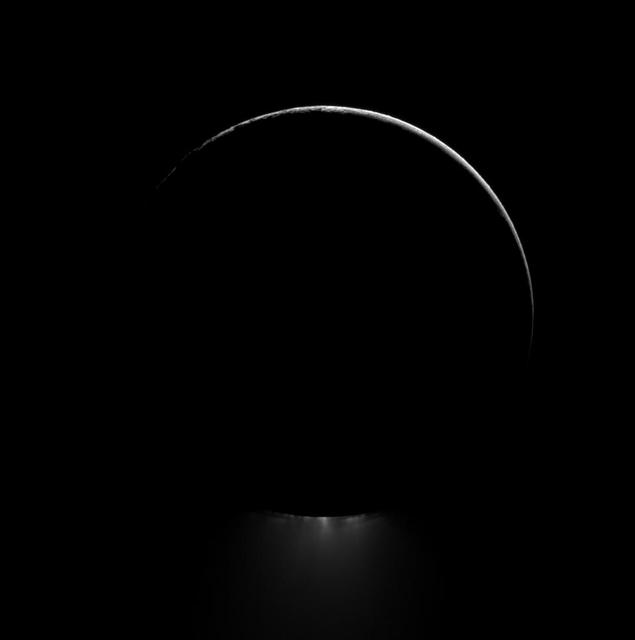
Right now, as you read this, Enceladus is blasting massive geysers of liquid water from cracks near its south pole — shooting ocean water at 1,440 km/h directly into space. The spray is so continuous and so vast that it feeds one of Saturn's rings. It has been doing this, uninterrupted, for millions of years.
We discovered this completely by accident. In 2005, NASA's Cassini spacecraft swung past Enceladus on a routine trajectory and spotted something that shouldn't have been possible: enormous plumes of water vapour erupting from a moon that had no right to be warm. Scientists stared at the data for weeks. Then they made a decision that changed space exploration forever.
They flew through it.
What Cassini Tasted
Between 2008 and 2015, Cassini made 22 close flybys of Enceladus, dipping directly into the plumes on multiple passes. Its instruments were never designed for this kind of sampling — but they collected data anyway, analysing the chemistry of water that had come straight from the ocean beneath the ice. The ocean rose up to meet us. We didn't even have to land.
The early results were already remarkable. Water. Salt. Organic molecules. Simple carbon compounds — the chemical fingerprints of the kind of chemistry that, on Earth, leads to life.
But in 2017, Cassini found something that made the scientific community go very quiet.
Molecular hydrogen.
Molecular hydrogen in a liquid water environment means one thing: hydrothermal vents. On Earth, hydrothermal vents are cracks in the deep ocean floor where superheated water reacts with rock. They exist in total darkness. No sunlight ever reaches them. And yet they are teeming with life — bacteria, shrimp, tube worms, entire ecosystems surviving on chemical energy alone.
The presence of molecular hydrogen in Enceladus's plumes meant the ocean floor was hot. Reactive. Chemically alive. Exactly the kind of environment where, on Earth, life doesn't just survive — it thrives.
The Last Missing Piece — Discovered in 2023
Astrobiologists have a shorthand checklist for the conditions life requires. They call it CHNOPS — Carbon, Hydrogen, Nitrogen, Oxygen, Phosphorus, Sulfur. Six elements that form the backbone of every living thing ever found on Earth. No exceptions.
After Cassini's 2017 results, scientists had confirmed five of the six in Enceladus's plumes. One element remained undetected: phosphorus — the element in DNA, RNA, cell membranes, and ATP, the molecule every cell on Earth uses to store and transfer energy. Without phosphorus, life as we know it simply cannot exist.
In 2023, a team of scientists reanalysing archived Cassini data found it.
Phosphorus. In the plumes. At concentrations estimated to be up to 100 times higher than in Earth's oceans.
Scientists were careful with their language. "We're not saying there's life," the lead researchers said. "We're saying all the ingredients are present." That is the scientific equivalent of finding a kitchen stocked with every ingredient, a working stove, and the cookbook open to the right page — and then declining to say whether dinner is being made.
It might be. It might not be. We genuinely don't know. And that uncertainty is the point.
Why Does a Tiny Frozen Moon Even Have a Liquid Ocean?
Here's where it gets stranger. Enceladus is small enough that it should have frozen solid billions of years ago. Its core should be cold rock. The ice should go all the way down. So why does it have a warm, liquid ocean underneath ice that could be 30 km thick?
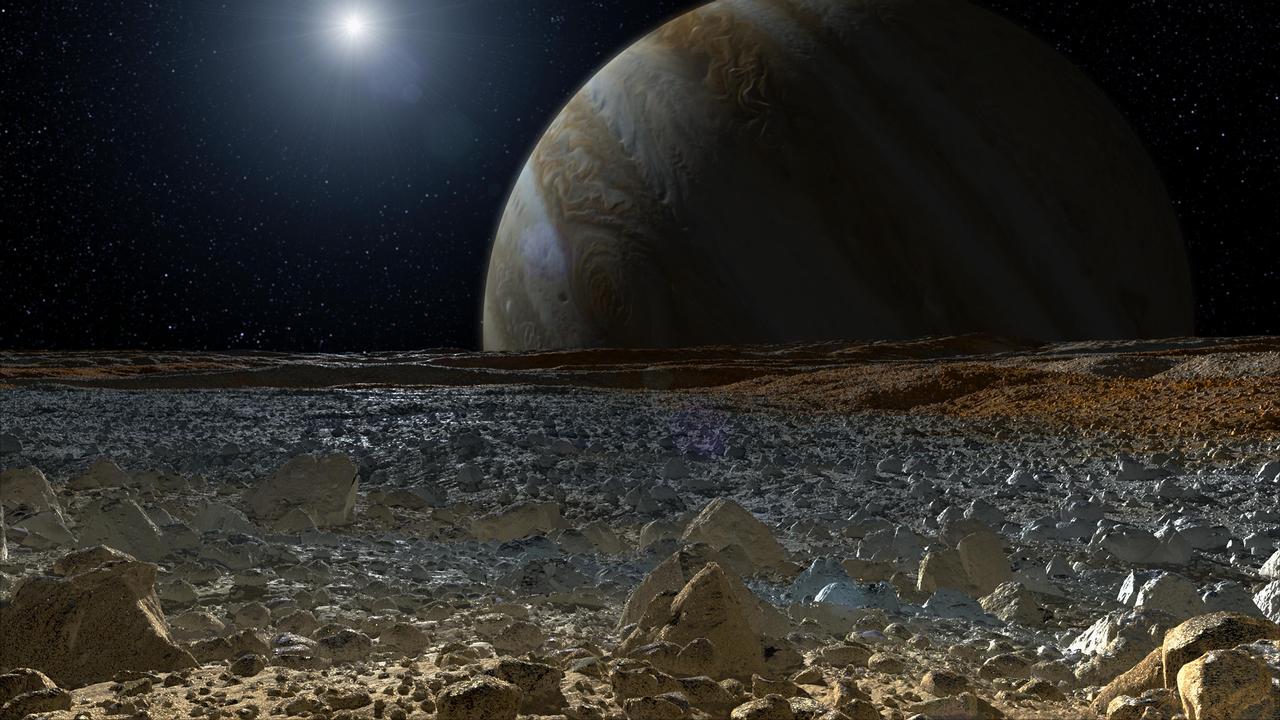
The answer is Saturn. As Enceladus orbits the planet, Saturn's immense gravitational field squeezes and stretches it — a process called tidal heating. The moon is essentially being kneaded like dough, and the friction generates heat. Enough heat to keep water liquid 1.3 billion kilometres from the Sun. The same mechanism keeps Europa's ocean liquid around Jupiter. Gravity as a power source. No sunlight required.
How far from the Sun is Enceladus?
Nine and a half times farther from the Sun than we are. Liquid water. Active hydrothermal vents. Six-for-six on the ingredients for life. And it's been broadcasting its ocean into space for millions of years, waiting for someone to notice.
We Left. And We Haven't Gone Back.
Cassini ended its mission in September 2017. NASA deliberately plunged it into Saturn's atmosphere — a controlled destruction to prevent contaminating any moons with Earth microbes. It was a responsible ending. It also felt like a tragedy.
Since then, there has been no dedicated mission to Enceladus. No spacecraft is currently en route. NASA's Europa Clipper launched in 2024 toward Jupiter's ocean moon, and it dominates the astrobiology headlines. But Enceladus — arguably the more accessible target, because it's already doing the sampling work for us — waits.
NASA has studied a concept called the Enceladus Orbilander: a spacecraft that would orbit the moon, fly through the plumes repeatedly with far more sensitive instruments than Cassini carried, and potentially land on the surface to analyse freshly deposited ocean ice. Cost estimate: roughly $4 billion USD. Status: unfunded.
William Herschel spots Enceladus through a telescope. It appears unremarkable — a frozen rock among Saturn's many moons.
Cassini detects active geysers erupting from Enceladus's south pole. Scientists spend weeks confirming what they're seeing is real.
Cassini dips directly into the plumes, collecting ocean water shot into space. First direct sampling of an alien ocean in history.
Molecular hydrogen detected. Evidence of hot rock reacting with liquid water at the ocean floor. On Earth, these environments sustain entire ecosystems without sunlight.
The last of the six CHNOPS life elements detected in archived plume data. Scientists choose their words carefully.
No spacecraft is en route. Enceladus continues erupting its ocean into space, uncollected.
The Most Important Question We Haven't Answered
Here is the uncomfortable truth. The answer to the most profound question humanity has ever asked — are we alone in the universe? — might already be encoded in unanalysed Cassini data sitting on a hard drive somewhere.
Or the answer might be no. Maybe Enceladus's ocean is sterile. Maybe all the chemistry is present and nothing ever sparked. That would also rewrite science — it would mean the ingredients alone aren't enough, that some additional threshold exists that we don't yet understand.
Either answer is extraordinary. Either way, we need to go back.
The geysers are still erupting right now. Every second, Enceladus is spraying ocean water 200 km into space — free samples of whatever is, or isn't, living beneath three decades of accumulated ice. You could call it an open invitation.
We just haven't accepted it yet.
You can track the satellites watching our own planet live on SkyLens — but the most important target might be one we visited once, briefly tasted, and then flew away from.
SkyLens editorial — live CelesTrak + NASA/JPL data (15679 objects)
Related stories