Space Race · 2026-06-13
China Just Launched Its Tallest Rocket. The New Moon Race Has a Frontrunner — And It Might Not Be NASA.
Ninety meters of steel stood on a launchpad in China this week. The engines lit. The rocket flew.
No drama. No abort. No explosion on the pad. Just a clean debut from China's newest — and tallest — orbital rocket, carrying three satellites to orbit like it had done this a hundred times before.
It hadn't. This was the first flight. And that's exactly what made it alarming.
What Actually Happened
The mission was commercial on the surface: three satellites for Qianfan, China's answer to Starlink, now adding to a constellation that aims for 14,000 total spacecraft. Standard stuff for a busy launch calendar.
But the rocket doing the lifting is not standard. It's a new vehicle — China's largest yet — built for the era of mega-constellations and, eventually, crewed lunar missions. CNSA confirmed the launch successful. The satellites are in orbit. The rocket worked on its first try.
For scale: the Statue of Liberty, base to torch, is 93 meters. This rocket is nearly that tall — and it cleared the tower cleanly on its first flight.
New rockets don't usually do that. SpaceX's Falcon 9 had anomalies on early flights. The SLS had years of delays before its first launch in 2022. China's new vehicle just... worked. On day one.
The Moon Race Nobody Is Talking Loudly Enough About
Here is what the headlines glossed over: China is running a Moon program that is on schedule. Not "on schedule for China." On schedule, full stop.
Chang'e 4 landed on the Moon's far side in 2019 — a first in human history, never done before by anyone. Chang'e 5 returned lunar samples to Earth in 2020. Chang'e 6 returned samples from the far side in 2024. Every mission hit its mark. No program-level failures. No multi-year delays.
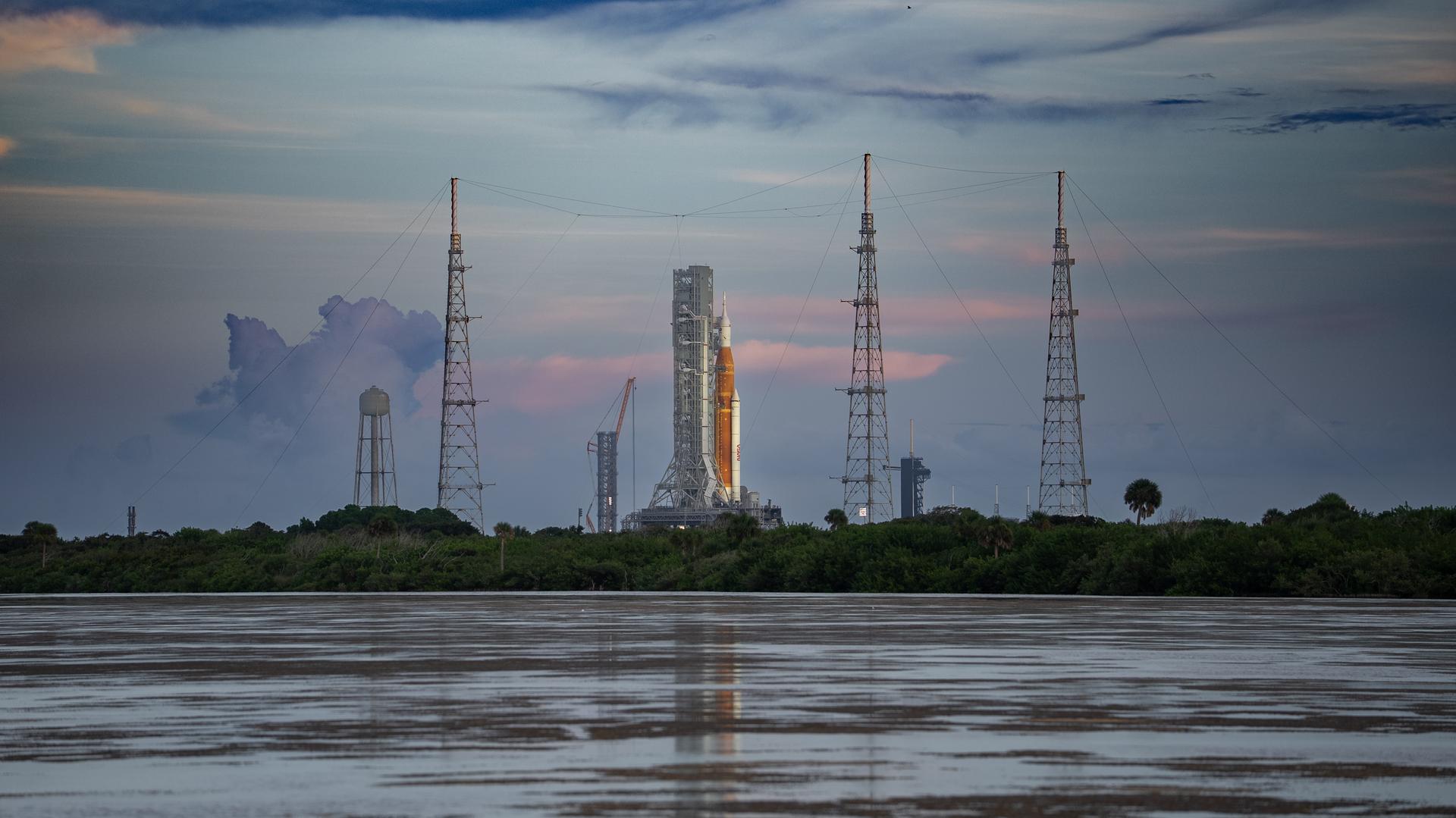
Artemis — NASA's crewed lunar return — is targeting Artemis III as the Moon landing mission. It has already slipped from 2025 to at least 2027. Some analysts privately estimate 2028 or beyond, depending on Starship's development timeline. Both programs want the lunar south pole, where permanently shadowed craters hold water ice. Whoever arrives first gets to define what "claim" even means in that context.
China's official public position is that they are "not in a race." Their launch cadence — and this week's successful debut — suggests the competition is very much on.
Meanwhile: LandSpace Is Trying to Land a Rocket
The same week, a different Chinese company is preparing for something that sounds very familiar if you watched SpaceX in 2015: landing a rocket after launch.
LandSpace — China's closest commercial equivalent to a young SpaceX — is gearing up for its second attempt to recover the first stage of the Zhuque-3, their reusable vehicle. Their first attempt didn't stick the landing. The second is coming.
SpaceX took several tries before Falcon 9 landed cleanly. Then a few more before the economics of reuse actually worked. Then the rest of the launch industry watched in horror as SpaceX cut costs by 90% and everyone else was still building rockets to throw in the ocean.
LandSpace is at the beginning of that curve. The awkward, expensive, fascinating beginning. If they get there — not this week necessarily, but in the next few years — China will have a commercial reusable rocket for the first time. That changes launch costs. That changes cadence. That changes who can afford to go to space, and how often.
14,000 Satellites. One Constellation. One Country.
Those three satellites launched this week are part of Qianfan — Chinese for "thousand sails." The goal: 14,000 satellites in low Earth orbit, blanketing the planet with Chinese internet infrastructure and providing connectivity to China and its Belt and Road partner nations.
Right now, the SkyLens live tracker shows roughly 15,700 total tracked objects in Earth orbit from CelesTrak data. Qianfan alone, at full build-out, would nearly double that number. Add SpaceX's continued Starlink expansion. Add Amazon's Kuiper. Add OneWeb and Europe's IRIS². The low Earth orbit environment is filling up fast.
Astronomers are already sounding alarms. SpaceX plans to launch orbital data centers — actual computing infrastructure in space — as early as next year, and researchers warn those satellites will create radio frequency interference with ground-based observatories. Adding 14,000 Chinese broadband satellites to that environment changes what the night sky looks like. Literally. Not metaphorically.
China's position under international telecommunications law is technically sound: orbital slots are a shared global resource, and China intends to use its allocated share. The ITU — the body that manages those allocations — was not designed to arbitrate a constellation arms race. It is currently not equipped to move fast enough to matter.
The Scoreboard Right Now
The US lead in active satellites looks comfortable today. Run the numbers forward a decade — with Qianfan building out, LandSpace iterating on reusability, and China's lunar program executing on schedule — and the gap starts to look different.
This week's launch was quiet. No livestream that went viral, no Elon tweet, no congressional hearing. Just a rocket that flew on its first try, delivered its payload, and landed the program one step closer to the Moon.
The next moves that matter: a firm Artemis III launch date, the Long March 10's crewed test timeline, and whether LandSpace sticks that second landing attempt.
You can see China's 830+ tracked satellites live right now — filter by country on the SkyLens tracker, or read more about what these different orbit types actually mean on the learn page. More space stories like this are on the SkyLens blog.
SkyLens editorial — live CelesTrak + NASA/JPL data (15700 objects)
Related stories