Planetary Defense · 2026-06-13
NASA Crashed a Spacecraft Into an Asteroid in 2022 and Moved It. Here's What Happens When the Next Threat Isn't a Test.
Nobody warned Chelyabinsk.
February 15, 2013. A rock the size of a six-story building entered Earth's atmosphere at 19 km/s — faster than anything humans have ever built. It detonated 23 kilometers above a Russian city with the force of 30 Hiroshima bombs. The shockwave shattered windows across six cities. 1,500 people were rushed to hospitals.
Not from fire. Not from the impact. From flying glass.
The world's most powerful telescopes saw nothing coming. Not one observatory issued a warning. The asteroid arrived in total silence.
That was 13 years ago. Since then, we actually built a planetary defense system. And in 2022, we tested it for real. What we learned should be the biggest science story of the decade — and it barely made the evening news.
The Night We Actually Did It
September 26, 2022. A spacecraft the size of a vending machine was hurtling through deep space at 6.1 km/s. Its target: a 160-meter rock called Dimorphos — a moon orbiting a larger asteroid called Didymos. No one lived there. This was pure science. This was NASA's DART mission.
It hit dead center. And in that moment, humans changed the orbit of a celestial body for the first time in history.
The expected change to Dimorphos's orbit was about 7 minutes. The actual result? 33 minutes. The impact kicked up such a massive debris cloud that the deflection multiplied itself — nearly five times more powerful than any model predicted. The asteroid fought back, and we still won.
The Alert System Nobody Talks About
Right now, telescopes on four continents are watching the sky. NASA's Planetary Defense Coordination Office is running 24/7. So is the European Space Agency's Planetary Defence Office. And the International Asteroid Warning Network — a web of independent observatories that cross-check each other's data. And the UN's Space Mission Planning Advisory Group, which has already drafted formal response protocols.
There are roughly 25,000 known near-Earth asteroids being tracked today. Scientists estimate we've found about 40% of the dangerous ones — rocks 140 meters or bigger, capable of destroying a city. The other 60% are still out there, uncharted. We find new ones every week. Sometimes after they've already passed.
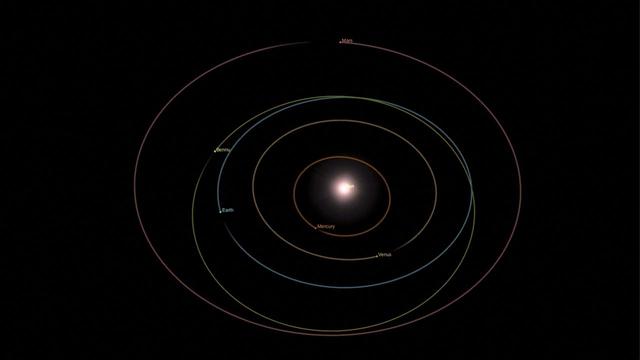
You can see near-Earth object passes in real time on the SkyLens live tracker — the same orbital data astronomers use, updated continuously.
Every potential impactor gets a Torino Scale rating — a number from 0 to 10. Zero means effectively impossible. Ten means certain global catastrophe. No known asteroid currently scores above zero. But that number changes as new observations arrive. Sometimes a rock spikes to a 1 or 2 before the data resolves it back down. Every spike gets attention. Every spike gets nervous phone calls.
What Actually Happens When One Gets Through the Net
Here's the scenario nobody in government likes to discuss publicly.
A telescope in Hawaii finds something unusual. The orbit calculation runs. And it comes back... bad. The rock has a real probability of hitting Earth. Not next week. In eleven years.
Within 24 hours, the International Asteroid Warning Network sends alerts to every major space agency on the planet. Independent telescopes on three continents confirm the orbit. The probability number updates — maybe it gets worse, maybe it collapses to zero. First detections are noisy. This is normal. Scientists don't panic yet.
But if the probability stays high for 72 hours, that's a different conversation. NASA convenes its Planetary Defense Coordination Office. ESA convenes its equivalent. The UN Space Mission Planning Advisory Group is formally notified. And then things get complicated in ways that no Hollywood movie has ever accurately depicted.
The Harder Problem: Who Decides?
Think about this carefully.
A deflection mission needs to launch in 3 years to have enough time to work. The spacecraft needs to be designed and built starting now. The cost: multiple billions of dollars. The benefit: shared by every human being on Earth. So who pays? Who authorizes the launch? Who decides whether to deflect the rock — and where it goes if the deflection is imperfect?
DART cost $308 million and was built under zero pressure, with no political stakes and no countries arguing about whose territory might be affected. A real planetary defense scenario would involve all of that and more.
Scientists have flagged this gap for years. The physics of planetary defense is nearly solved. The geopolitics isn't even close. There is no international treaty obligating any nation to fund a deflection mission. There is no standing fleet of spacecraft on standby. There is a framework for communication, and one successful proof of concept.
Less than 11 years of warning and the options shrink fast. Nuclear standoff detonation becomes the next fallback — a concept that exists in classified planning documents but has never been tested, never been approved by any international body, and raises its own nightmarish questions about dual-use weapons treaties.
The SkyLens orbital mechanics explainer breaks down why lead time matters so much — and why detection windows are measured in years, not months.
The 2029 Rehearsal
April 13, 2029. Write it down.
An asteroid called Apophis — named after the Egyptian god of chaos — will pass Earth at just 31,600 kilometers. That is closer than the ring of satellites running your GPS, your weather app, and your satellite TV. It will be visible to the naked eye from Europe and Africa as it crosses the night sky. People will watch it move in real time.
Apophis is not going to hit Earth. The orbital math is clear and the probability is effectively zero. But it will give scientists something priceless: a close-range view of a large near-Earth asteroid threading the needle between us and our communications infrastructure. ESA's RAMSES mission is being designed specifically to rendezvous with Apophis before and during this flyby. NASA is evaluating its own mission.
This is planetary defense science at its most urgent. Not because Apophis threatens us. But because a rock exactly like it, found ten years later, might. And watching Apophis up close will teach us more about how these objects behave than any computer model ever could.
What We Still Don't Know
Here's the part that keeps researchers awake.
DART worked. But DART hit a small moon of a double-asteroid system. The results exceeded expectations partly because Dimorphos is a rubble pile — loosely held-together gravel and rock — not solid iron. A dense metallic asteroid might respond completely differently. A rock three times larger would require a mission three times more powerful, at minimum.
We have tested deflection exactly once. On one type of asteroid. Under controlled conditions. With years of preparation.
And we still have a blind spot. The Chelyabinsk meteor came from the direction of the sun — an angle that ground-based telescopes physically cannot watch. The Vera Rubin Observatory in Chile, coming online soon, will reduce this gap significantly. But it won't close it. A fast-moving rock from the right angle could still arrive with little warning.
The Bottom Line
Chelyabinsk — sudden, silent, injuring 1,500 people — is the version of this story we never want to repeat at scale. DART — planned, executed, and stunningly effective — is proof that we don't have to accept that future.
We built the tool. We proved it works. What comes next requires something harder than rocket science: international coordination, sustained funding, and the political will to act on a threat that hasn't arrived yet.
Somewhere in the roughly 60% of city-killers we haven't catalogued yet, the next Chelyabinsk — or the next something much larger — is out there. Untracked. Unnamed. Moving on its own schedule.
We just need to find it before it finds us.
SkyLens editorial — live CelesTrak + NASA/JPL data (15700 objects)
Related stories