Space Mysteries · 2026-09-24
Oumuamua: The First Visitor From Another Star System — and Why Scientists Still Can't Agree on What It Was
In October 2017, an astronomer in Hawaii noticed something strange in the telescope data. An object moving through our solar system. Fast. Too fast. It was travelling at 26 kilometres per second — three times faster than the International Space Station. Nothing that naturally belonged here could move like that.
It had come from somewhere else. It was already leaving. And scientists had barely two weeks to study it before it vanished into the dark — forever.
The object was named Oumuamua — a Hawaiian word meaning "first messenger from afar." It was the first confirmed interstellar visitor ever detected passing through our solar system. Nine years later, scientists still argue about what it was.
Where did Oumuamua come from?
It arrived from the direction of the constellation Lyra — roughly toward the star Vega. But that's a coincidence of geometry. Vega wasn't in that position hundreds of thousands of years ago, when Oumuamua would have begun its journey. It originated somewhere unknown, in the vast darkness between stars, and coasted for hundreds of millions of kilometres without a destination.
It swung around our Sun on September 9, 2017. Closest approach. Nobody noticed — no telescope was pointing the right way. It then arced back outward, passing closest to Earth on October 14 at roughly 24 million kilometres. Still nobody noticed. Five days later, a routine survey telescope in Hawaii caught it by accident. By that point, it was already retreating. The first interstellar visitor in history, and we almost missed it entirely.
Why was Oumuamua's shape so strange?
This is where the story gets genuinely odd. Scientists measured how the object's brightness varied as it tumbled through space. The brightness swung wildly — by a factor of ten — every few hours. That meant only one thing: the object was extremely elongated. Ten times longer than it was wide. Like a cigar, or possibly a flat disc, spinning end over end through the void.
Nothing in our solar system looks like that. Comets are lumpy potatoes. Asteroids are irregular boulders. Whatever Oumuamua was, it had a shape that matched nothing in our entire catalogue. It was also reddish in color — consistent with organic materials baked by billions of years of cosmic radiation. And it had no coma. No gas cloud. No tail. For an object passing close to the Sun, that silence was extraordinary.
Why did Oumuamua accelerate — and why does that matter?
Here is the part that has divided scientists for nine years. As Oumuamua moved away from the Sun, it sped up — measurably more than solar gravity alone could predict. Comets do this too, when sublimating ice vents gas and the escaping material acts like a tiny rocket engine. But Oumuamua showed no outgassing. No detected gas. No visible material leaving its surface. The acceleration was real, reproducible, and confirmed by multiple independent teams. The source was invisible.
Did Harvard's top astronomer really suggest it was alien technology?
Yes. Avi Loeb — then chair of Harvard's astronomy department — co-authored a peer-reviewed paper in 2018 proposing that the acceleration, combined with the unusual shape, was consistent with a solar light sail: a spacecraft propelled by radiation pressure from sunlight. Not a rocket. A sail. Thin enough that the Sun's photons could push it like wind. He later wrote a full book, Extraterrestrial, expanding on the hypothesis.
His core argument: if Oumuamua was an extremely flat, thin sheet — like a pancake rather than a cigar — radiation pressure could explain the extra push without any outgassing. A natural object that thin would be physically implausible to form. An artificial one wouldn't.
The scientific community largely rejected this. Critics pointed to more mundane explanations: hydrogen ice, nitrogen ice fractured from an exoplanet, or a "fluffy" porous dust structure that could generate radiation pressure from within. To be fair to both sides: these alternatives have their own problems. Hydrogen ice evaporates too quickly in interstellar space. Nitrogen ice requires a chunk to have been violently ejected from a Pluto-like world somewhere in the galaxy — statistically possible, but rare. None of the natural explanations are airtight. The mystery remains genuinely unresolved, and Loeb's paper still has not been formally refuted — only contested.
Was Oumuamua the only interstellar visitor?
No. In August 2019, an amateur astronomer in Crimea named Gennadiy Borisov spotted a second one: 2I/Borisov. This one was far more reassuring. It had a coma. It had a tail. It looked exactly like scientists would have predicted — an ordinary comet from another star system, composed of water ice and carbon monoxide, chemically similar to our own comets.
Borisov made its closest approach in December 2019 and passed through the inner solar system without incident. Scientists had months to study it. It was normal. Almost disappointingly normal. And that contrast is precisely what makes Oumuamua harder to dismiss. Two interstellar visitors. One textbook-ordinary. One still unexplained. If they were both natural, why are they so different from each other?
Oumuamua reaches perihelion — closest approach to the Sun. No telescope is watching.
Closest approach to Earth: 24 million km — closer than Venus gets. Still undetected.
Robert Weryk spots it in Pan-STARRS survey data from Mauna Kea, Hawaii. Already retreating at full speed.
Non-gravitational acceleration confirmed across multiple observatories. No outgassing source found. Object named Oumuamua.
Loeb and Bialy publish the light-sail hypothesis in The Astrophysical Journal Letters. Scientific community reacts with skepticism.
2I/Borisov confirmed as the second interstellar visitor — a conventional comet, nothing like Oumuamua.
Vera C. Rubin Observatory begins full sky survey. Expected to detect new interstellar objects within years.
How many interstellar objects pass through our solar system each year?
Far more than most people realise. Statistical models published after Oumuamua's discovery suggest roughly one detectable interstellar object per year passes through our solar system — if you have a powerful enough telescope watching all the time. Before Pan-STARRS came online, we simply didn't have the coverage. Thousands of interstellar visitors may have passed unnoticed in the history of modern astronomy.
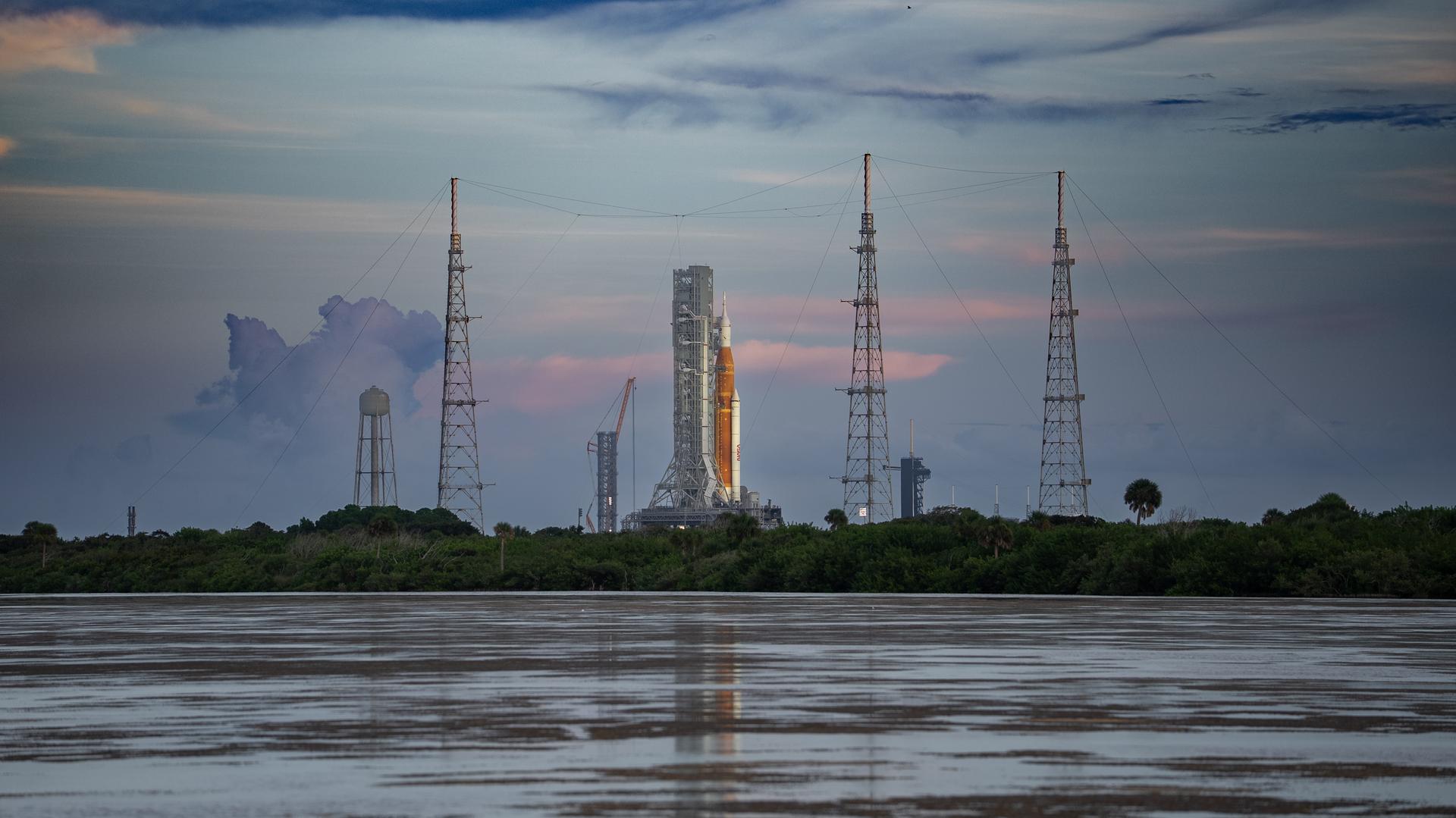
The Vera C. Rubin Observatory in Chile, which entered science operations in 2025, surveys the entire southern sky every three nights with a three-billion-pixel camera. Models estimate it will detect one or two confirmed interstellar objects every year. If another Oumuamua arrives, we'll have weeks of observation time instead of days — and instruments powerful enough to finally answer the outgassing question. You can track near-Earth objects live on SkyLens, and this blog will cover any new interstellar visitor the moment it's confirmed.
What is Oumuamua doing right now?
Leaving. It passed beyond Pluto's orbit years ago and is now more than 40 astronomical units from the Sun — over 6 billion kilometres away and still accelerating. It is far too faint to observe with any current telescope. It will never return. At its current velocity, it will reach the vicinity of the nearest stars in roughly 100,000 years — ten times longer than all of recorded human history.
Whatever it was — a fragment of a shattered exoplanet, a cloud of exotic ice, a piece of something that was built — it passed through the one solar system in the galaxy that happened to have a telescope pointing the right direction at the right moment. For two weeks, we watched. We measured. We argued. And then it was gone.
The universe is not empty space. It is full of things like Oumuamua — passing silently through star systems, unremarked, for billions of years. We just never had the eyes to notice. Learn how we track objects crossing our solar system, or browse more stories from the edge of what we know.
SkyLens editorial — live CelesTrak + NASA/JPL data (16022 objects)
Get the free Night Sky Field Guide
Spot the ISS, Starlink trains and more with the naked eye — plus occasional SkyLens updates.
🔒 No spam. Unsubscribe anytime.
Related stories