Mars Exploration · 2026-07-15
A Nuclear Robot Has Been Driving Alone on Mars for 14 Years. This Week, It Looked Back at Where It Started.
Sol 4947. Nobody Counted on This.
When NASA's Curiosity rover touched down in Gale Crater on August 6, 2012, the mission was designed to last two years. Two years of nuclear-powered roaming across an ancient Martian lakebed, and then it would be over.
That was 4,947 Martian days ago.
Curiosity is still driving.
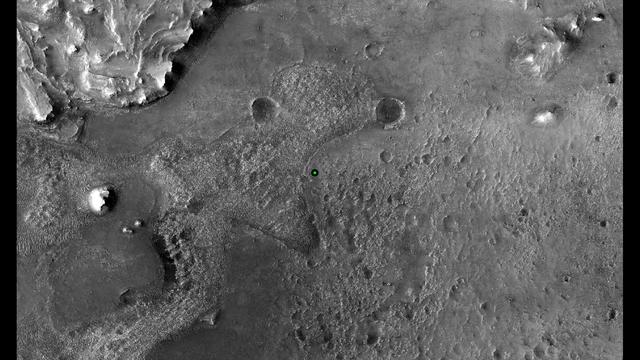
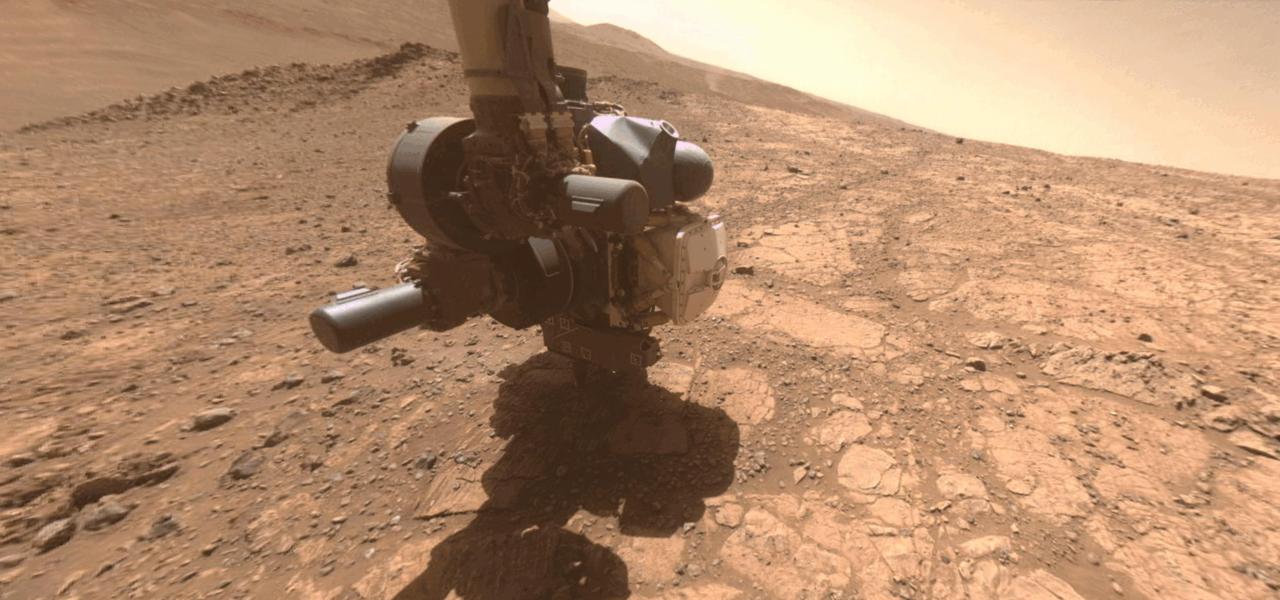
This week, Curiosity's science team published a new update — Gale Crater Then and Now. They're comparing what the rover saw when it first landed to what it's seeing today, 14 years deeper into the ancient lake floor. The comparison is stunning. And slightly unsettling.
This Crater Used to Be a Lake
Gale Crater isn't just a big hole in the ground. It's a graveyard for an ancient Martian lake — and possibly the most important geological feature on Mars for understanding whether life ever existed there.
The crater is 154 kilometers wide. Wider than the entire state of Connecticut. It formed about 3.5 to 3.8 billion years ago when a meteor struck Mars. Then something remarkable happened. Water filled it. For hundreds of millions of years, a lake sat at the base of that crater.
In the center of the crater rises Mount Sharp — a 5.5-kilometer-tall mountain of layered rock. Each layer is a chapter. Each chapter is a different era of Martian climate. Curiosity has been climbing those layers since 2014, reading the history of a planet that used to be warm and wet. In 2012, the mountain was a distant silhouette on the horizon. Today, the rover is on its slopes.
What Curiosity Actually Found
The headline version undersells what this rover has confirmed. Here's the actual list:
- Ancient water that could support life. The chemistry of lakebed sediments shows water that was neither too acidic nor too salty — the kind microbes can survive in. NASA confirmed this in 2013.
- Organic molecules. Carbon-bearing molecules — the building blocks of life — preserved in 3-billion-year-old rock. Confirmed in 2018. This doesn't prove life. It proves the ingredients were there.
- Methane spikes. On multiple occasions, Curiosity has detected sudden bursts of methane in the thin Martian atmosphere. On Earth, most methane comes from living organisms. On Mars, nobody knows where these spikes come from — or why they appear and then vanish.
- Radiation maps for future astronauts. Every sol, Curiosity measures the radiation humans would face on the Martian surface. Data that will keep the first boots on Mars alive.
Why It Runs on Plutonium
Curiosity doesn't use solar panels. It runs on plutonium-238.
A small canister of radioactive material — an RTG, a Radioisotope Thermoelectric Generator — converts the heat from radioactive decay directly into electricity. No sunlight required. No dust storms that can kill a rover.
This is exactly why Curiosity is still alive when Opportunity is not. A global Martian dust storm in 2018 coated Opportunity's solar panels and it never recovered. The last signal from Opportunity was a data packet engineers described as the equivalent of my battery is low and it's getting dark.
Curiosity didn't notice the storm.
The Loneliest Machine in the Solar System
There are over 16,000 objects tracked in Earth orbit right now — you can see the full picture on the SkyLens live tracker. A wall of human-made machines surrounding our planet, dense enough to look like a second atmosphere.
Mars has two orbiters, one broken helicopter, and Curiosity. That's it. The entire active human presence on another planet is a nuclear SUV, slowly climbing a mountain, completely alone.
The radio signal from Earth takes between 3 and 22 minutes to arrive — depending on where Earth and Mars are in their orbits. There is no real-time steering. Every command is sent hours before it executes. Every problem must be solved before the rover even encounters it. And yet the rover hasn't stopped.
Then and Now: What the Comparison Actually Shows
The team's new update — written by atmospheric scientist Alex Innanen from York University in Toronto — isn't just nostalgia. It's a calibration exercise. Fourteen years of geological context, layered on top of what the rover is seeing this week.
In 2012, Curiosity sat on a relatively flat crater floor. Fine-grained lake sediments. Sandy, dusty, almost featureless — like a dried riverbed that forgot what rivers were.
In 2026, the rover is surrounded by layered sulfate rocks, climbing the slopes of Mount Sharp. These sulfate layers represent a transitional period in Mars's history — when the lakes were evaporating and becoming salty and hostile. The planet was dying in real time. And every meter Curiosity climbs is another chapter of that collapse.
Innanen's atmospheric team has used Curiosity's onboard weather station to track dust cycles, pressure changes, and seasonal patterns across the equivalent of 14 Martian years of data. That's a climate record for another planet that didn't exist a decade ago. Learn more about how Mars science connects to the broader search for life on our learn page.
The Clock Is Running Down
Curiosity's RTG degrades slowly but steadily. Power output drops about 4 to 5 watts per year. The rover is still functional, but there are fewer experiments it can run simultaneously. The team makes harder trade-offs every season.
At some point — possibly within the next few years — Curiosity will go quiet for the last time. Not because it crashed. Not because it fell into a crater. Just because the nuclear fuel that has powered it for over a decade will finally fade below the threshold needed to keep the computer warm through a Martian night.
Before that happens, the science team wants to reach a specific geological boundary higher on Mount Sharp — a layer that might show the exact transition between a habitable Mars and the barren world we see today. The answer to whether Mars was ever alive might be sitting in a rock layer 200 meters above the rover's current position.
SkyLens editorial — live CelesTrak + NASA/JPL data (16072 objects)
Related stories