UAP · 2026-05-28
PURSUE Record — NASA-UAP-D5, Apollo 17 Crew Debriefing for Science, 1973
Among the 120 PDFs declassified in PURSUE Release 01, NASA-UAP-D5 is one of the most technically specific: a January 1973 science debriefing excerpt from the Apollo 17 mission, in which a co-investigator on the onboard ultraviolet experiment describes an anomalous spectral observation that — in his own words — nobody had anticipated. The record is not a UFO report. It is a scientific transcript, included in the release because it documents something unexpected detected by mission instrumentation that, at the time of transcription, remained without a fully stated explanation.
What this record contains
NASA-UAP-D5 is a single-part PDF released on May 8, 2026, as part of the U.S. Department of War's PURSUE Release 01 package. The releasing agency is unspecified in the public manifest, and no incident date or incident location is logged separately — the document itself is dated to January 8, 1973, the day of the Apollo 17 Crew Debriefing for Science. The public release description identifies the speaker as Dick Henry, co-investigator on the ultraviolet experiment carried aboard Apollo 17, and excerpts pages 119–120 of that debriefing transcript.
In the excerpt, Henry describes surveying a large number of sky positions at high galactic latitudes — both north and south — to look for ultraviolet background radiation analogous to the unexpected X-ray and gamma-ray sky backgrounds that had already surprised astronomers. What he and the team found was a UV spectrum, distinct above instrumental dark current, that matched the spectral profile of a hot star. The problem, as Henry states directly: "we know that there were no hot stars within our field of view." The description blurb as released ends mid-sentence — "the most conservative interpretation, I think, is that what we're seeing is light from hot" — suggesting either a transcription truncation or a redaction boundary at that point in the document.
Historical & documentary context
Apollo 17, launched December 7, 1972, was the ninth crewed U.S. lunar mission and the sixth landing — carrying Commander Eugene Cernan, Lunar Module Pilot Harrison Schmitt, and Command Module Pilot Ronald Evans. It remains the last crewed mission to the Moon. The science manifest for Apollo 17 was unusually rich, including a Far Ultraviolet Camera and spectrographic instruments designed to exploit the Moon's lack of atmosphere for deep-sky UV observation. Ground-based UV astronomy was effectively blocked by Earth's atmosphere; the lunar surface offered a rare unobstructed platform. Crew debriefings for science, like the January 8 session captured here, were structured interviews where principal investigators and co-investigators walked mission scientists through raw results while the astronauts' direct instrument interactions were still fresh.
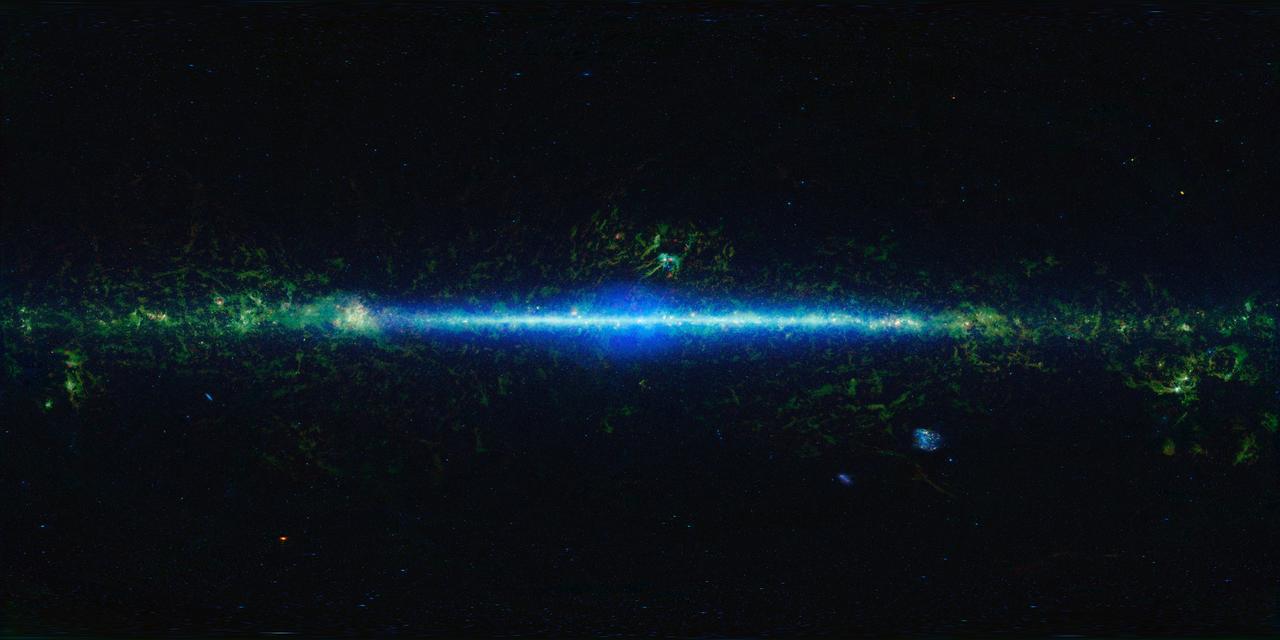
Henry's observation — a UV spectral signature consistent with hot stellar plasma in a region of sky containing no catalogued hot stars — touches on what would later be recognized as the diffuse UV background, a genuinely unresolved problem in astrophysics through much of the 1970s and beyond. Whether the released excerpt contains his full conclusion, or whether the sentence is truncated, is itself a meaningful question about the document's completeness as released.
What this does and does not prove
What is documented: a trained astrophysicist, working from Apollo 17 mission data in a formal science debrief, states that the instrument detected a UV spectrum consistent with hot stellar emission where no hot stars were known to exist, and that this result was "unexpected." What this does not prove is any extraterrestrial or anomalous non-astrophysical phenomenon. The observation is consistent with diffuse astrophysical emission sources — interstellar hot gas, unresolved stellar populations, or instrumental effects not fully characterized — and Henry's own framing is cautious and scientific. The public release does not include the rest of his sentence, so his stated conservative interpretation is literally incomplete in the released record. Readers should not read beyond what the transcript, as excerpted, actually says.
How it fits PURSUE Release 01
NASA-UAP-D5 is part of the NASA archive strand within PURSUE Release 01 — a subset of the 120 PDFs drawing on materials from space program files rather than military sensor logs or FBI field reports. As noted in the full PURSUE Release 01 catalogue, the release explicitly spans agency types: DoW mission data, FBI files dating to 1947, and NASA program archives. The inclusion of a 1973 science debriefing transcript signals that the release coordinators cast a wide net for documented unexplained detections — extending the definition of "unresolved observation" beyond radar tracks and pilot accounts to include instrumental anomalies reported by mission scientists. For broader coverage of how NASA archive materials sit within this release, see other PURSUE editorial analysis on the SkyLens blog.
Editorial note: This analysis is independent commentary on a publicly released document. The original record, source links, and full release metadata are catalogued on the SkyLens UAP files page alongside every other case in the PURSUE Release 01 set.
Official PURSUE Release 01 record · U.S. Department of War · catalogued via images-api.nasa.gov
Get the free ebook: 12 government UFO cases they still can’t explain
Declassified documents, eyewitness accounts — plus an email when new PURSUE files drop.
🔒 No spam. Unsubscribe anytime.
Related stories