UAP · 2026-05-28
PURSUE Record — NASA-UAP-D3, Gemini 7 Transcript, 1965: NASA · Moon · 1965
Record NASA-UAP-D3 is a declassified PDF transcript of voice communications from NASA's Gemini 7 mission in 1965, released by NASA on May 8, 2026 as part of PURSUE Release 01. The document captures real-time crew reporting of an unidentified object and an accompanying debris field during the mission. It is a primary source record — astronaut words spoken in the moment, preserved verbatim — not a post-flight summary or retrospective account. The transcript is accompanied by contemporaneous handwritten notes annotating the event.
What this record contains
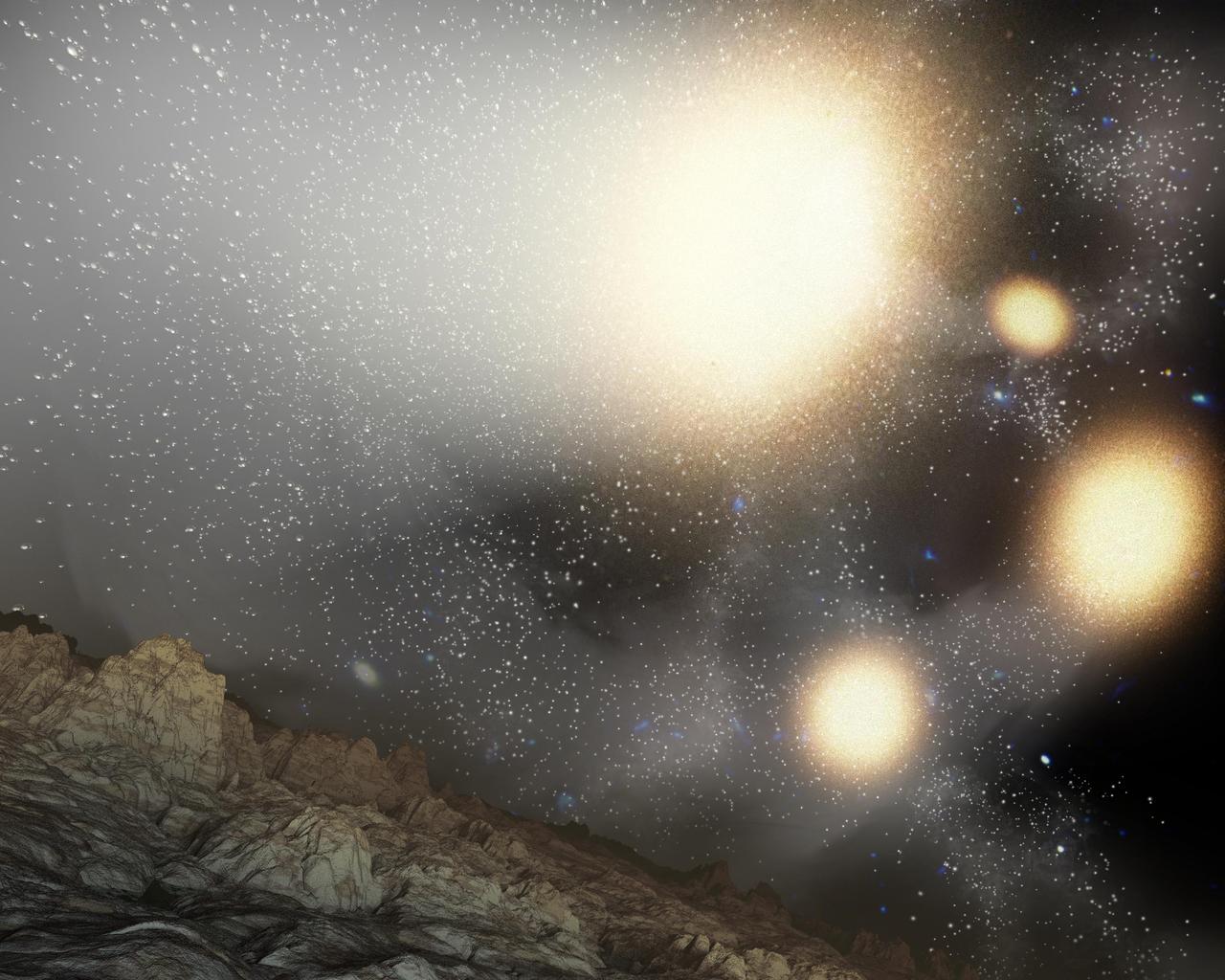
Released by NASA as a single-part PDF, this transcript documents communications between the Gemini 7 flight crew — Astronauts Frank Borman and James Lovell — and the Manned Flight Center (now Johnson Space Center) in Houston, Texas. The incident is logged against a 1965 date and is catalogued under the location designation "Moon." The official release description notes that Borman opened by reporting a "bogey" — the then-standard aviation and spaceflight term for an unidentified aircraft — along with a debris field. Borman described the field as consisting of "very, very many … hundreds of little particles," placing them at an estimated four miles from the spacecraft. Lovell separately described observing "a brilliant body in the sun against a black background with trillions of particles on it."
The document also preserves handwritten notes from the era, annotated in the top right corner with the phrase "UFO Sighting by Borman." That annotation was written at the time, not appended later — making it a contemporaneous institutional acknowledgment that the crew's report was being treated as an anomalous sighting. The transcript is one file part, with no supplementary imagery or sensor data included in this specific record.
Historical & documentary context
Gemini 7 launched on December 4, 1965, and was the tenth crewed American spaceflight — a long-duration mission primarily designed to test whether humans could survive the roughly two-week transit time required for a future lunar voyage. Borman and Lovell orbited Earth for 14 days, conducting medical experiments and serving as a rendezvous target for Gemini 6A. The Gemini program as a whole was the operational bridge between Mercury's proof-of-concept flights and Apollo's lunar missions. Crew communications during Gemini flights were recorded as a matter of standard mission protocol, meaning this transcript exists not because the encounter was considered unusual at the time of recording, but because everything was recorded. The fact that the session produced handwritten annotations flagging a UFO sighting indicates that someone within the mission operations chain treated the report as noteworthy enough to mark.
The 1960s were a period of institutional ambiguity around UAP reporting. Project Blue Book, the U.S. Air Force's formal investigation program, was still active, running until 1969. Astronaut sighting reports occupied a peculiar position in this ecosystem: crews were trained observers with instrument access, operating in an environment where misidentification of mundane objects — rocket stages, debris clouds, atmospheric phenomena — was a genuine and common occurrence. The debris field description Borman offered is consistent with orbital debris behavior of the era, but the record itself does not resolve what the particles were.
What this does and does not prove
What is documented is this: two NASA astronauts verbally reported an unidentified object and a surrounding particle field during an orbital mission in December 1965, someone in the mission operations chain annotated those notes as a UFO sighting, and that document has now been formally declassified and released. What the record does not establish is the nature, origin, or significance of what Borman and Lovell observed. The debris field description is consistent with several mundane orbital explanations — spent rocket stages, ice crystals venting from the spacecraft, or other mission-related particulates — and with unresolved possibilities. The "brilliant body" Lovell described has not been identified in this release. PURSUE Release 01 is investigative material, not a verdict, and this transcript carries the same evidentiary weight as the rest of the set: it documents that something was reported, not what that something was.
How it fits PURSUE Release 01
NASA-UAP-D3 sits within the NASA archive materials strand of the May 8, 2026 release — one of 120 PDFs across the full 162-document set, which also includes 28 videos and 14 images drawn from AARO-coordinated military sensor records and historic FBI files dating to 1947. The Gemini 7 transcript is among the older materials in the release by incident date and among the most directly human in character: it is two people, aloft, describing what they saw. For a fuller view of how this record fits alongside the other NASA archive documents and contemporaneous military reports in the release, the complete catalogue is available on the SkyLens UAP files page. Additional editorial coverage of PURSUE Release 01 cases can be found in the SkyLens blog archive.
Editorial note: This analysis is independent commentary on a publicly released document. The original record, source links, and full release metadata are catalogued on the SkyLens UAP files page alongside every other case in the PURSUE Release 01 set.
Official PURSUE Release 01 record · NASA · catalogued via images-api.nasa.gov
Get the free ebook: 12 government UFO cases they still can’t explain
Declassified documents, eyewitness accounts — plus an email when new PURSUE files drop.
🔒 No spam. Unsubscribe anytime.
Related stories