Living in Space · 2026-10-20
Life in Space: 16 Sunrises a Day, No Shower, and a Mandatory 2-Hour Workout — What ISS Astronauts Actually Do Every Day
Right now, seven people are watching the Sun rise for the 16th time today. They've been awake for less than six hours.
The International Space Station hurtles around Earth at 27,576 km/h — nearly eight times faster than a rifle bullet. It completes a full orbit every 92 minutes. That means the crew experiences a sunrise, then a sunset, then another sunrise, over and over, sixteen times before they go to sleep.
Most people imagine life in space as weightless wonder. The reality is closer to: mandatory gym sessions, no running water, and a sleeping bag velcroed to the wall. Here's what the ISS crew actually does from the moment their alarm goes off at 6 a.m. GMT — every single day, 420 kilometres above your head.
What time do astronauts wake up on the ISS?
Alarm goes off at 6:00 a.m. GMT. By 6:30, the crew has done morning hygiene — which involves rinsing your mouth over a sealed bag to catch floating water, washing your face with a damp cloth, and brushing your teeth with edible toothpaste. Spitting sends droplets drifting directly into the ventilation system, so you swallow.
Breakfast is from a foil pouch. Scrambled eggs reconstituted with water injected from a syringe. Coffee from a sealed bag with a straw. The food has improved dramatically since the early shuttle days, but supply ships occasionally bring fresh fruit — and when they do, the crew photographs it like a gold discovery. A fresh apple at 420 km. Nobody takes it for granted.
How much exercise do astronauts do in space?
Two hours. Every single day. Non-negotiable — written into the daily schedule by flight surgeons before the mission even launches.
Without it, the human body in microgravity begins to dismantle itself. Bones lose density at 1–2% per month in space. On Earth, that's the rate seen in people with severe osteoporosis. Muscles that don't need to fight gravity simply stop contracting. Astronauts who have neglected their exercise routines have returned from six-month missions unable to walk unassisted.
The ISS carries a treadmill — the astronaut straps in with bungee cords so they don't float away mid-run — a cycling ergometer, and a resistance machine using vacuum cylinders to simulate weightlifting. Because actual weights are useless in zero gravity. The resistance machine can replicate a squat with up to 270 kg of equivalent load. Astronauts are squatting 270 kg in orbit. Right now. Let that settle.
How do astronauts shower in space?
They don't. There is no shower on the ISS. There has never been a shower on the ISS.
Water doesn't flow in microgravity — it forms floating spherical blobs that drift into electronics and cause short circuits. Instead, astronauts use specially formulated no-rinse soap with a damp cloth for sponge baths. Their shampoo is waterless. A haircut requires scissors and a vacuum cleaner running simultaneously to catch every floating strand before it reaches an air duct.
Think about this sequence. You just did a two-hour workout in a sealed metal tube with six other people. And then. No shower. The air recycling system works very hard. So does everyone's deodorant.
What do ISS astronauts actually work on all day?
Six to seven hours of scheduled tasks. Every hour is planned months in advance by a team of hundreds of people on the ground. Astronauts rarely improvise.
The science running on the ISS right now includes: growing protein crystals in microgravity (they form more perfectly without gravity, leading to sharper pharmaceutical designs), studying how flames behave without convection (fire in space forms a silent blue sphere instead of a teardrop — it burns cooler, longer, and it doesn't behave like anything on Earth), monitoring how the human immune system rewires itself over months in orbit, and simply watching Earth from the cupola observation dome.
The cupola is a seven-windowed dome pointing straight down at the planet. Astronauts describe sitting in it for hours, just staring. Wildfires tracing orange lines across continents. Cyclones that span entire seas. City grids snapping on at dusk, one grid square at a time. You can track the ISS's current ground position in real time using the SkyLens live tracker — right now it may be directly over your city.
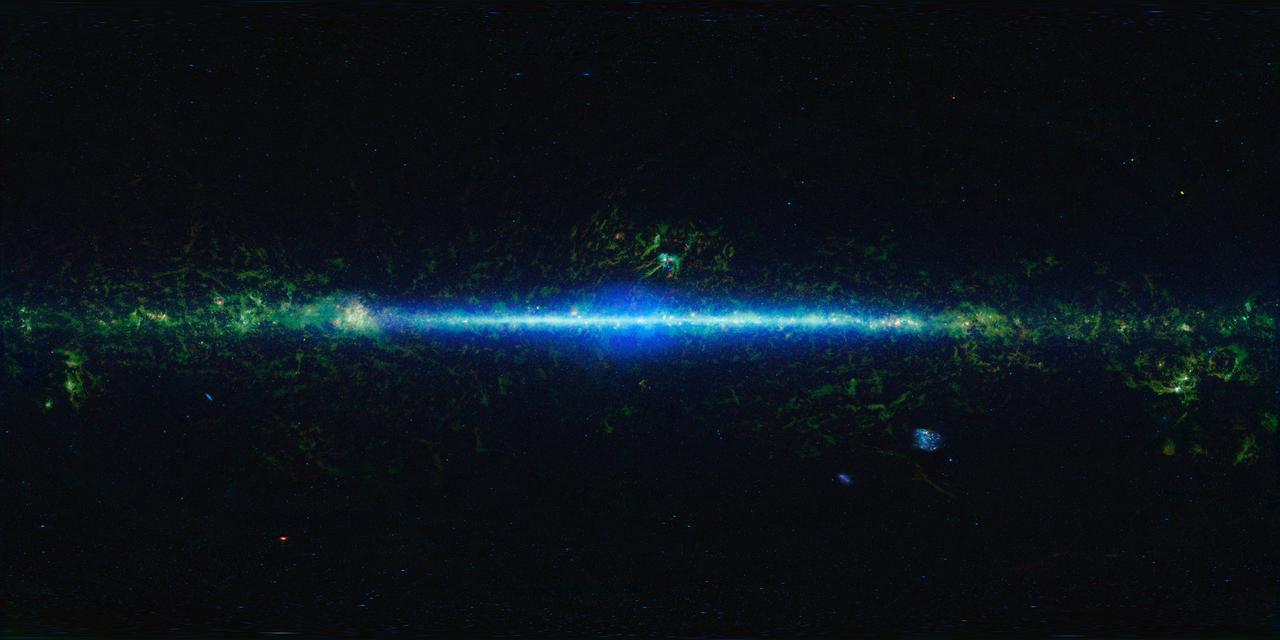
Where the ISS sits between Earth and deep space
How do astronauts sleep in space?
In a sleeping bag. Zipped into a private cabin roughly the size of a phone booth. The bag is usually tethered to a wall — but it doesn't matter which surface. There is no floor or ceiling. Some astronauts float freely in the middle of the cabin, arms drifting outward like they're falling, sleeping peacefully at 27,576 km/h.
The biggest sleep problem isn't the bag. It's the light. The ISS has no natural night cycle. A full orbit takes 92 minutes, so the Sun vanishes and reappears sixteen times a day. The station's LEDs dim to simulate evening, but the human brain evolved over millions of years to track the actual Sun — and it knows something is wrong.
Studies have found that roughly 47% of astronauts on long-duration missions use sleeping medication at some point. Sleep deprivation is considered one of the top performance risks for ISS crew. Missions to Mars, which would last two to three years, list it as a critical unsolved problem with no good answer yet.
What are the long-term health effects of living in space?
More serious than most mission summaries let on. Six months in orbit causes measurable structural changes to the brain. MRI scans of returning astronauts show cerebrospinal fluid shifting toward the head in microgravity — increasing intracranial pressure in ways that can flatten the optic disc and change the shape of the eyeball itself. Some astronauts return with permanently degraded vision. NASA calls it Spaceflight-Associated Neuro-ocular Syndrome, or SANS. It affects a significant fraction of long-duration crew members, and there is currently no reliable countermeasure.
Then there's radiation. The ISS sits above most of Earth's protective atmosphere. A standard six-month mission delivers roughly 80–100 millisieverts of radiation — more than 30 times what the average person receives from background radiation in an entire year at ground level. On a future Mars mission — two to three years, far beyond Earth's magnetosphere — that number climbs to something that would concern any oncologist on Earth.
NASA and ESA track all of this methodically. Every ISS mission is simultaneously a medical experiment. The data feeds directly into the risk models for future crewed missions. To understand more about how this research shapes what comes next, explore the SkyLens space science archive.
Is life in space actually worth it?
Ask anyone who's sat in the cupola and watched a thunderstorm crawl across India from above. Or seen the Sahara shift from terracotta to absolute black as night falls beneath them in under two minutes. Or floated at a porthole at 3 a.m. and watched the auroras from the outside — green and violet curtains of light rippling below their feet instead of above their heads.
Every single astronaut says yes. Without hesitation. Even the ones who had to relearn how to walk after landing.
The International Space Station has been continuously occupied since November 2, 2000. That's over 26 years of unbroken human presence in orbit. More than 270 people from over 20 countries have lived there. In 2030, it will be deliberately deorbited and guided into the Pacific Ocean. Whatever comes after — commercial stations, Lunar Gateway, a Mars transit ship — will inherit every lesson the ISS learned the hard way.
Space is extraordinary. It is also genuinely, relentlessly difficult. The ISS is the longest-running experiment in human endurance, human ingenuity, and the question of what happens when you take a species that evolved on a savannah and point it at the stars.
Read more space stories — asteroids, missions, mysteries, and what's in the sky tonight — on the SkyLens blog. And track the station flying overhead right now on the live tracker.
SkyLens editorial — live CelesTrak + NASA/JPL data (15927 objects)
Related stories