Space Science · 2026-08-24
Nancy Grace Roman Space Telescope: The Observatory Launching in 6 Days That Sees 100 Times More Sky Than Hubble
Six days from now, a rocket will climb out of Earth's atmosphere carrying something that could fundamentally rewrite humanity's map of the universe. On August 30, 2026, NASA's Nancy Grace Roman Space Telescope — 20 years in the making, cancelled twice, resurrected twice — finally launches.
Astronomers have been waiting for this the way musicians wait for a concert grand after a decade on a practice keyboard.
What is the Nancy Grace Roman Space Telescope?
The Roman Space Telescope is NASA's next flagship observatory, built to survey colossal swaths of sky in infrared light. It carries a 2.4-metre primary mirror — the same diameter as the original Hubble Space Telescope. But here's the detail that makes astronomers borderline emotional: Roman's field of view is 100 times wider. In one single exposure, it captures the same area of sky that Hubble would need 100 separate pointings to photograph.
Think of it this way. If Hubble sees the universe through a keyhole, Roman sees it through an open window. Same optical quality. A hundred times more sky. All at once.
What will the Roman Space Telescope actually discover?
Let's be specific, because the science here is genuinely staggering — and it's confirmed by peer-reviewed survey planning, not hype.
First: dark energy. About 68% of everything in the universe is dark energy — a mysterious force accelerating the expansion of the cosmos. We can't see it. We can't touch it. We infer it exists because distant galaxies are rushing apart faster than they should be. Roman will survey billions of galaxies across deep cosmic time, mapping how their positions have shifted over billions of years. From that map, scientists hope to finally pin down what dark energy actually is. Best-case scenario: we crack one of the biggest open questions in all of physics.
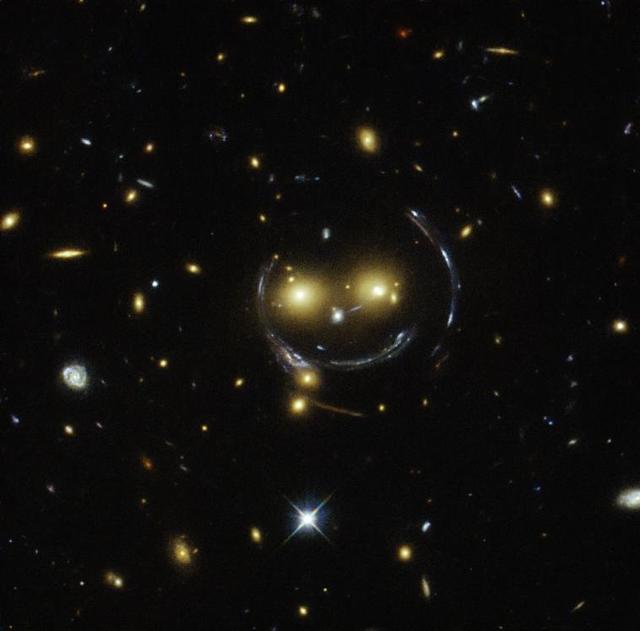
Second: exoplanets — at industrial scale. Roman will hunt for planets using gravitational microlensing, watching how a star's gravity bends and briefly brightens the light of an even more distant star behind it. A planet around that foreground star distorts the brightening in a unique way. Roman will monitor hundreds of millions of stars simultaneously, catching thousands of these events in a single stare toward the galactic core.
Here's the comparison that makes you put your phone down. Kepler — the legendary planet-hunting spacecraft — found roughly 2,600 confirmed planets over nine years of operation. Roman is projected to match that number as a secondary task. While simultaneously mapping dark energy. While testing new direct-imaging technology. In five years.
Who was Nancy Grace Roman?
Here's the part most articles skim past. Nancy Grace Roman became NASA's first chief of astronomy in 1959 — when NASA itself was less than a year old and almost everyone assumed space science was a man's job. She spent two decades building the scientific foundations and institutional scaffolding that made the Hubble Space Telescope possible. She fought for its budget. She designed the program. She's formally credited as the "Mother of Hubble."
She died in 2018, aged 93, having watched Hubble transform our understanding of the cosmos for nearly 30 years. NASA named its next great observatory after her. It launches August 30. Some milestones feel like the universe correcting a debt.
To be fair to NASA's record: Roman was recognized and honoured in her later years, and she was deeply aware of Hubble's legacy. But a flagship mission bearing her name? That took until 2020 to be formally announced — two years after her death.
Where is the Roman Space Telescope going?
Roman will travel to the second Lagrange point — L2 — 1.5 million kilometres from Earth. Same orbital neighbourhood as the James Webb Space Telescope. At L2, the Sun, Earth, and Moon are all behind you in a neat line. No stray sunlight contaminating your detectors. No thermal noise from Earth. Just the universe, perfectly dark, waiting.
How far is L2 from Earth?
Worth pausing on: L2 is almost four times farther than the Moon. The Moon is 384,400 km away. L2 is 1.5 million kilometres away. If something breaks up there, no crew is flying out to fix it. Roman was engineered from the start to be fully autonomous and robust — no servicing missions planned, none possible. It either works perfectly or it drifts silent in the dark.
According to NASASpaceflight, the telescope completed its final integration and rehearsal milestones this week. The systems are verified. The countdown is live.
Could Roman help find signs of alien life?
Indirectly — and more meaningfully than most people realise. Roman carries a coronagraph instrument designed to directly photograph exoplanets by blocking out the blinding light of their host stars. Imagine holding your thumb up against the Sun so you can see an object beside it — except at distances measured in light-years. That coronagraph is a technology demonstration, and if it works, it becomes the blueprint for the next generation of telescopes explicitly designed to sniff out biosignatures in planetary atmospheres.
No guarantees. But Roman is a pipeline stage. It maps thousands of candidate worlds; future missions go back to the most promising ones and look for oxygen, methane, water vapour. You can explore how biosignature detection actually works — it's more sophisticated, and more achievable, than most articles suggest.
Why did it take 20 years to build the Roman Space Telescope?
Roman was first formally proposed in 2010 under the name WFIRST — Wide Field Infrared Survey Telescope. The US National Academy of Sciences ranked it the top priority in astrophysics for the 2010s. Then came the cost overruns on James Webb, which spooked the entire flagship programme. Then the Trump administration's White House proposed cancelling WFIRST outright in 2018 and again in 2019. Congress overrode the cancellation both times. Then COVID disrupted manufacturing. Then supply chain delays. Then procurement fights over the mirror — which came from a batch of 2.4-metre optics donated to NASA by the National Reconnaissance Office, the US spy satellite agency.
Yes, really. The mirror in Roman was originally built for a spy satellite. There are probably people with clearances who could tell you what it was meant to photograph. They won't.
Twenty years of proposals, budget battles, cancellation threats, engineering reinventions, and one very useful spy mirror later — the rocket is on the pad. The launch window is August 30. Watch the sky that night on the SkyLens live tracker — Roman will become one of the brightest new points of light heading toward L2.
There's a version of this story where Roman never flew. Where the budget fight went differently or Congress blinked. Where dark energy stayed mysterious for another generation and two thousand exoplanets went undiscovered. That version didn't happen. Six days from now, the other version lifts off.
It's named after a woman who spent her life building the infrastructure for discoveries she'd never live to see. That feels about right for astronomy — a discipline that has always played on a longer clock than the humans doing it.
Curious about other observatories changing our picture of the universe? Read more space science stories on the SkyLens blog.
SkyLens editorial — live CelesTrak + NASA/JPL data (16106 objects)
Related stories