Human Spaceflight · 2026-08-02
Boeing's Starliner Left Two Astronauts Stranded for 286 Days. Now It's Being Sent Up Again — This Time Without a Crew.
Two astronauts spent 286 days in space waiting for a spacecraft that was never coming back to get them.
That wasn't the plan. Butch Wilmore and Suni Williams launched on Boeing's Starliner capsule in June 2024 for what was supposed to be an eight-day mission to the International Space Station. A handshake visit. Wave at the camera. Come home.
They didn't come home for nine months.
This week, Boeing CEO Kelly Ortberg confirmed the company has completed serious redesign work on Starliner. The proposal on the table: a cargo mission to the ISS in 2026. No crew. Just supplies. And a question nobody has answered yet — does Boeing still know how to build a spacecraft people can trust?
What Actually Happened Up There
Starliner developed helium leaks shortly after docking. Then five of its maneuvering thrusters failed. NASA engineers ran simulations. Then ran them again. Boeing privately insisted the vehicle was safe to fly home. NASA disagreed — quietly, then loudly, then officially.
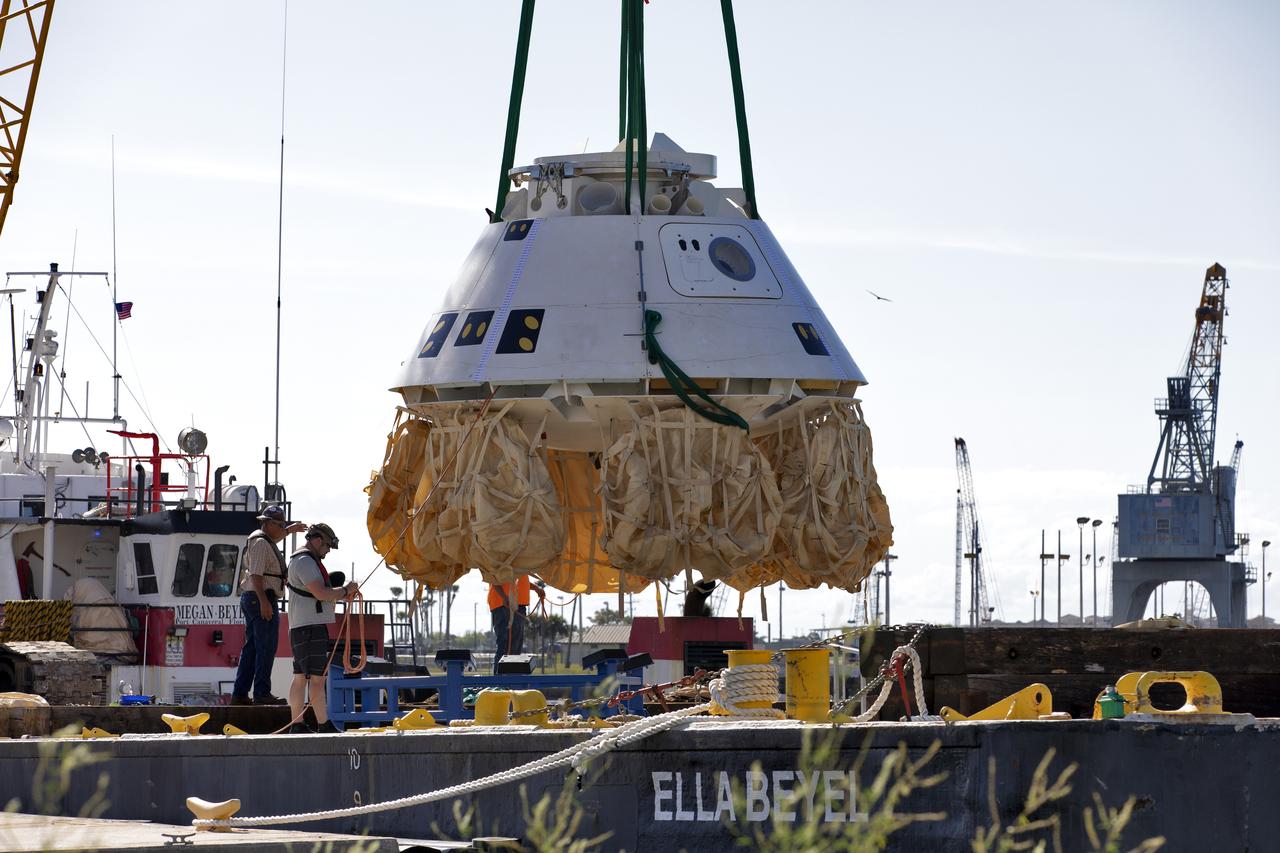
Eventually, NASA made the call nobody wanted to make. Starliner would return to Earth empty. Butch and Suni would catch a ride home on SpaceX's Crew Dragon — the competitor's capsule. Boeing's spacecraft, the one built to prove Boeing could compete in the new era of commercial spaceflight, undocked from the ISS alone and splashed down in the desert like nothing had happened.
It was the most expensive taxi detour in human history.
To be fair to Boeing — and fairness matters here — Starliner did dock with the ISS successfully on that mission. The thruster failures happened during orbital maneuvering, not during launch or docking. The capsule arrived. Several NASA engineers privately believed Starliner could have made the return journey safely. Boeing's position was that the risks were understood and manageable.
NASA disagreed. Risk tolerance, not just technical failure, drove the decision. But the headline that wrote itself — "Boeing strands astronauts" — was devastating regardless of the nuance.
Now: A Cargo Mission as a Second Chance
Flying Starliner without a crew first sounds cautious. It's actually a calculated gamble. Boeing is essentially telling NASA: we won't ask you to trust us with human lives again until we've proven the hardware works in the real environment. Earn the rating back one mission at a time.
Ortberg's confirmation this week is the first public signal that the redesign is far enough along to be operational. The thrusters have been reworked. The propulsion system has been audited. Boeing says it knows exactly what failed and why.
The cargo run — if approved and successful — would set up a crewed certification flight in 2027 or 2028. That gives Boeing one, maybe two crewed missions before the ISS retires. It's a razor-thin window to justify the entire program's existence. You can track the ISS's current orbit and crew status on the SkyLens live tracker.
Why NASA Quietly Needs This to Work
Here's the part most coverage skips: NASA is not rooting against Boeing here.
Right now, the only way American astronauts reach the International Space Station is SpaceX Crew Dragon. One company. One capsule family. If Crew Dragon has a serious problem — a grounding, an anomaly, a manufacturing issue — NASA has no fallback. There's no second car in the driveway.
The entire point of the Commercial Crew program was redundancy. Two certified providers. Two capsules. Two independent paths to orbit. Boeing winning that contract alongside SpaceX wasn't favoritism — it was architecture. A deliberate choice to avoid exactly the situation NASA is in right now.
Boeing walking away from Starliner — or running out of time before 2030 — doesn't just close a program. It leaves American human spaceflight dependent on a single private company indefinitely. That's a strategic vulnerability the people running NASA think about constantly. Read more about how orbital infrastructure shapes national capability on the SkyLens learn page.
The Part Nobody Can Audit
Trust in spacecraft is a strange currency. It builds over years and collapses in a single moment.
NASA trusted the Space Shuttle for 135 flights before Challenger. It trusted it again for 87 more flights before Columbia. Both times, the capsule came back online. Both times, the underlying organizational problem — the culture that minimized warning signs before it was too late — hadn't been fully fixed.
The question for Boeing isn't whether the thrusters work now. It's whether the room where engineers sign off on "flight-ready" has changed. Whether the person who first flagged the thruster degradation back in 2024 is empowered to stop a launch now. Hardware is auditable. Culture isn't.
What Butch and Suni Actually Said
This is the detail that doesn't fit the simple narrative. Butch Wilmore publicly described the extended stay as "a gift" — unexpected time in space. Suni Williams spoke without visible bitterness about the experience. Neither of the people most directly affected by what happened became the angry face of Boeing's failure.
Maybe that's professionalism. Maybe it's grace. Or maybe it's what you learn after spending enough time in space: that the machines are complicated, that failure happens at the edge of human capability, and that the only meaningful response is to understand exactly what went wrong and make it right.
That's what Boeing says it did over the last eighteen months. The 2026 cargo mission is how everyone else finds out if they're correct.
Somewhere in a Boeing facility right now, engineers are running the same simulations they ran in 2024. Checking the same systems. Reading the same data. Hoping this time, everything holds.
A cargo run to a space station 420 kilometers up. No humans aboard. Just hardware making the case for itself.
It's the quietest second chance in the history of American spaceflight. Follow all developing launch and mission news at SkyLens blog.
SkyLens editorial — live CelesTrak + NASA/JPL data (16111 objects)
Related stories