Space Missions · 2026-07-14
America and Russia Are Barely Speaking. Their Astronauts Just Docked Anyway. This Partnership Has Survived Everything — and It Ends in 2030.
Three humans left Earth this morning on a Russian rocket. One is American. Two are Russian. Below them, their governments are locked in the tensest geopolitical standoff in decades. Up there, 420 kilometers above all of it, they just knocked on the door.
The mission is called Soyuz MS-29. It launched today, July 14, 2026. About six hours later, it docked with the International Space Station. The ISS now has ten people aboard. That's the fullest it's been in years — and almost nobody is talking about it.
None of that is the remarkable part.
The remarkable part is that this keeps happening. Despite everything. Every single time.
The Only Exception in Decades of Tension
American and Russian leaders have barely been in the same room in years. Sanctions. Counter-sanctions. Proxy conflicts. Expelled diplomats. The diplomatic relationship between Washington and Moscow is as frozen as it's been since the 1980s.
And yet, once or twice a year, an American astronaut straps into a Russian-built spacecraft — and two Russian cosmonauts sign paperwork that puts their lives in each other's hands. They eat together, sleep in adjacent modules, and share a bathroom the size of a closet. For six months.
Who Just Arrived
The American on Soyuz MS-29 is Anil Menon. His story is remarkable before you even get to the rocket.
Menon is the son of Indian immigrants who settled in Minneapolis. He became a combat medic in the US Army — deployed to Iraq and Afghanistan. Then he became a physician. Then he took a job that almost nobody knows exists: he became one of SpaceX's first flight surgeons, the doctor who stood at Mission Control during the historic Demo-2 launch in 2020 — the first time American astronauts flew to the ISS on an American rocket since the Space Shuttle retired in 2011.
Today, he rode a Russian rocket to the same station he once watched others reach from the ground. He is the first American of South Asian descent to fly aboard a Soyuz.
With him: cosmonaut Pyotr Dubrov, a veteran who in 2021–2022 spent 355 days continuously aboard the ISS — one of the longest single stays in the station's history. And Anna Kikina, who in 2022 flew in the opposite direction: she was a Russian cosmonaut who flew aboard SpaceX's Crew Dragon as part of the seat-swap program. She has now flown both vehicles. Almost nobody in history can say that.
How This Started — and Why It's Survived Everything
The seeds were planted in 1975, when an Apollo capsule docked with a Soviet Soyuz capsule in the middle of the Cold War. It was a political gesture as much as a scientific mission. Two crews from rival superpowers floated through a hatch and shook hands 225 kilometers above the planet. Both governments called it a win. Both were right.
First US-Soviet docking in space. Cold War still very much active below. The handshake was real anyway.
American shuttles dock with Russian Mir station. Nine missions. The dress rehearsal for ISS.
The first module — Russian-built, American-funded — reaches orbit. A station that belongs to neither country and both of them.
After the Columbia disaster, the Shuttle is grounded for two years, then retired in 2011. For nearly a decade, the ONLY way to reach the ISS is a Russian rocket. NASA pays Roscosmos billions to get there.
Anna Kikina flies on Crew Dragon. Frank Rubio flies on Soyuz. Cooperation formally intensifies — the same year Russia's invasion of Ukraine begins on the ground below.
Anil Menon boards a Soyuz. ISS reaches ten crew. The pattern holds.
The Number That Changes How You See All of This
For the better part of a decade, the United States had no rocket capable of putting humans in orbit. Every American who wanted to reach the ISS had to learn Russian well enough to pass a language exam, travel to Baikonur, Kazakhstan — a remote steppe launch site in Central Asia — and ride Roscosmos's spacecraft to get there.
Russia knew this. America knew this. And they cooperated anyway — through the Georgia war, through Crimea, through sanctions and counter-sanctions, through diplomatic breakdowns that shredded cooperation in nearly every other domain.
That isn't naive optimism. It's engineering pragmatism at a geopolitical scale. Both sides built a machine neither could disassemble without losing something irreplaceable. The ISS became the one thing that couldn't be weaponized — because doing so would hurt both sides equally, immediately, and visibly from space.
What Ten Humans Aboard Actually Looks Like
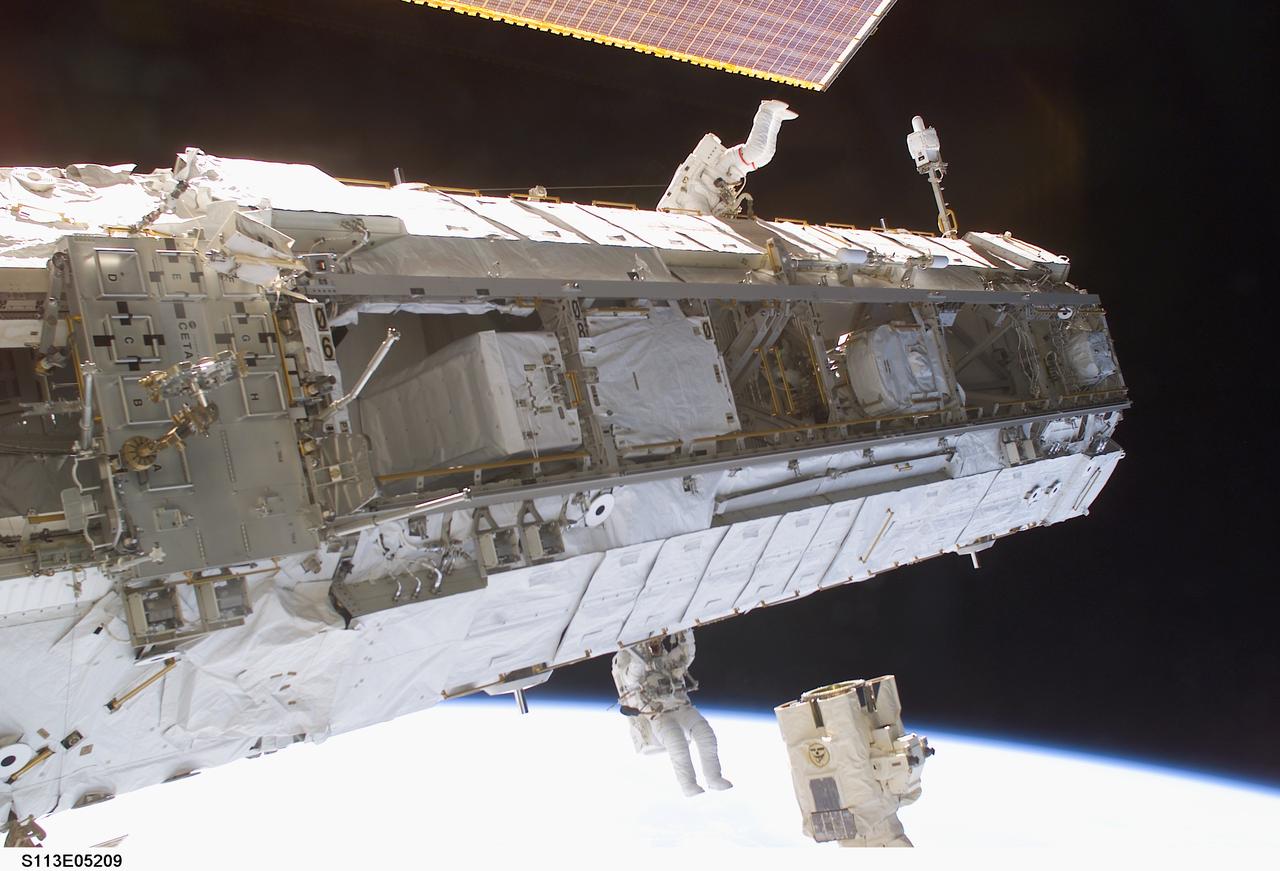
Right now, as you read this, ten human beings are sealed inside a structure roughly the size of a football field — moving at 7.66 kilometers per second. That's fast enough to circle the entire Earth in 92 minutes. They see the sun rise and set 16 times a day.
Five of them are American. Two are Russian. The others represent Japan, Denmark, and Saudi Arabia. They speak different languages, represent governments that disagree on almost everything, and eat meals together in a module that has been orbiting continuously since November 2, 2000. The ISS has had humans aboard for over 25 years without a single gap.
The Clock Is Running
The ISS is scheduled to be deliberately deorbited in 2030 — aimed at a remote stretch of the South Pacific called the Spacecraft Cemetery, where it will burn up and sink. The hardware will be gone.
No successor joint station between the US and Russia is currently planned. NASA is funding commercial replacements — Axiom Space, Blue Origin, Starlab — that will be American-owned and operated. Russia is planning its own station, ROSS, with no seats for American astronauts in the announced configuration.
After 2030, the last structural reason for American and Russian space programs to stay entangled disappears.
Today Anil Menon opened a hatch in a Russian spacecraft and floated into a station built by people whose governments disagree on almost everything. That's not a solution to anything happening on the ground. But it's a data point. A 51-year-long data point, from Apollo-Soyuz to Soyuz MS-29, that says something humans haven't fully figured out how to replicate anywhere else.
Sometimes the most complicated geopolitics in the world simplifies very quickly when the alternative is running out of oxygen together at 28,000 kilometers per hour.
You can watch the ISS pass over your location — it's visible to the naked eye, brighter than most stars — using the SkyLens live tracker. For more on what's happening in orbit right now, browse the full blog.
SkyLens editorial — live CelesTrak + NASA/JPL data (16019 objects)
Related stories