Space Industry · 2026-07-08
Blue Origin's Rocket Destroyed Its Own Launch Pad in May. Six Weeks Later It's Still Offline — and America Just Realized How Few of These It Actually Has.
The Pad Is Still Gone.
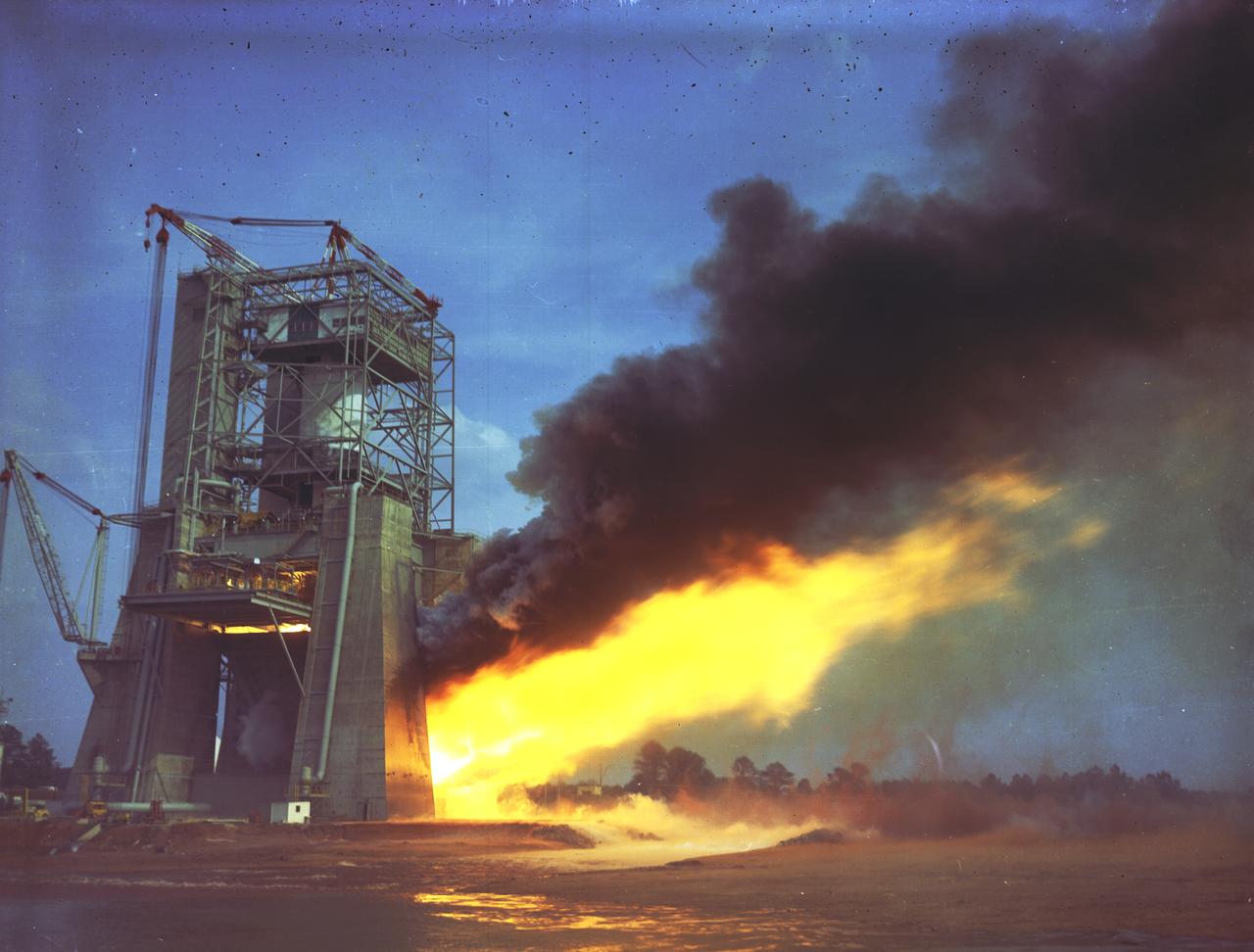
On May 28, a Blue Origin New Glenn rocket exploded at Cape Canaveral's Launch Complex 36. The blast didn't just destroy the rocket. It severely damaged the launch pad itself — one of a handful of orbital launch complexes the United States has to support the most aggressive space program since Apollo.
Six weeks later, the pad is offline. And on July 8, SpaceNews reported that the U.S. government is now formally discussing what to do — because the options are limited, the timeline is long, and the queue of rockets waiting to fly just got shorter.
This Pad Has Been Here Since 1961.
Launch Complex 36 launched Mariner 2 — the first spacecraft to successfully fly by another planet. It survived the Cold War, the shuttle era, and the commercial space revolution. Blue Origin spent years and hundreds of millions of dollars transforming it into New Glenn's home.
It took one morning to wreck it.
Think about what's competing for those eight pads right now: national security satellites, Artemis lunar missions, commercial constellations, and a full-blown space race with China. Every launch has a window. Every pad has a queue. When one disappears, every operator sharing that infrastructure feels the ripple.
The Military Had Been Counting on This Rocket.
Blue Origin's New Glenn wasn't just a commercial project. The Space Force had certified it under the National Security Space Launch (NSSL) program — meaning it was slated to carry some of America's most sensitive military payloads into orbit. The pad explosion didn't just hurt Blue Origin's business. It created a gap in the U.S. government's launch manifest.
This week, Space Force moved to plug that gap by adding two new companies — Relativity Space and Impulse Space — to the NSSL program's Lane 1. More providers mean more flexibility. But additional rockets don't solve the fundamental problem: you still need somewhere to launch them from.
The SpaceNews report laid out the government's options: accelerate pad repairs, build new infrastructure, redistribute launches across other sites — or accept delays. None of these are fast. Repairing a blast-damaged orbital launch complex isn't like fixing a road. It's structural. It involves blast walls, fuel systems, electrical infrastructure, and safety recertification. Major pad reconstructions typically take 12 to 24 months.
The Cape Was Already Running Hot.
Cape Canaveral and Kennedy Space Center together host the busiest stretch of launch airspace on Earth. SpaceX uses LC-40 and LC-39A. Artemis has LC-39B. New Glenn had LC-36. Each pad has its own manifest, its own maintenance schedule, its own regulated exclusion zones. When one drops out, the others can't simply absorb the overflow — they're already full.
US vs. China orbital launch pad capacity
China has been expanding its launch infrastructure for a decade. Wenchang, Jiuquan, Xichang, and Taiyuan are all operational — and Wenchang is actively adding new pads for commercial launches. Beijing doesn't face this bottleneck. And Beijing is watching.
What Blue Origin Has Actually Said.
Blue Origin confirmed the explosion but has not released a root cause or a repair timeline. The company hasn't disclosed whether the failure originated in the rocket, the fueling system, or the pad infrastructure itself — a distinction that matters enormously for how long recovery takes and who pays for it.
Post-incident investigations take months, and releasing findings before they're complete can be premature and misleading. The silence is standard practice, not necessarily a cover-up.
The Number That Makes This Hit Different.
The United States launched more rockets in 2023 than in the entire decade of the 1960s combined. That number is still accelerating. The infrastructure was already at a pressure point before May 28.
Those 15,932 satellites currently tracked by live trackers like SkyLens each needed a launch pad to reach orbit. Every new constellation, every military bird, every lunar mission in the pipeline needs another slot in a queue that just got one shorter.
The government report this week is the first public acknowledgment that the arithmetic isn't working. More missions, more satellites, more national security requirements — and now fewer pads to launch from. Want to understand how all of this fits together? SkyLens has a full breakdown of how launch infrastructure shapes what reaches orbit — and what doesn't.
The question the report doesn't fully answer is whether anyone in Washington understood how close to the edge this infrastructure already was — before a May morning in Florida made it impossible to ignore.
The pad is still offline. The queue is backing up. And the next chapter of America's space ambitions is waiting for a clear patch of Florida sky — and a launch complex that isn't a debris field. Follow more stories like this as the situation develops.
SkyLens editorial — live CelesTrak + NASA/JPL data (15932 objects)
Related stories