Space Race · 2026-07-08
India's First Private Orbital Rocket Is on the Pad. It Fires in Four Days. The Country That Reached the Moon's South Pole on a Shoestring Budget Just Grew a Commercial Space Industry.
A startup built this. Not a government. A startup.
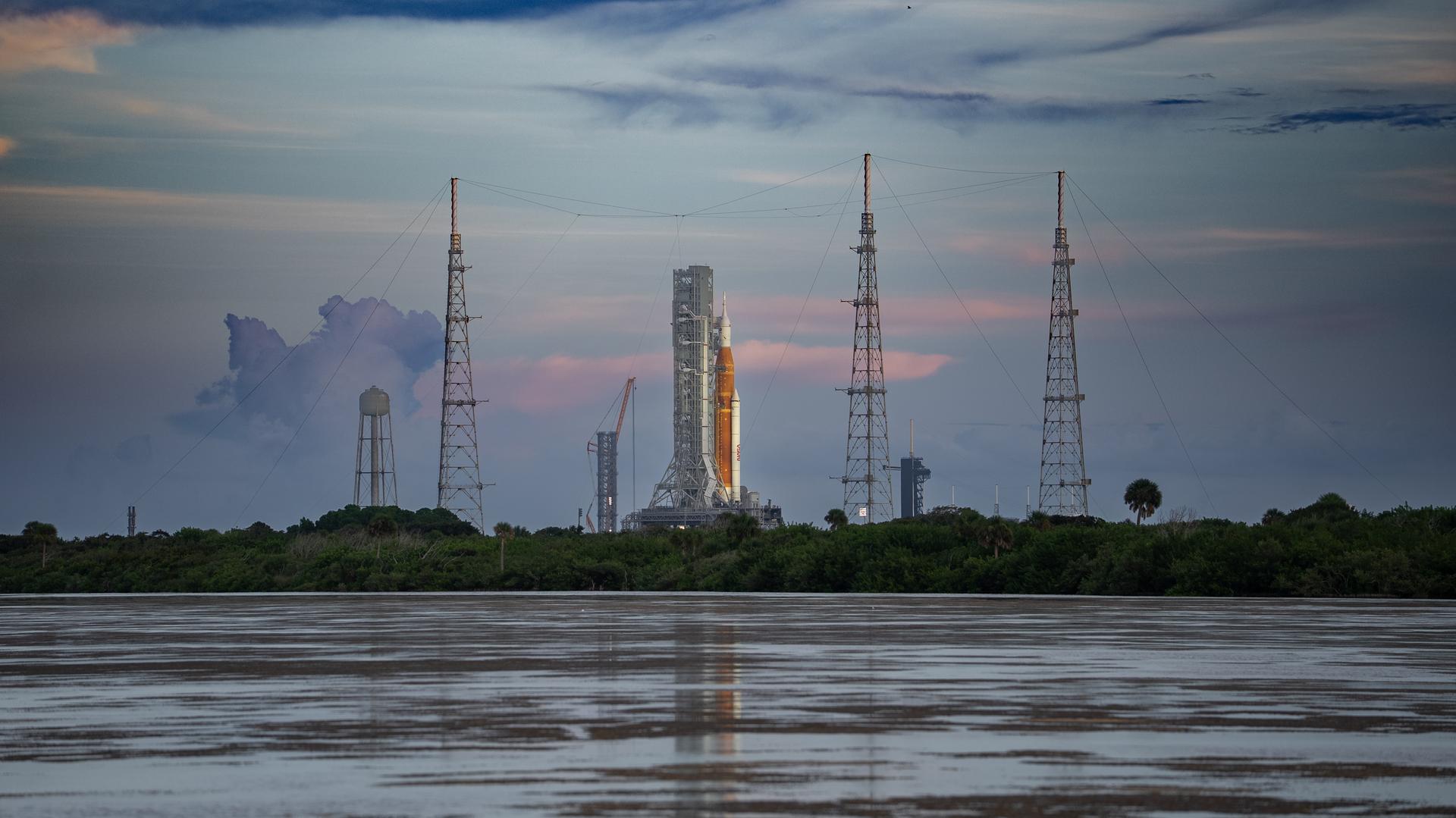
There is a rocket sitting on a launch pad in Sriharikota, India right now. It is roughly 20 meters tall — about the height of a five-story building. It was not built by ISRO. It was not funded by the Indian government. It was built by Skyroot Aerospace, a startup founded in 2018 by two engineers who left the government space agency because they believed they could move faster.
No earlier than July 12, they light it up.
If it reaches orbit, India becomes one of the only countries on Earth where a private company — not a state program — launched a rocket to space. The list of countries where that has happened fits in a sentence: the United States. And now, possibly, India.
Before this, India had to ask for permission
For most of the 20th century, if India wanted something in orbit, it needed a ride. From the Soviets. From the Americans. From whoever would sell a launch slot. That changed when ISRO — the Indian Space Research Organisation — built its own rockets. But ISRO is a government body. Cautious. Scheduled in five-year plans. Managing perhaps five or six launches a year across the entire country.
That is not nearly enough. Not anymore.
The global small satellite market is booming. Every defense contractor, climate research team, telecom startup, and precision agriculture company wants sensors in low Earth orbit. There are currently 15,932 tracked objects in Earth orbit, and demand for more launch capacity keeps climbing. ISRO cannot serve that market alone. Nobody asked them to.
What Vikram-1 actually is
The rocket is called Vikram-1 — named after Vikram Sarabhai, the physicist who founded ISRO in 1969. Three stages. Solid propellant. Designed to deliver small satellites into low Earth orbit, the 300–600 km altitude band where the most commercially valuable real estate in space currently sits.
At orbital insertion, it will be moving at roughly 7.9 km/s.
This is not a toy rocket. This is a full orbital vehicle, designed to carry commercial payloads on dedicated missions — meaning a customer buys the whole rocket for their satellites, instead of waiting for a rideshare slot that fits someone else's schedule.
That distinction matters enormously. Ridesharing is cheap but inflexible. You launch when the primary customer is ready, into whatever orbit they chose, with whatever constraints they set. A dedicated small launcher lets you choose your orbit, your timing, your inclination. For defense satellites and Earth observation platforms, that flexibility is worth a premium.
India's secret weapon: doing more with less
India's total space budget is roughly $2.5 billion per year. The United States spends that in about three weeks.
And yet: India soft-landed on the lunar south pole in 2023 — the first country ever to do so. India's Mars Orbiter Mission cost $74 million. NASA's MAVEN mission to the same planet cost $671 million. Same destination. Nine times the price gap.
The engineers Skyroot hired came from that tradition. They know how to build hardware that works without burning money on redundancy theater. Whether that translates to a reliable commercial launch vehicle is the question July 12 will begin to answer.
But first launches are brutally hard
Here is what the history books say about first orbital attempts from new launch vehicles:
They fail. Often.
SpaceX's Falcon 1 failed on attempts one, two, and three. Elon Musk has said he had money left for exactly one more try when attempt four finally reached orbit in 2008. Rocket Lab's Electron failed its first attempt in 2017. Astra — a US small launch competitor — failed multiple orbital attempts before eventually shutting down entirely.
This is not pessimism. This is physics. Getting to orbit requires every stage of a rocket to perform correctly in sequence, in a vacuum, at extreme temperatures, under enormous mechanical stress, in a way that has never been tested at full scale before. The margin for error is essentially zero.
The geopolitics are as interesting as the engineering
In 2005, meaningful orbital launch capability existed in five places: the United States, Russia, China, France via ESA, and Japan. Today that list includes India, South Korea, New Zealand (via Rocket Lab), Israel, and Iran — with Germany, Australia, and Brazil all in active development.
The monopoly on who gets to space, and on what terms, is gone. It collapsed faster than almost anyone predicted. And it matters: countries that cannot launch their own satellites are dependent on whoever will sell them a ride. That dependency shapes alliances, intelligence agreements, and military posture in ways that don't make the news but absolutely shape policy.
A private Indian orbital launcher changes the math for every nation in the Indo-Pacific that wants satellites in orbit but does not want to route its payloads through American, Chinese, or Russian infrastructure.
You can see what India already has in orbit on the SkyLens live tracker — 31 tracked satellites, from ISRO communications platforms to Earth observation systems. That number has been growing steadily. If Vikram-1 works and monthly cadence follows, it could start growing much faster.
What to watch for
Skyroot has not confirmed a precise launch time — "no earlier than July 12" is the current guidance, which means weather, range safety, and technical readiness all still get a vote. Indian space launches depart from the Satish Dhawan Space Centre on the east coast, and the launch will be visible along parts of the Bay of Bengal coastline.
The first orbital launch is a demonstration mission. It carries payloads designed to validate performance, not necessarily generate commercial revenue on day one. Success means they prove the vehicle works. Then they iterate. Then they sell.
The global launch market doesn't need another massive rocket. It needs reliable, affordable, on-demand access to orbit for small satellites. That is the gap Skyroot is attempting to fill. Four days from now, we find out if they can.
SkyLens editorial — live CelesTrak + NASA/JPL data (15932 objects)
Related stories