Moon Missions · 2026-07-03
For the First Time in 53 Years, Humans Flew to the Moon. 149 Million People Watched — And Most of Them Weren't Alive Last Time It Happened.
Four humans just flew to the Moon.
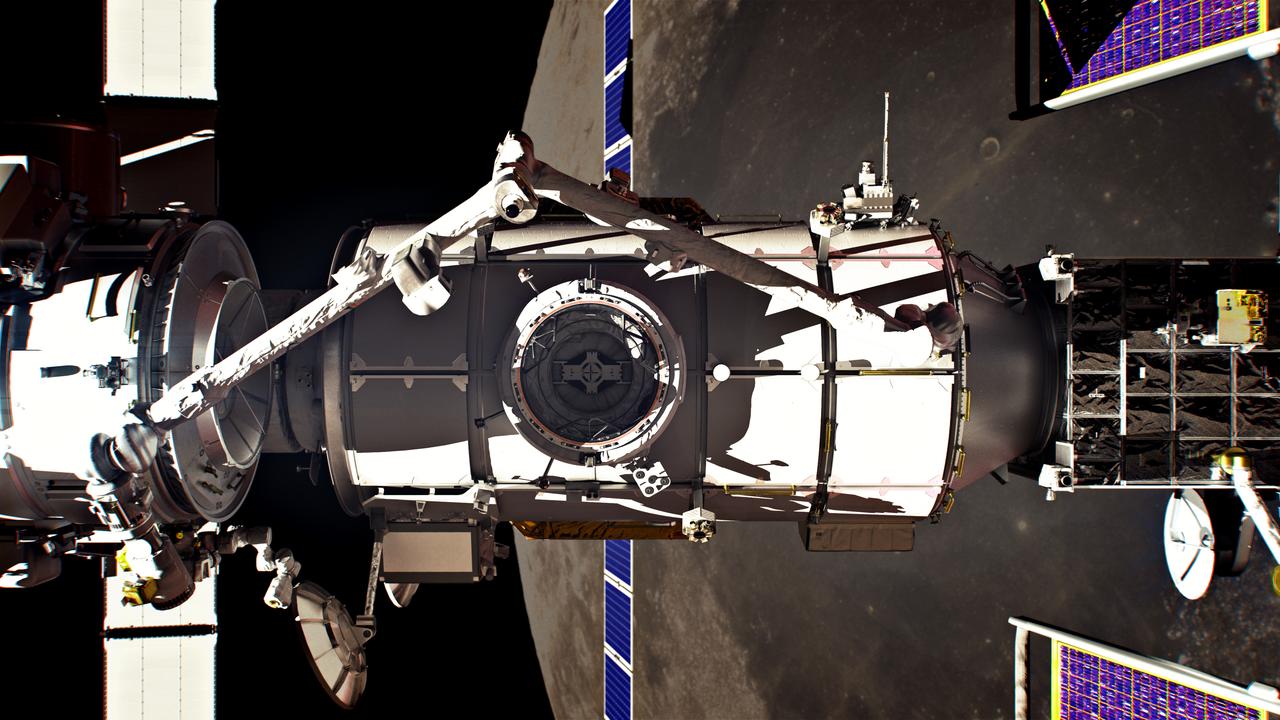
Not a robot. Not a probe. Four actual people, in an actual spacecraft, watching the lunar surface roll by 7,400 kilometers below them — closer to another world than any human being has been since December 1972.
149.4 million people watched it on NASA's platforms alone. That's more than the entire population of Russia. And NASA is calling it the biggest streaming event in the agency's history.
The Gap Nobody Talks About Enough
When Apollo 17 splashed down in December 1972, astronaut Gene Cernan was the last person to step off the Moon. He paused before climbing the lander's ladder, looked back at the dust, and said his final words from another world. Then he left.
That was 53 years ago.
Think about what 53 years actually means. The people who watched that splashdown live are in their late 70s now. Entire generations were born, grew up, and grew old while humanity just... stopped going. We built the internet. We invented smartphones. We mapped the human genome. We discovered thousands of planets orbiting other stars.
But we didn't go back to the Moon.
Who Was on Board
Commander Reid Wiseman. Pilot Victor Glover — the first Black astronaut to fly to the Moon's vicinity. Mission Specialist Christina Koch — the first woman to travel to lunar distance. And Jeremy Hansen of the Canadian Space Agency — the first non-American to ever leave Earth orbit.
Four people. One spacecraft. A crew that broke records before the mission even lifted off.
NASA didn't say much about what the crew felt during the flyby. But there's footage of them in the Orion capsule, pressed against the windows, looking at the Moon. No audio. Just the window. And the surface rolling past.
What They Actually Did
Artemis II wasn't a landing. That part matters. This was a free-return trajectory — the crew flew out to the Moon, swung around it, used its gravity like a slingshot, and came home. The spacecraft: Orion. The rocket: NASA's Space Launch System, currently the most powerful rocket ever to leave Earth.
Peak speed on the way out: roughly 39,000 km/h.
They came within 7,400 kilometers of the lunar surface — close enough to see individual crater walls without a telescope. Then gravity pulled them back, the Pacific swallowed the capsule, and the recovery teams pulled four humans out of the ocean. Total distance traveled: nearly 800,000 kilometers.
Why 149 Million People Watched
NASA breaks streaming records on big days — Mars landings, solar eclipses, the first Webb images. But 149.4 million views is a different category entirely. That's FIFA World Cup territory. That's a number that belongs on a Super Bowl broadcast sheet.
People didn't watch because space is new. People watched because this felt different. An entire generation that grew up with smartphones watched the first crewed Moon mission of their lifetimes. The launch streamed on break room TVs. People cried in comment sections. Social feeds froze mid-scroll.
And that 149.4 million is only what NASA directly tracked across its own channels. The real audience — across TV rebroadcasts, international coverage, YouTube restreams, and social video — was almost certainly several times larger.
You can explore where Artemis sits in the broader landscape of orbital missions on the SkyLens live tracker, or read about the science driving the next phase on the learn page.
What Comes Next
Artemis II was the rehearsal. The proof that Orion holds pressure, the crew survives deep space radiation, and the trajectory works exactly as computed.
Artemis III is the landing.
Two astronauts — including a woman, for the first time in history — will set down on the Moon's south pole. A region the Apollo crews never visited. A region where NASA's instruments have confirmed the presence of water ice, locked in permanently shadowed craters that haven't seen sunlight in billions of years.
That ice is the point. Water becomes fuel. Fuel means you don't have to carry everything from Earth. Carry less from Earth, and you can go further. The Moon isn't just a destination. It's the first step in a logistics chain that leads, eventually, to Mars.
Gene Cernan becomes the last human to walk on the Moon. He says, "We'll come back." 53 years pass.
Uncrewed Orion capsule flies a free-return trajectory around the Moon. Every system works. The mission is declared a success.
First crewed lunar mission in 53 years. Four astronauts fly to the Moon and return safely. 149.4 million people watch live.
Two astronauts land on the lunar south pole. First humans on the Moon since Apollo 17. First woman on the Moon, ever.
The Weight of the Moment
When Orion splashed down, something quiet happened. Engineers at Johnson Space Center who have spent 20-year careers pointing at this moment started crying. Not because they were surprised it worked. Because it worked.
For 53 years, the Moon was something that lived in history books. In grainy black-and-white footage. In the memories of people now in their 70s and 80s who watched a small television in 1969 and told their grandchildren about it.
This week, it became present tense again.
SkyLens editorial — live CelesTrak + NASA/JPL data (15928 objects)
Related stories