Earth Science · 2026-06-18
El Niño 2026 Is Strengthening. A Satellite 1,336 km Above the Pacific Just Confirmed It. Here's What That Means for 2 Billion People on the Ground.
The Ocean Is Doing Something. A Spacecraft Is Watching.
Right now, a mass of warm water roughly the size of the continental United States is spreading across the central Pacific Ocean. Nobody is sailing through it to measure it. A spacecraft the size of a compact car is doing it from 1,336 km up — accurate to within 2.5 centimeters.
That's not poetry. That's altimetry. And what that radar pulse is detecting right now has happened before. The last major version of it killed tens of thousands of people and cost the global economy somewhere between $175 billion and $200 billion. Scientists are watching the data tick upward in real time, and as of this week, they've confirmed: El Niño 2026 is strengthening.
Hot Water Is Taller. That's the Trick.
Here's something your physics teacher probably didn't put on a poster: warm water is physically taller than cold water. Not dramatically. But enough that a radar signal bounced off the ocean surface from orbit can detect the difference.
When El Niño develops, the eastern Pacific warms. That warm water expands. It rises — maybe 10 to 30 centimeters above normal sea level. To the Sentinel-6 Michael Freilich satellite and its predecessor Jason-3, that's a clear signature. A digital fingerprint stamped across thousands of kilometers of open ocean, visible from space as a spreading red anomaly on sea-surface-height maps.
This program has been running continuously since 1992 — over 30 years of unbroken ocean data, handed off from TOPEX/Poseidon to Jason-1 to Jason-2 to Jason-3 to Sentinel-6. Every El Niño in that window has been catalogued with satellite precision. And right now, the signature is there. The data confirm it. The warm blob is real and it's growing.
What El Niño Actually Does to People
It doesn't stay in the ocean. That's what most people miss. El Niño is an ocean event that reprograms the atmosphere. Warm a Texas-sized stretch of Pacific water and you change where moisture flows, where storm tracks shift, where drought cracks open the ground.
- South America: Heavy flooding across Ecuador, Peru, and Bolivia — rivers surge, infrastructure collapses
- Australia and Southeast Asia: Severe drought, forest fire risk climbs sharply
- East Africa: Flash flooding across Kenya, Somalia, and Ethiopia
- Southern United States: Wetter-than-average winters, particularly California
- North Atlantic: Suppressed hurricane season — actually one of the few benefits
The 2015–2016 El Niño was the strongest on record. Bolivia watched its second-largest lake — Lake Poopó, a body of water that had existed for thousands of years — evaporate almost entirely. The World Bank estimated the event drove $200 billion in economic losses. That's not a rounding error. That's larger than the GDP of most countries.
The Satellite Named After a Man Who Didn't Live to See It Launch
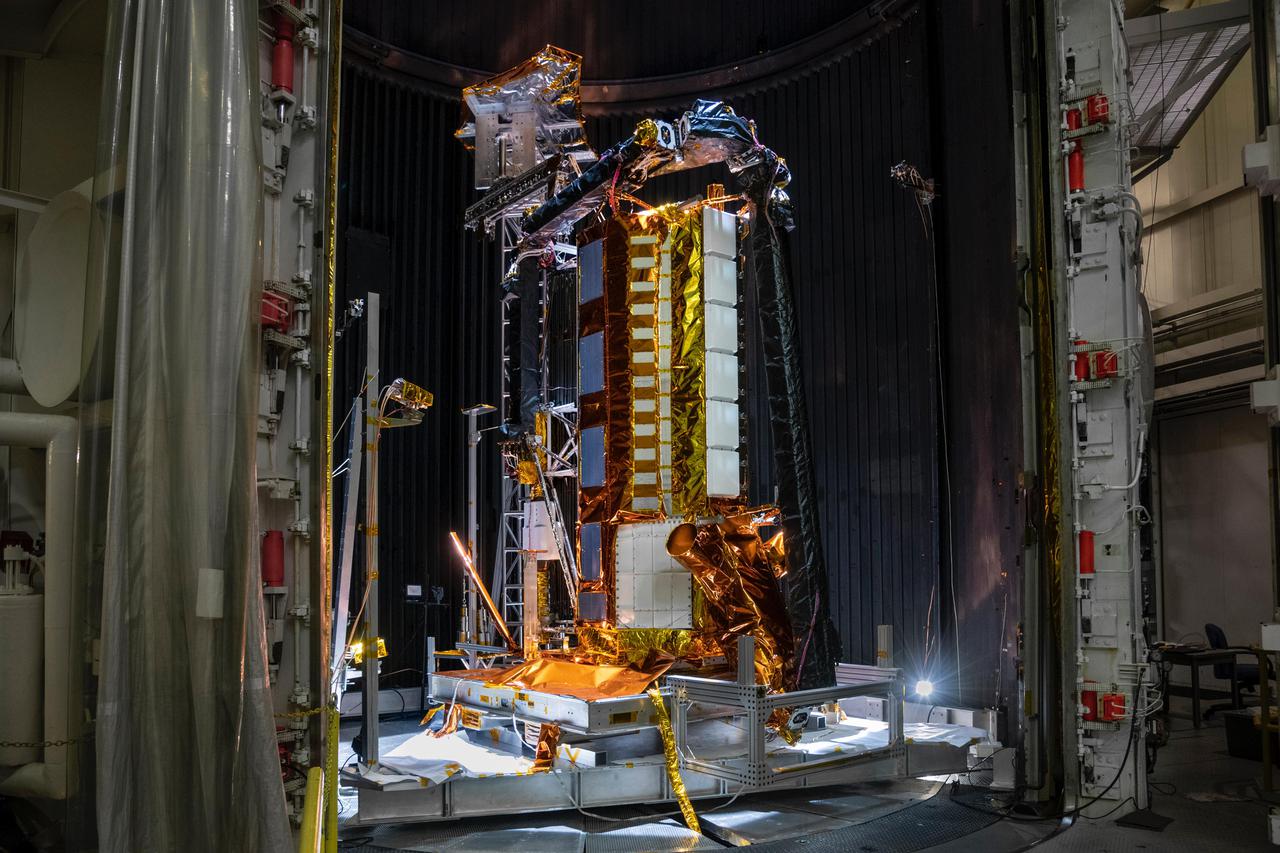
Sentinel-6 Michael Freilich launched in November 2020. It's named after a NASA oceanographer who spent decades arguing — quietly, persistently — that satellites were the key to understanding Earth's oceans at scale. He was right. He died of cancer two months before his namesake spacecraft lifted off from Vandenberg Space Force Base.
The satellite carries a precision radar altimeter, a microwave radiometer, and multiple GPS receivers. It circles Earth every 112 minutes. It maps the entire ocean surface every 10 days. It is so accurate that scientists use it to track millimeter-level sea level rise caused by melting ice sheets — one of the most consequential datasets in modern climate science. It's also the spacecraft watching El Niño build, pass by pass, over the central Pacific right now. You can track Earth-observing satellites in real time on the SkyLens live tracker.
What Happens Between Now and December
El Niño typically peaks around December. Which means there are roughly six months of development ahead. The atmosphere doesn't wait politely for December — regional weather impacts begin months before peak intensity, and forecast agencies are already issuing early seasonal outlooks based on what the satellites are showing now.
That's the quiet miracle almost nobody talks about. A spacecraft in orbit is giving farmers in the Sahel, water managers in Australia, and emergency planners in East Africa six months of warning. Decisions about what crops to plant, where to stockpile water, which communities to pre-position emergency supplies for — all of those are being shaped right now by data from a satellite bouncing radar off the Pacific Ocean.
Before ocean altimetry from space, El Niño forecasts were based on sparse buoy readings and ship reports. The lead time was measured in weeks. Satellite data extended that to seasons. It's one of the clearest cases in history of space technology directly saving lives — and it happens so quietly that most people have never heard of the spacecraft responsible. Want to understand more about how Earth-monitoring satellites work? The SkyLens explainer is a good place to start.
The Invisible Infrastructure
There are currently over 15,000 objects tracked in Earth orbit. Most headlines go to rockets and astronauts and constellations. The ocean altimetry satellites never trend. They don't have dramatic launch videos. They just circle quietly overhead, measuring a planet, sending back data that shapes food security, disaster response, and climate policy for billions of people.
El Niño 2026 is a reminder of what a lot of that infrastructure is actually for. Not entertainment. Not navigation. Not communications.
Survival intelligence. Delivered from 1,336 km up. Accurate to the width of your palm.
For more space stories you won't find anywhere else, explore the full SkyLens blog.
SkyLens editorial — live CelesTrak + NASA/JPL data (15811 objects)
Related stories