Space Weather · 2026-06-16
The Sun Almost Ended the Internet in 2012. Nobody Noticed. The Next Time Might Not Miss.
Nine Days. That's All That Saved Us.
On July 23, 2012, a monstrous wave of magnetized plasma erupted from the surface of the Sun. It was traveling at 3,000 kilometers per second — ten times faster than a typical solar storm. Scientists who studied it afterward called it likely the most powerful solar event in 150 years.
Earth was not in its path.
We missed it by nine days — because the planet had simply rotated to the other side of its orbit.
Daniel Baker, a space physicist at the University of Colorado who led the analysis, published his conclusion plainly: "If it had hit, we would still be picking up the pieces."
The Last Time It Actually Hit
The year was 1859. The telegraph was the internet of its day — copper wire strung across continents, carrying messages that connected governments, markets, and people in near-real time.
On September 1st, British astronomer Richard Carrington was sketching sunspots through his telescope when a brilliant white flash erupted from the solar surface. So bright he blinked and looked away, convinced it was a reflection in his lens.
It wasn't.
Seventeen hours later — the time it took for the plasma wave to cross 150 million kilometers of space — the storm hit Earth.
Telegraph offices across North America and Europe caught fire. Operators received electric shocks severe enough to knock them off their chairs. In some places, the telegraph networks kept transmitting even after operators disconnected the batteries — running on current induced by the storm itself.
The aurora borealis was visible from Cuba. From Hawaii. From Colombia. In New England, people read newspapers outside by its light. At midnight.
Now We Have 15,000 Objects in Orbit
In 1859, the casualties were telegraph wire and the operators holding it. In 2026, the target list looks different.
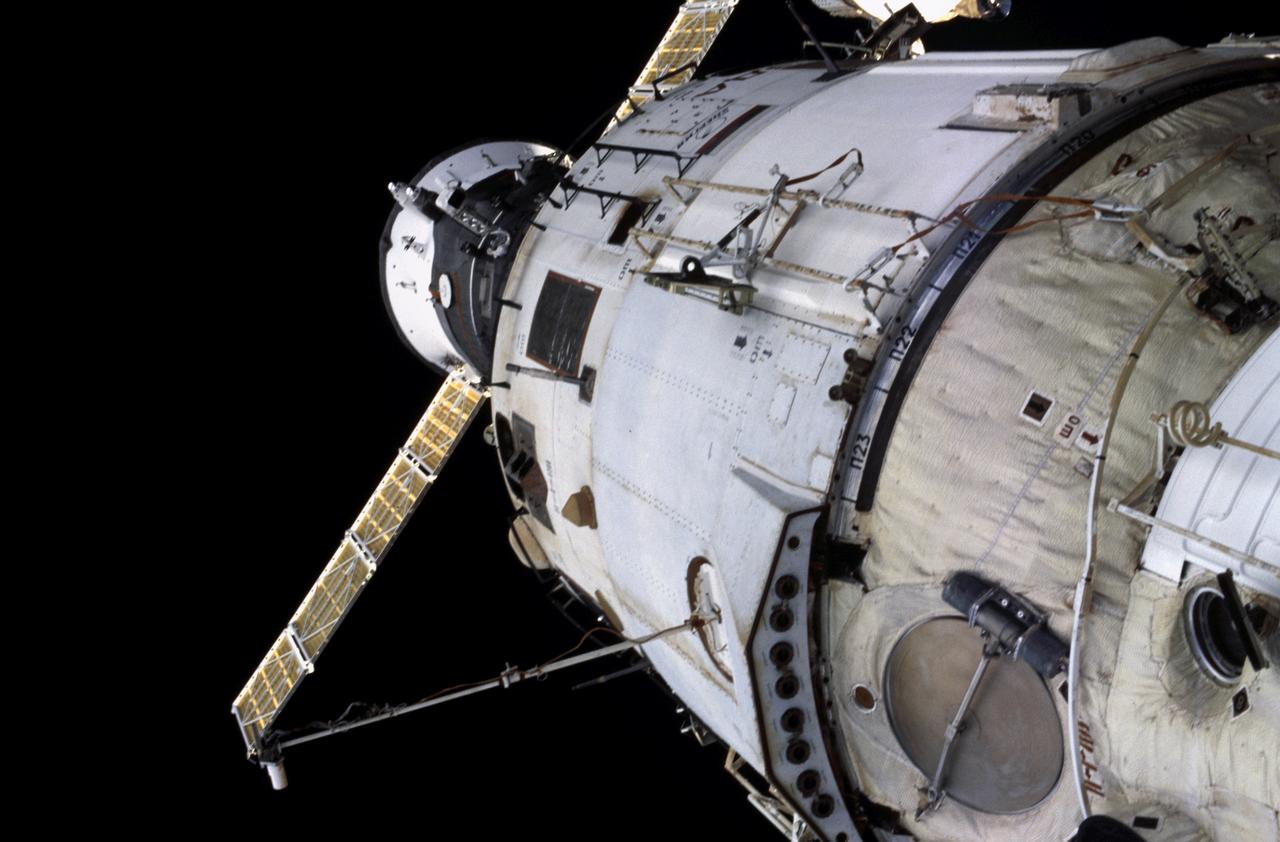
Right now, more than 15,000 catalogued objects are circling Earth — active satellites, navigation constellations, weather relays, communications infrastructure, financial transaction networks, and the International Space Station with people aboard. You can watch them move in real time on the SkyLens live tracker.
A Carrington-class storm would interact with all of them simultaneously.
Here's what happens, roughly in sequence:
- First 8 minutes: X-rays and ultraviolet radiation travel at the speed of light. They hit the sunlit side of Earth instantly. HF radio fails. Pilots lose contact. Navigation signals using ionospheric reflection degrade without warning.
- Minutes to hours: A wave of high-energy charged particles arrives. Satellite electronics in certain orbits begin accumulating radiation damage. Some satellites lose attitude control — they start tumbling.
- 12–36 hours later: The main coronal mass ejection hits. Earth's upper atmosphere heats and expands. Every satellite in low orbit experiences increased drag. Operators burn fuel fighting it — or lose control entirely.
- Days after: Geomagnetically induced currents surge through power grids at high latitudes. Large transformers — the ones that take 12 to 18 months to manufacture — begin to fail.
We're Watching. But Watching Has Limits.
DSCOVR — the Deep Space Climate Observatory — sits at the L1 Lagrange point, about 1.5 million kilometers sunward of Earth. It monitors the solar wind in near-real time and gives us our earliest warning of an inbound CME.
That sounds reassuring. Until you do the math.
At the speed of the 2012 storm — 3,000 km/s — a CME at L1 reaches Earth in about eight minutes. Eight minutes is not enough time to do much more than send an alert and brace. At typical storm speeds (500–800 km/s), the window expands to 15–60 minutes. Still not enough time to power down satellite fleets, manually isolate grid transformers, or reroute aircraft away from polar corridors.
NASA's Parker Solar Probe is our most ambitious hedge. It has flown closer to the Sun than any spacecraft in history — close enough to physically pass through the solar corona. The data it's returning is changing how scientists understand how CMEs form, accelerate, and propagate. The hope is that a new generation of sentinel spacecraft, stationed far closer to the Sun, could give us hours of warning instead of minutes. Those spacecraft do not yet exist.
The Satellites Built to Survive It
This week, the U.S. Space Force ordered two more GPS satellites from Lockheed Martin in a $514 million contract that specifically upgrades anti-jam features and resilient digital payloads. That procurement reflects a quiet reality: military satellites are engineered to survive what commercial ones are not.
The technical term is radiation hardening — designing electronics to absorb the particle bombardment of a major geomagnetic storm without failing. It adds cost, weight, and complexity. Commercial constellations — built for price-efficiency and rapid replacement — generally don't get it. Learn more about how satellite orbits affect vulnerability.
Which means in a true Carrington-class event, the satellites most likely to keep functioning are the ones taxpayers built for the military.
How Likely Is the Next One?
A study published in Space Weather journal estimated the probability of a Carrington-scale event in any given decade at roughly 1.9 percent. Over 50 years, that compounds to somewhere between 10 and 12 percent.
That number deserves context in both directions.
It means this isn't happening tomorrow. It also means this is more likely than a once-in-a-millennium catastrophe — it's closer to the odds of a major earthquake in a high-risk seismic zone in your lifetime.
The Sun also operates on an 11-year cycle. We are currently in Solar Cycle 25, which peaked in 2025 — and peaked stronger than most models predicted. The elevated activity window isn't closed yet.
What This Actually Means
There's limited individual action here. This is an infrastructure story, a policy story, a "who is responsible for hardening civilization" story that plays out in government procurement offices and engineering spec sheets, not personal preparedness kits.
But awareness matters. The 2012 near-miss happened and most people didn't know. The 1989 Quebec geomagnetic storm knocked out power for six million people for nine hours — and is largely forgotten outside specialist circles.
The pattern is: it happens, it's alarming, and then it fades from memory before the lesson is institutionalized. Check the SkyLens blog for more on the systems — and their vulnerabilities — that modern space infrastructure depends on.
Somewhere right now, a space weather forecaster at NOAA is watching a slightly elevated reading from DSCOVR and deciding whether it's routine or not. Most days it's routine. The skill is knowing which day it isn't.
SkyLens editorial — live CelesTrak + NASA/JPL data (15697 objects)
Related stories