Spy Satellites · 2026-06-05
The US Has Satellites That Can See a Dinner Plate From Space. The Government Has Never Confirmed How Sharp They Are.
A satellite launched before most people reading this were born is orbiting Earth right now. It has no name on any public registry. Its camera is sharper than anything you can legally buy. And at this moment — it might be pointed at your country.
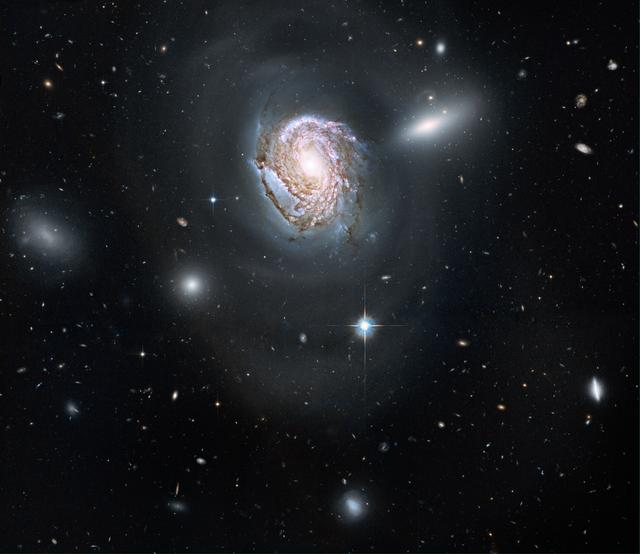
Most people know about Hubble. The telescope that stared at distant galaxies and changed how we see the universe. What most people don't know: the US government owns satellites with better cameras than Hubble — and they've been pointing them at Earth for fifty years.
The Agency That Officially Didn't Exist
In 1961, the United States created the National Reconnaissance Office — the NRO. Its entire purpose: build and fly spy satellites. And then keep that a secret from everyone.
For 31 years, the NRO officially did not exist. The agency's name, budget, mission — all classified. Its headquarters in Chantilly, Virginia appeared on no government directory. Employees couldn't tell their own families where they worked.
The NRO was finally acknowledged publicly in 1992. Not because the government decided to be transparent. Because a budget document leaked.
The satellites they built carry the designation KH — for Keyhole. Early versions used physical film canisters that were ejected from orbit and caught mid-air by military aircraft. Actual film capsules parachuting from space, snatched from the sky over the Pacific.
What These Satellites Can Actually See
Then came the KH-11 Kennen. First launched December 1976 — the same year the first Apple computer was sold. Instead of film, it used digital sensors and transmitted images in near-real-time. A digital telescope pointed down at Earth instead of up at the stars.
How sharp is it?
The US government has never officially confirmed the resolution of its current reconnaissance satellites. That number is classified. But evidence occasionally surfaces.
In 2019, President Trump tweeted a photograph — an image of an Iranian launch facility after a rocket failed on the pad. Intelligence analysts who study satellite imagery professionally were stunned. The visible detail of the damaged launch structure suggested a ground resolution of around 10 centimeters per pixel.
10 centimeters. From three hundred kilometers above Earth. The size of a dinner plate, resolved as a single pixel.
Intelligence officials were reportedly furious. The image — however it came to be posted — gave adversaries concrete proof of what the US could observe from orbit.
The Gift That Revealed Everything
In 2012, the NRO donated two surplus space telescopes to NASA. Just handed them over. They'd been sitting in a warehouse in Rochester, New York.
Each one had a primary mirror 2.4 meters wide — identical to Hubble's. But these were optimized for a wider field of view, covering roughly 100 times the sky area Hubble images at once.
These were surplus. The NRO no longer needed them.
Think about what that implies. The telescopes they were throwing away were equivalent to Hubble. What they kept — what they're still flying — is better than those.
It's Not Just Cameras
Imagery is only one layer of what these systems do. Military reconnaissance satellites break into several distinct types — and the cameras may not be the most consequential:
- IMINT (Imagery Intelligence): Optical and infrared cameras. The ones people imagine.
- SIGINT (Signals Intelligence): Listening satellites. They intercept radio signals, radar emissions, and communications. The Mentor-class satellites reportedly deploy antennas the size of a football field once in orbit.
- MASINT (Measurement and Signature Intelligence): Nuclear detonation detection, ballistic missile launch warning. The DSP and SBIRS satellites watch every corner of Earth for rocket exhaust signatures — 24 hours a day, 365 days a year.
The signals-intelligence satellites are arguably the more powerful layer. A satellite intercepting every radio transmission from a country — that's a fundamentally different kind of observation than a photograph. And it's been operational since the 1970s. You can explore how different orbital altitudes enable different missions — SIGINT birds often sit in highly elliptical or geosynchronous orbits to maximize coverage time over target regions.
The Satellites Nobody Can Track
Right now, there are an estimated 150 to 200 classified military satellites in orbit across all nations. The US operates the largest network. Russia has the Persona series. China has the Yaogan constellation — officially described as "Earth observation" satellites; most analysts treat them as China's reconnaissance network.
These aren't visible on public tracking tools like the SkyLens live tracker. The public TLE catalog from Space-Track.org covers commercial, civilian, and some military satellites — but the classified ones are absent. They orbit above you right now, and they simply aren't there in the public record.
The Commercial World Is Closing the Gap
Here's what's changed in the last decade: the private sector caught up. Fast.
Companies like Maxar and Planet Labs now sell satellite imagery commercially — at 30 to 50 centimeters per pixel. Anyone can buy it. Governments buy it. Journalists buy it. In early 2022, commercial Maxar imagery of Russian military movements near the Ukrainian border was released publicly by US officials — specifically to preempt disinformation about invasion preparations.
30 centimeters, commercially available. The classified government hardware is likely two to three times sharper.
As commercial resolution approaches 10 centimeters over the next few years, a question nobody has cleanly answered: at what point does the capability gap between state and civilian surveillance disappear — and what does that mean for what counts as a state secret?
Satellite resolution — then vs. now
The Normal That Isn't Normal
There's a quiet strangeness to this. Objects built by humans are looking at the surface of Earth right now with a clarity that would have seemed like science fiction in 1970. Every airfield. Every harbor. Every road. Continuously, every hour, every day.
When a country moves troops toward a border — it's seen. When a nuclear test site shows new activity — it's seen. When a new missile silo is being dug in a desert — it's seen, weeks before construction finishes.
Intelligence that prevented confrontations, and intelligence that failed to prevent catastrophes, often came from the same quiet machines in orbit. Machines with no names on any public list.
The SkyLens live tracker shows every publicly catalogued satellite — civilian, commercial, and the ones we're permitted to know about. The ones we're not? They're up there too. Watching. And we don't know exactly what they see.
SkyLens editorial — live CelesTrak + NASA/JPL data (9216 objects)
Related stories